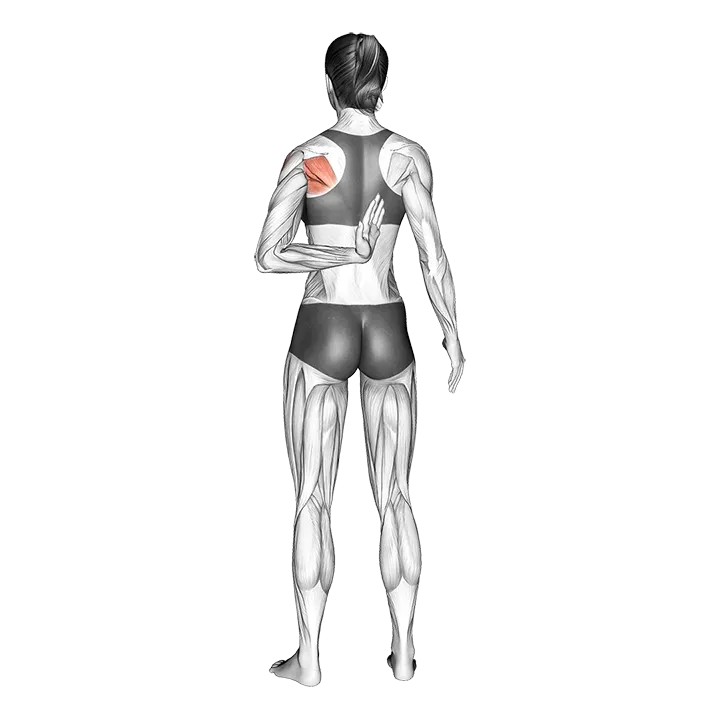
Reaching Up Shoulder Stretch
- Músculo objetivo
- —
- Equipamiento
- Body weight
- Parte del cuerpo
- Back
- Tipo
- Stretching
The Reaching Up Shoulder Stretch is a simple bodyweight stretch that targets the latissimus dorsi, shoulders, and upper back by extending the arms overhead. It helps relieve tension built up from sitting, poor posture, or overhead work. Regular practice improves shoulder mobility and upper-back flexibility.
Cómo hacer el Reaching Up Shoulder Stretch
- 1Stand tall with your feet hip-width apart, or sit upright on a bench or chair with both feet flat on the floor.
- 2Inhale and raise both arms straight overhead, palms facing inward or toward each other.
- 3Actively reach your fingertips toward the ceiling, lengthening through your entire spine.
- 4Gently press your shoulders down and away from your ears to avoid shrugging.
- 5Tilt your pelvis slightly and engage your core to prevent your lower back from arching excessively.
- 6Hold the fully extended position for 20–30 seconds, breathing slowly and deeply throughout.
- 7To deepen the stretch, interlace your fingers and turn your palms toward the ceiling, pushing upward.
- 8Release by slowly lowering your arms back to your sides on an exhale.
- 9Repeat 2–3 times, resting a few seconds between holds.
Consejos de técnica
- Keep your ribs down and core lightly braced — flaring the ribs redirects the stretch away from the lats and into the lower back.
- Actively push your palms toward the ceiling rather than simply lifting your arms; the active reach creates more length through the lats and thoracic spine.
- Breathe steadily throughout the hold — exhaling deeply allows the ribcage to descend and increases the stretch in the upper back.
- If shoulder mobility is limited, keep your arms slightly in front of the body rather than forcing them directly overhead.
- Perform this stretch when your muscles are warm — after a workout or a brief walk — to get the most benefit and reduce any discomfort.
Errores comunes
- Shrugging the shoulders toward the ears: this creates tension in the neck and traps rather than opening the shoulder joint and lats.
- Hyperextending the lower back: arching excessively compresses the lumbar spine instead of lengthening it; keep the core engaged and ribs neutral.
- Holding the breath: breath-holding increases muscular tension and reduces the depth of the stretch; breathe slowly and rhythmically throughout.
- Rushing through the hold: spending fewer than 15 seconds in the stretch does not give connective tissue enough time to lengthen; aim for at least 20–30 seconds.
- Collapsing the elbows or bending the wrists: soft elbows reduce the traction on the lats; keep arms as straight as flexibility allows for maximum effect.
Preguntas frecuentes
What muscles does the Reaching Up Shoulder Stretch target?
The stretch primarily lengthens the latissimus dorsi (lats), the posterior deltoids, and the muscles of the upper back including the teres major and lower trapezius. The thoracic spine and intercostal muscles also benefit from the overhead reach.
How long should I hold the Reaching Up Shoulder Stretch?
Hold each repetition for 20–30 seconds. This gives the muscles and fascia enough time to relax and lengthen. Perform 2–3 repetitions per session for best results.
Can I do this stretch if I have tight shoulders?
Yes. If your shoulders are very tight, keep your arms slightly in front of vertical rather than forcing them directly overhead. Over time, consistent practice will improve your range of motion and allow a fuller overhead position.
When is the best time to do this stretch?
This stretch works well as part of a post-workout cool-down, during a midday break from desk work, or any time you feel upper-back or shoulder tightness. Avoid performing deep static stretches on completely cold muscles — a brief warm-up first is ideal.
Can the Reaching Up Shoulder Stretch help with posture?
Yes. Regularly stretching the lats and shoulders counteracts the rounded-shoulder posture common from prolonged sitting and screen use. Pairing this stretch with upper-back strengthening exercises provides the most lasting postural benefit.







