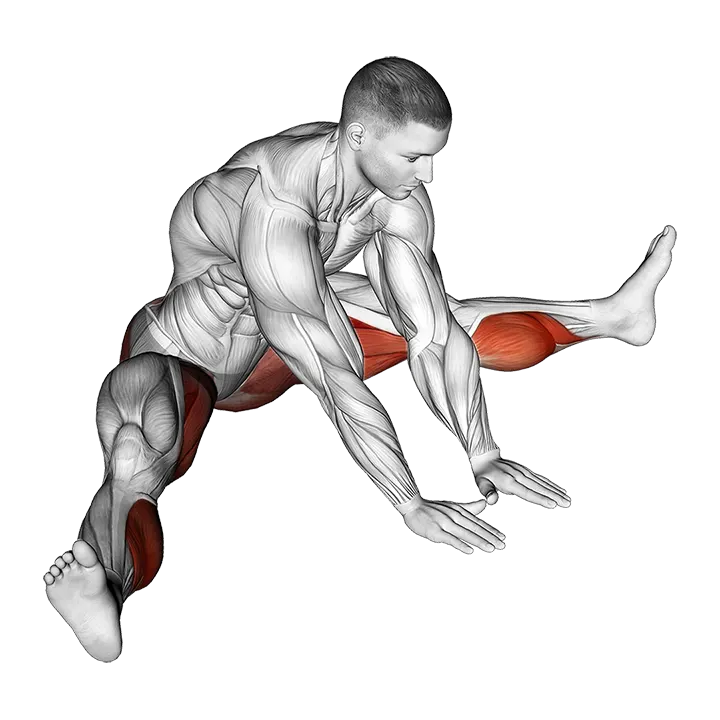
Seated Knee Flexor And Hip Adductor Stretch
- Músculo objetivo
- —
- Equipamiento
- Body weight
- Parte del cuerpo
- Thighs
- Tipo
- Stretching
The Seated Knee Flexor And Hip Adductor Stretch is a bodyweight flexibility exercise that simultaneously targets the hamstrings (knee flexors) and the inner thigh muscles (hip adductors). Performed seated on the floor with legs extended or spread, it is an effective stretch for improving hip mobility, reducing groin tightness, and relieving tension in the posterior thigh.
Cómo hacer el Seated Knee Flexor And Hip Adductor Stretch
- 1Sit on the floor with your legs extended straight out in front of you and your spine tall.
- 2Open your legs out to the sides into a wide V-shape, as far as is comfortable without straining.
- 3Flex your feet so your toes point toward the ceiling, engaging your legs and keeping your knees from rotating inward.
- 4Place your hands on the floor between your legs or on your thighs for light support.
- 5Inhale to lengthen your spine, then exhale and slowly hinge forward from your hips — not by rounding your lower back — until you feel a stretch in your inner thighs and along the back of your legs.
- 6Hold the deepest comfortable position for 20–40 seconds, breathing steadily and relaxing deeper into the stretch with each exhale.
- 7To release, walk your hands back, sit upright, and bring your legs back together slowly.
Consejos de técnica
- Hinge forward from the hips rather than curling your spine — initiating the movement from the lower back reduces the stretch on the target muscles and stresses the lumbar spine.
- Keep your knees pointing straight up toward the ceiling; letting them roll inward collapses the stretch and can strain the medial knee.
- Progress the range gradually — only go as wide with your legs as your hips allow without your pelvis tucking under.
- Use a folded blanket or yoga block under your sit bones if your pelvis tilts backward when you sit on the floor; elevating the hips makes it easier to maintain a neutral spine.
- Breathe continuously throughout the hold — holding your breath creates tension that works against the stretch.
Errores comunes
- Rounding the lower back instead of hinging at the hips, which shifts stress away from the adductors and hamstrings onto the lumbar spine.
- Forcing the legs too wide too quickly, which can overstretch the inner thigh tendons and cause groin strain.
- Letting the knees bend during the stretch, which reduces tension on the hamstrings and signals poor hip mobility rather than proper flexibility work.
- Holding the breath, which keeps the muscles in a state of tension and prevents you from deepening the stretch safely.
- Bouncing or pulsing into the stretch, which triggers the muscle's stretch reflex and increases the risk of a muscle pull.
Preguntas frecuentes
What muscles does the Seated Knee Flexor And Hip Adductor Stretch target?
It primarily stretches the hamstrings (the knee flexors along the back of the thigh) and the hip adductors (the inner thigh muscles including the adductor magnus, longus, and gracilis).
How long should I hold this stretch?
Hold for 20–40 seconds per set and aim for 2–3 sets. Holding at least 20 seconds gives the muscle time to relax past its initial stretch reflex, which is when the deeper flexibility benefit occurs.
How wide should I spread my legs?
Start with a comfortable width where you feel mild tension in the inner thighs, not pain. Over time, you can gradually increase the spread as flexibility improves.
When is the best time to do this stretch?
This stretch is best performed after a workout or warm-up when the muscles are already warm. Avoid doing deep static stretches on completely cold muscles, as they are less pliable and more prone to strain.
Can this stretch help with tight hips and groin?
Yes — regular practice of this stretch can improve hip adductor flexibility, reduce groin tightness, and support better hip mobility for activities like running, squatting, and cycling.







