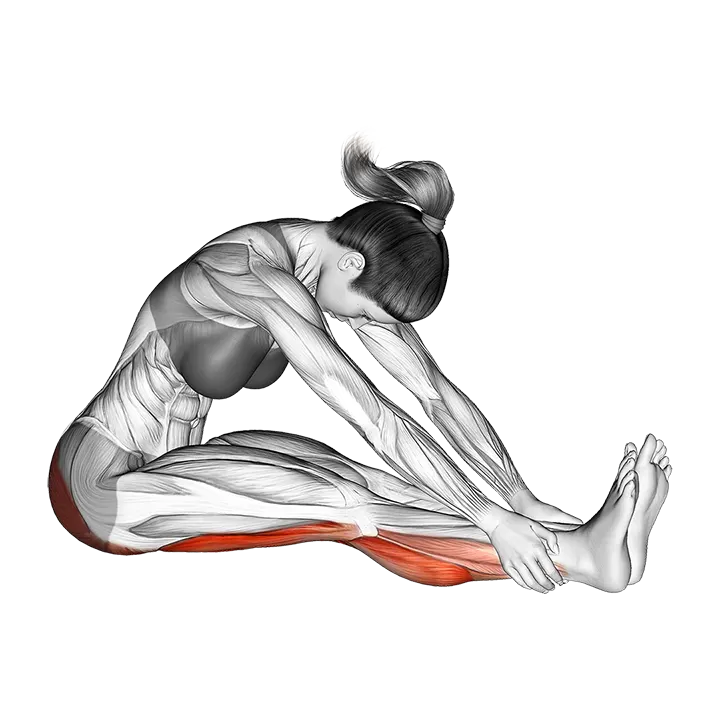
Seated Knee Flexor Stretch
- Músculo objetivo
- Gastrocnemius, Gluteus Maximus, Hamstrings
- Músculos sinergistas
- Soleus
- Equipamiento
- Body weight
- Parte del cuerpo
- Thighs
- Tipo
- Stretching
The Seated Knee Flexor Stretch is a body-weight flexibility exercise that targets the hamstrings, gluteus maximus, and gastrocnemius, with the soleus acting as a synergist. Performed from a seated position, it effectively lengthens the muscles along the back of the thigh and lower leg. This stretch is ideal for improving posterior chain flexibility, reducing tightness after lower-body training, and supporting healthy knee and hip range of motion.
Cómo hacer el Seated Knee Flexor Stretch
- 1Sit on the floor with both legs extended straight in front of you.
- 2Keep your back tall and your core lightly engaged throughout the movement.
- 3Flex your feet so your toes point upward toward the ceiling.
- 4Hinge forward from your hips — not your lower back — reaching your hands toward your feet.
- 5Slide your hands along your shins as far as comfortable without rounding your spine excessively.
- 6When you feel a moderate stretch along the back of your thighs and calves, hold the position.
- 7Maintain steady, relaxed breathing and allow the muscles to release with each exhale.
- 8Hold the stretch for 20–40 seconds, then slowly return to the upright seated position.
- 9Repeat 2–3 times, deepening the reach slightly with each repetition as flexibility allows.
Consejos de técnica
- Initiate the forward lean from your hip joint rather than collapsing through the lower back — think of pivoting your pelvis forward.
- Keep your knees fully extended and resist the urge to bend them to reach further; a bent knee reduces tension on the hamstrings.
- Dorsiflexing (pulling back) your feet increases the stretch on the gastrocnemius and soleus as well as the hamstrings.
- Relax your shoulders away from your ears and breathe deeply — tension in the upper body limits how far you can hinge forward.
- Use a folded towel or yoga strap looped around your feet if you cannot reach comfortably, to maintain proper spinal alignment.
Errores comunes
- Rounding the lower back instead of hinging at the hips: this shifts stress away from the hamstrings and onto the lumbar spine, increasing injury risk.
- Bending the knees to touch the toes: reduces the stretch on the hamstrings and gastrocnemius, defeating the purpose of the exercise.
- Holding the breath: tension in the body limits muscle release; continuous breathing allows the posterior chain to relax and lengthen more effectively.
- Forcing the stretch aggressively: bouncing or pulling hard on the feet can trigger the stretch reflex, causing muscles to tighten rather than release.
- Letting the feet fall outward: externally rotated feet reduce tension along the back of the leg; keep toes pointed straight up for optimal alignment.
Preguntas frecuentes
What muscles does the Seated Knee Flexor Stretch target?
The Seated Knee Flexor Stretch primarily targets the hamstrings, gluteus maximus, and gastrocnemius. The soleus, located beneath the gastrocnemius in the calf, acts as a synergist and also receives a meaningful stretch, especially when the feet are actively dorsiflexed.
How long should I hold the Seated Knee Flexor Stretch?
Aim to hold the stretch for 20–40 seconds per repetition. Research suggests that static stretches held for at least 20 seconds begin to produce lasting improvements in flexibility. Performing 2–3 repetitions, with brief rest in between, yields the best results for increasing hamstring and calf length.
When is the best time to do the Seated Knee Flexor Stretch?
This stretch is most effective as part of a cool-down after lower-body or cardiovascular workouts, when muscles are warm and more pliable. It can also be performed on rest days to maintain flexibility. Avoid intense static stretching on cold muscles before a workout, as it may temporarily reduce muscle force production.
Can the Seated Knee Flexor Stretch help with lower back pain?
Tight hamstrings can tilt the pelvis and increase strain on the lower back, so regularly stretching them with exercises like the Seated Knee Flexor Stretch may help reduce lower back tension. However, focus on hinging from the hips — not rounding the spine — to avoid placing additional stress on the lumbar region during the stretch itself.
I cannot reach my feet in this stretch — what should I do?
If your hamstrings or calves are too tight to maintain a straight spine while reaching your feet, loop a resistance band, yoga strap, or folded towel around the soles of your feet and hold the ends. This allows you to keep your back neutral and hinge properly from the hips while still achieving an effective stretch.







