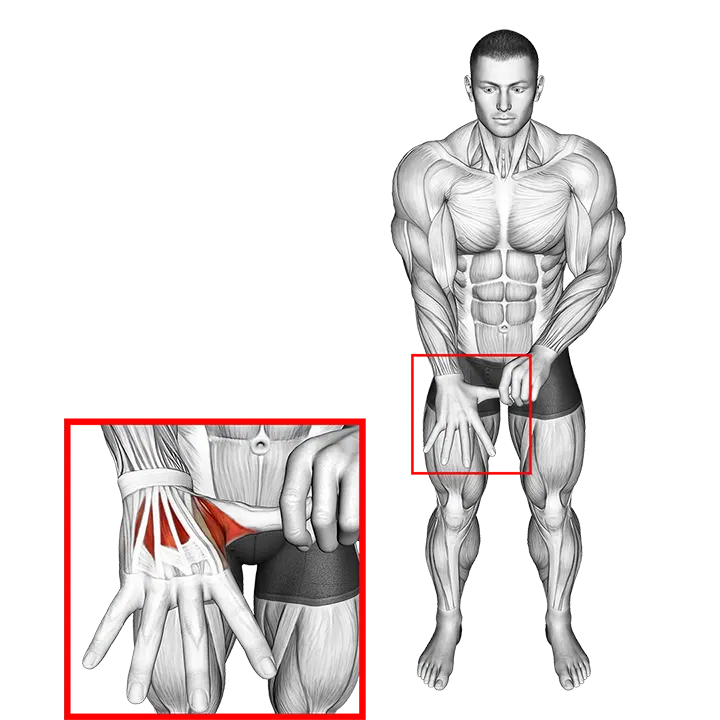
Separation Finger Stretch
- Músculo objetivo
- —
- Equipamiento
- Body weight
- Parte del cuerpo
- Forearms
- Tipo
- Stretching
The Separation Finger Stretch is a bodyweight stretching exercise that targets the intrinsic hand muscles, finger tendons, and forearm extensor tissues by spreading the fingers as wide apart as possible. It is ideal for improving finger mobility, relieving tension after gripping activities, and maintaining hand flexibility for everyday tasks and athletic performance.
Cómo hacer el Separation Finger Stretch
- 1Sit or stand in a comfortable, upright position with your shoulders relaxed.
- 2Extend one arm in front of you with your palm facing down and your elbow slightly soft.
- 3Spread all five fingers apart as wide as you can, creating as much space between each finger as possible.
- 4Hold the fully spread position for 5–10 seconds, feeling the stretch across the top of your hand and into your forearm.
- 5Relax your fingers back to a neutral position, then repeat the spread 3–5 times on the same hand.
- 6To deepen the stretch, use your opposite hand to gently press each finger outward one at a time.
- 7Switch to the other hand and repeat the same sequence.
- 8Perform 2–3 sets per hand, breathing steadily throughout.
Consejos de técnica
- Keep your wrist neutral and avoid hyperextending it backward while spreading your fingers.
- Move slowly into the full spread rather than forcing your fingers apart abruptly.
- Focus on maximizing the gap between every adjacent pair of fingers, not just the index and pinky.
- Pair this stretch with a fist clench between sets to alternately open and close the hand for fuller mobility work.
- Perform this stretch after prolonged typing, gripping, or climbing sessions when forearm fatigue is highest.
Errores comunes
- Forcing fingers apart too aggressively — rushing the spread can strain the finger joints and small tendons rather than providing a controlled stretch.
- Holding the wrist in extreme extension — bending the wrist far back while spreading fingers shifts stress onto the wrist rather than targeting the intended finger and forearm tissues.
- Holding the breath — breath-holding increases muscular tension and reduces the effectiveness of the stretch; breathe steadily throughout.
- Neglecting the thumb — allowing the thumb to stay close to the palm misses a significant portion of the hand; actively abduct the thumb outward as well.
- Cutting the hold time short — releasing too quickly before the tissues have a chance to relax limits the stretch benefit; aim for at least 5 seconds per hold.
Preguntas frecuentes
What muscles does the Separation Finger Stretch target?
The stretch primarily works the intrinsic muscles of the hand responsible for spreading the fingers (the dorsal interossei), the finger extensor tendons, and the forearm extensor muscles that run along the back of the forearm into the fingers.
How often should I do the Separation Finger Stretch?
For general hand health and mobility, performing 2–3 sets of 5–10 second holds per hand once or twice daily is sufficient. If you type, grip, or climb frequently, stretching after each session can help prevent stiffness and overuse tension.
Can the Separation Finger Stretch help with carpal tunnel symptoms?
It may offer relief from general hand and forearm tension, but carpal tunnel syndrome involves median nerve compression and requires a proper medical evaluation. Always consult a healthcare professional before using stretching as a treatment for diagnosed conditions.
Is the Separation Finger Stretch good for rock climbers or gymnasts?
Yes. Athletes who rely heavily on gripping benefit from this stretch because it counteracts the sustained finger flexion used in climbing and gymnastics, helping restore balance between the flexor and extensor sides of the forearm and hand.
Should I feel pain during the Separation Finger Stretch?
You should feel mild to moderate tension across the back of the hand and between the fingers, but never sharp or shooting pain. If you experience pain in the joints or a snapping sensation, stop immediately and consult a healthcare provider.







