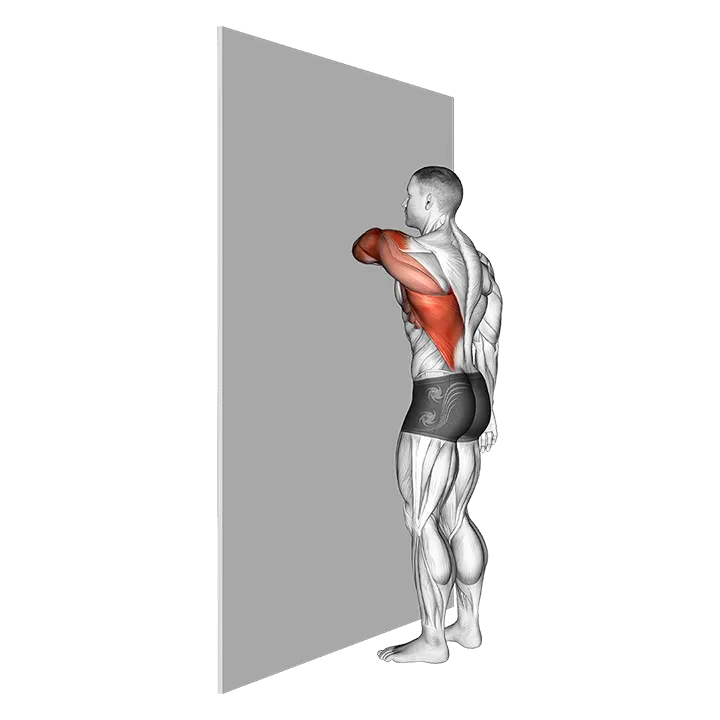
Shoulder Extensor Adductor And Retractor Stretch
- Músculo objetivo
- —
- Equipamiento
- Body weight
- Parte del cuerpo
- Shoulders
- Tipo
- Stretching
The Shoulder Extensor Adductor And Retractor Stretch is a bodyweight mobility exercise that targets the posterior deltoid, rhomboids, middle and lower trapezius, and latissimus dorsi by pulling one arm across or behind the body. It relieves tightness in the rear shoulder and upper back, making it an excellent cooldown or warm-up movement for pressing and pulling workouts.
Cómo hacer el Shoulder Extensor Adductor And Retractor Stretch
- 1Stand tall or sit upright with your feet shoulder-width apart and your spine neutral.
- 2Extend your right arm straight out in front of you at shoulder height, palm facing down.
- 3Bring the right arm horizontally across your chest toward the left shoulder.
- 4Hook your left forearm or hand under the right elbow to support and gently draw the arm closer to your chest.
- 5Keep your right shoulder down and away from your ear — do not let it shrug up.
- 6Hold the stretch for 20–30 seconds, breathing steadily and relaxing deeper into the position with each exhale.
- 7Release slowly and return the arm to the starting position.
- 8Repeat on the left side, holding for the same duration.
- 9Perform 2–3 rounds per side as part of your warm-up or cooldown routine.
Consejos de técnica
- Keep the stretching shoulder actively pressed down throughout — shrugging reduces tension on the posterior deltoid and rhomboids.
- Apply gentle, progressive pressure with the assisting arm rather than forcing the stretch; a sustained mild pull yields better results than a sharp tug.
- Rotate your torso slightly away from the stretching arm to deepen engagement of the rhomboids and middle trapezius.
- Breathe out slowly on each exhale and let the muscles release a little further — never hold your breath during a static stretch.
- If you feel pain in the front of the shoulder or the elbow joint, reduce the pull angle and check that the arm stays parallel to the floor.
Errores comunes
- Allowing the shoulder to shrug up toward the ear: this shifts tension away from the target muscles and places unnecessary stress on the neck and upper trapezius.
- Pulling the arm too aggressively: forcing the stretch past a comfortable range of motion can strain the posterior capsule and rotator cuff tendons, especially if the shoulder is already tight.
- Rotating the trunk away too much too soon: while a slight rotation deepens the stretch, excessive twisting turns it into a torso rotation exercise and reduces the isolated shoulder benefit.
- Bending the elbow of the stretching arm: a bent elbow shortens the lever arm and reduces the stretch on the adductors and extensors; keep the arm as straight as comfortably possible.
- Holding the stretch for too short a time: bouncing or releasing after only a few seconds does not allow the muscle to relax; aim for at least 20 seconds to achieve meaningful elongation.
Preguntas frecuentes
What muscles does the Shoulder Extensor Adductor And Retractor Stretch target?
The stretch primarily targets the posterior deltoid, rhomboids (major and minor), middle and lower trapezius, and the upper portion of the latissimus dorsi — all muscles responsible for extending, adducting, and retracting the shoulder girdle.
When is the best time to do this stretch?
It works well both as a warm-up to prepare the shoulder joint for pressing or pulling exercises and as a cooldown to relieve post-workout tightness. Holding for 20–30 seconds during a cooldown produces the greatest improvement in flexibility over time.
Can this stretch help with rounded shoulders or poor posture?
Yes. Tight shoulder extensors and retractors can contribute to a rounded upper-back posture. Regularly stretching these tissues, combined with strengthening the opposing muscles, can gradually improve shoulder alignment and thoracic posture.
How often should I perform this stretch?
For general mobility maintenance, 2–3 sessions per week is effective. If you sit at a desk for long periods or frequently perform overhead or pushing movements, daily stretching of this area is beneficial and safe.
I feel a pinch in the front of my shoulder when I do this stretch — is that normal?
A pinch or sharp pain at the front of the shoulder is not normal and may indicate anterior capsule compression or rotator cuff irritation. Lower the arm angle slightly, reduce the pulling force, and consult a physiotherapist if the discomfort persists.







