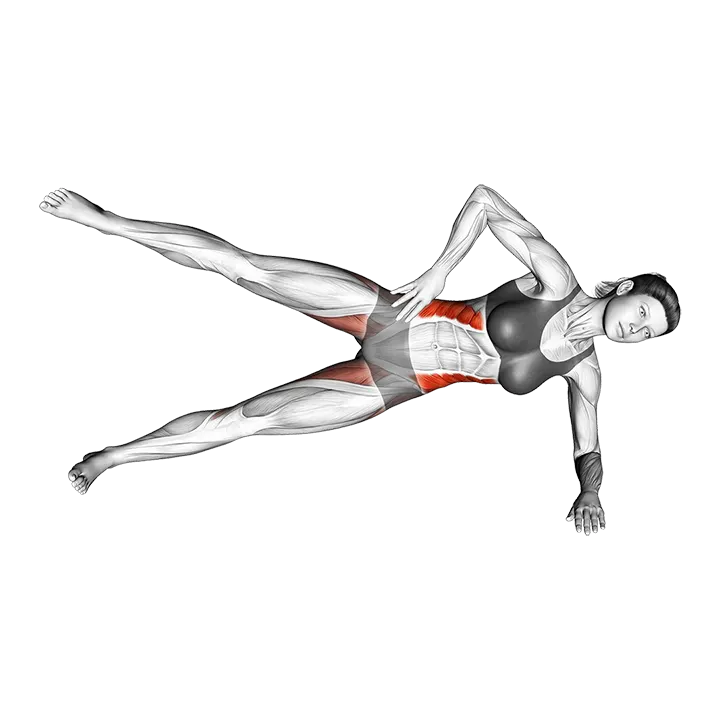
Side Plank with Raised Leg (VERSION 2)
- Músculo objetivo
- —
- Equipamiento
- Body weight
- Parte del cuerpo
- Waist
- Tipo
- Strength
The Side Plank with Raised Leg (Version 2) is a lateral core and hip stability exercise that challenges the entire waist and lateral chain by holding a side plank position while keeping the top leg elevated. Version 2 is typically performed with the supporting arm fully extended (hand on the floor rather than the forearm), increasing the demand on the shoulder and obliques. It is excellent for building anti-lateral-flexion core strength, hip abductor endurance, and shoulder stability using only body weight.
Cómo hacer el Side Plank with Raised Leg (VERSION 2)
- 1Begin by placing your hand flat on the floor directly beneath your shoulder, arm fully extended, and stacking your feet or placing them slightly offset for balance.
- 2Lift your hips off the floor to form a straight line from head to heel, engaging your obliques and glutes to prevent sagging or rotation.
- 3Stack your shoulders so they are vertically aligned, and keep your chest open — avoid letting your torso roll toward the floor.
- 4Extend your free arm toward the ceiling to help maintain balance and keep the body square.
- 5Once stable, slowly raise the top leg until it is roughly hip height, keeping it straight and toes pointing forward or slightly down.
- 6Hold the position, breathing steadily, for the target duration while maintaining a rigid torso and elevated leg.
- 7To finish, lower the top leg with control, then lower your hips back to the floor and rest before switching sides.
Consejos de técnica
- Drive your supporting hand into the floor actively — pressing away from the ground helps brace the shoulder and keeps the torso from collapsing.
- Think of making your body one long diagonal plank: check that your hips are neither sagging toward the floor nor piked upward.
- Squeeze your glutes and brace your core as a unit throughout the hold — do not rely solely on the obliques.
- Keep the raised leg controlled and still; avoid letting it drift forward or backward, which shifts the work away from the lateral hip.
- Start with shorter holds (15–20 seconds) and build duration before increasing the height of the raised leg.
Errores comunes
- Letting the hips sag toward the floor, which removes tension from the lateral core and places stress on the lower back.
- Rolling the torso forward or backward instead of staying stacked, which turns the exercise into a poor push-up position rather than a true side plank.
- Bending the knee of the raised leg, which reduces the lever arm and diminishes the hip abductor demand.
- Holding the breath throughout the hold, which spikes intra-abdominal pressure and accelerates fatigue — breathe steadily throughout.
- Placing the supporting hand too far in front of or behind the shoulder, which destabilizes the wrist and elbow and limits how long the position can be held safely.
Preguntas frecuentes
What makes Version 2 different from the standard Side Plank with Raised Leg?
Version 2 is typically performed with the supporting arm fully extended and the hand on the floor, rather than resting on the forearm. This higher position increases the range of motion at the shoulder and demands more stability from the rotator cuff and serratus anterior compared to the forearm variation.
What part of the body does this exercise target?
It primarily targets the lateral core and waist area — including the obliques and quadratus lumborum — along with the hip abductors of the raised leg and the stabilizing muscles of the supporting shoulder. Because no single target muscle is dominant, it functions as a full lateral-chain stability drill.
How long should I hold the position?
Beginners can aim for 15–20 seconds per side. As strength and stability improve, work toward 30–45 seconds. Prioritize quality of position over raw duration — reduce the hold time rather than letting form break down.
Can I do this exercise if I have wrist discomfort?
If the extended-arm position aggravates your wrist, switch to the forearm version (Version 1) until wrist strength and mobility improve. You can also use a fist grip or parallette handles to reduce wrist extension.
How many sets and reps should I do?
Two to three sets per side, holding for 20–40 seconds each, works well for most goals. Rest 30–60 seconds between sides. You can also count slow, controlled leg raises instead of a static hold to add a dynamic challenge.







