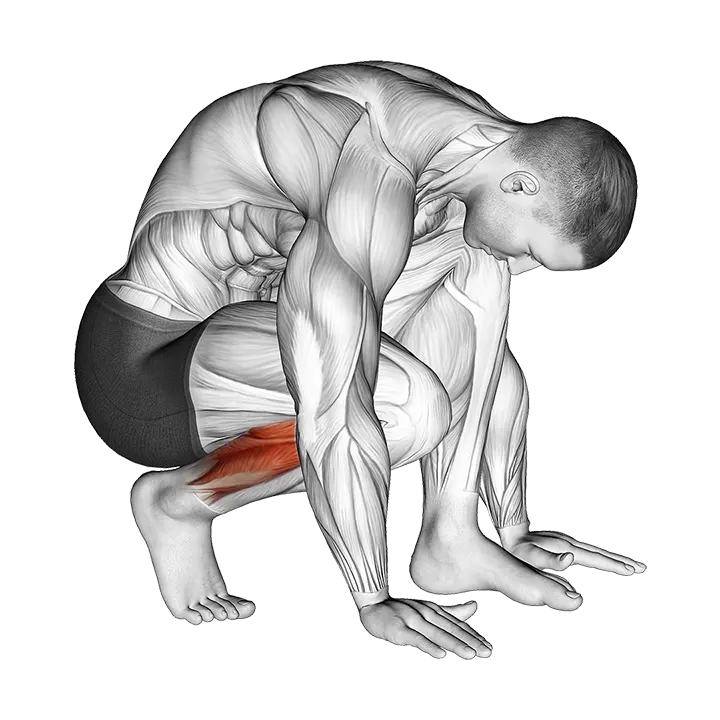
Squatting Toe Stretch
- Músculo objetivo
- —
- Equipamiento
- Body weight
- Parte del cuerpo
- Calves
- Tipo
- Stretching
The Squatting Toe Stretch is a bodyweight flexibility exercise that targets the plantar fascia, toe extensors, and calf muscles along the entire underside of the foot. Performed in a deep squat position with the toes curled upward, it opens up the connective tissue that is often tight from prolonged sitting or athletic activity. It is an effective stretch for improving foot mobility and relieving tension in the calves and soles.
Cómo hacer el Squatting Toe Stretch
- 1Kneel on the floor with both knees together and your toes tucked under so the balls of your feet and all ten toes press into the ground.
- 2Place your hands on your thighs or on the floor in front of you for balance.
- 3Slowly sit your hips back toward your heels, lowering your body weight onto the tucked toes. Stop when you feel a deep stretch through the soles of your feet and calves — not pain.
- 4Straighten your back as much as comfortable, keeping your chest lifted rather than hunching forward.
- 5Hold the position for 30–60 seconds, breathing steadily and allowing the stretch to deepen as the tissue relaxes.
- 6To release, shift your weight forward slightly, untuck your toes, and return to a neutral kneeling position.
- 7Repeat for 2–3 rounds, resting briefly between holds.
Consejos de técnica
- Distribute your weight evenly across all ten toes, including the little toe — rolling inward onto the big toe reduces the effectiveness of the stretch and can irritate the arch.
- Keep your torso upright throughout the hold. Leaning forward takes weight off the toes and shortens the stretch through the plantar fascia.
- If the stretch is too intense at first, place a folded blanket or yoga block between your thighs and calves to reduce how far your hips descend toward your heels.
- Breathe slowly and let gravity do the work — actively pushing your hips down will create excessive pressure before the tissue is ready to release.
Errores comunes
- Tucking only the big toe or letting the outer toes lift off the floor — this creates uneven tension across the foot and misses the lateral plantar fascia where tightness often accumulates.
- Rushing the descent by dropping the hips too quickly, which can cause sharp discomfort in the toe joints rather than a gradual stretch through the connective tissue. Lower your hips slowly and stop before any sharp pain.
- Rounding the upper back heavily and letting the chest collapse, which reduces the stretch in the calves and makes it harder to maintain balance in the squat position.
- Holding your breath during the stretch — this increases tension throughout the body and prevents the fascia and calves from releasing. Exhale slowly on the way down and breathe continuously through the hold.
- Skipping the stretch entirely after training because discomfort is expected — mild intensity is normal, but if you experience sharp joint pain in the toes or top of the foot, reduce depth and consult a professional.
Preguntas frecuentes
What does the Squatting Toe Stretch actually stretch?
The primary target is the plantar fascia — the thick band of connective tissue running along the sole of the foot — along with the toe flexor tendons and the calf muscles that attach through the Achilles tendon. Together these structures govern most of the tightness felt in the bottom of the foot.
Is the Squatting Toe Stretch good for plantar fasciitis?
Gentle stretching of the plantar fascia is widely recommended as part of plantar fasciitis management, and this exercise directly addresses that tissue. Start with a shallow position and shorter holds, and check with a physiotherapist if you have an active injury before adding load to an inflamed area.
How long should I hold the Squatting Toe Stretch?
Aim for 30–60 seconds per hold to allow the connective tissue enough time to release. Two to three rounds after a workout or as a stand-alone mobility session is enough to see improvements in foot and calf flexibility over time.
My toes hurt when I sit back — is that normal?
A deep, pulling discomfort through the soles and calves is expected and normal. Sharp pain specifically in the toe joints or on the top of the foot is not normal and usually means you are descending too far too soon — reduce depth, use a support under your hips, and build the stretch gradually over several sessions.
When is the best time to do this stretch?
The Squatting Toe Stretch works well at the end of a workout when tissue is warm, or as part of a morning mobility routine to loosen the plantar fascia after hours of inactivity. Avoid performing it as a cold stretch immediately before heavy lower-body training.







