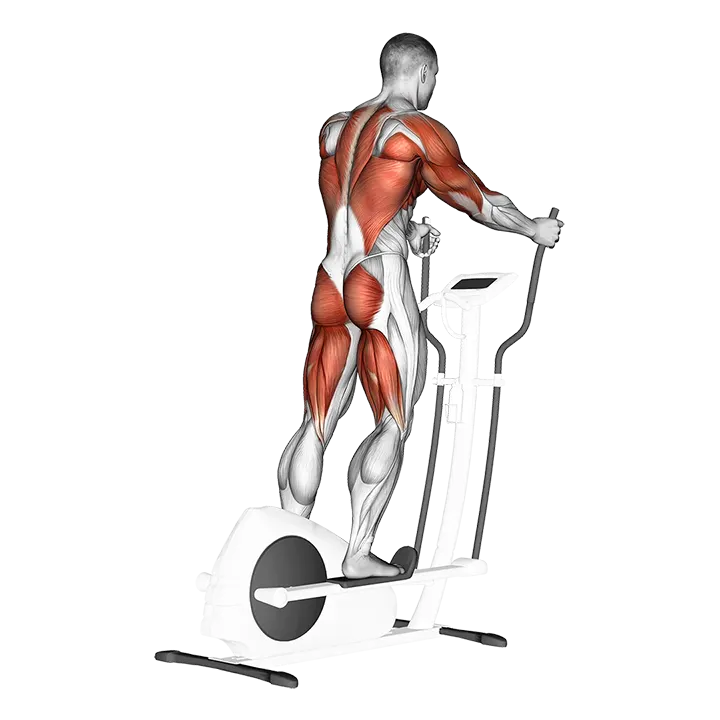
Walk (equipment)
- Músculo objetivo
- —
- Equipamiento
- Body weight
- Parte del cuerpo
- Cardio
- Tipo
- Aerobic
Walk (equipment) is a low-impact aerobic exercise performed on cardio equipment such as a treadmill, delivering steady-state cardiovascular conditioning without placing excessive stress on the joints. It is suitable for all fitness levels, including beginners, those recovering from injury, and anyone seeking an accessible way to improve heart health, burn calories, and build endurance. Regular structured walking sessions support weight management and long-term cardiovascular fitness.
Cómo hacer el Walk (equipment)
- 1Step onto the treadmill or cardio equipment and stand with feet on either side of the belt before starting.
- 2Set the speed to a comfortable warm-up pace (1.5–2.5 mph) and step onto the moving belt, holding the handrails briefly until you feel balanced.
- 3Stand tall with your head up, shoulders relaxed and pulled back, and your gaze directed forward rather than down at your feet.
- 4Swing your arms naturally in opposition to your legs — left arm forward with right foot, right arm forward with left foot — keeping elbows bent at roughly 90 degrees.
- 5Strike the ground with your heel first and roll smoothly through the midfoot to the ball of your foot with each stride.
- 6Breathe rhythmically: inhale for two steps and exhale for two steps, maintaining a pace at which you can hold a conversation.
- 7Gradually increase speed or incline to reach your target workout intensity once warmed up.
- 8Maintain your upright posture throughout — avoid gripping the handrails for extended periods, as this reduces the cardiovascular demand.
- 9At the end of your session, reduce speed progressively over 2–3 minutes to cool down before stepping off the equipment.
Consejos de técnica
- Keep your core lightly engaged throughout the walk to support your lower back and maintain an upright posture.
- Let your arms swing freely rather than holding or gripping the handrails — this increases caloric expenditure and keeps your gait natural.
- Use the incline setting to increase intensity without raising speed, which is gentler on the joints and challenges the cardiovascular system effectively.
- Land with a soft heel strike rather than a heavy, flat-footed slap, which reduces impact and protects the knees.
- Track your heart rate to stay within your target aerobic zone (roughly 50–70% of maximum heart rate for moderate-intensity walking).
Errores comunes
- Leaning too far forward or backward: tilting the torso shifts your center of gravity, strains the lower back, and creates an unnatural gait that reduces efficiency.
- Gripping the handrails throughout the session: hanging on the rails offloads body weight, artificially lowers your perceived effort, and reduces calorie burn compared to walking freely.
- Taking excessively long strides: overstriding causes your foot to land well in front of your hips, creating a braking force that increases joint stress and reduces walking efficiency.
- Staring down at your feet: looking down causes the neck and upper back to round, leading to poor posture and potential discomfort during longer sessions.
- Skipping the warm-up and cool-down: starting or stopping at full intensity without transitional pacing does not allow the cardiovascular system to adjust gradually, increasing the risk of dizziness and discomfort.
Preguntas frecuentes
How long should I walk on a treadmill for cardiovascular benefit?
The American Heart Association recommends at least 150 minutes of moderate-intensity aerobic activity per week, which can be broken into 30-minute sessions five days a week. Even shorter bouts of 10–15 minutes count toward this total, making treadmill walking highly flexible for any schedule.
Is walking on a treadmill as effective as walking outdoors?
Treadmill walking is broadly comparable to outdoor walking for cardiovascular conditioning at equivalent speeds and durations. Setting the incline to 1% approximates the slight extra effort of outdoor terrain and air resistance, making the calorie burn more similar to walking outside.
What speed on the treadmill is considered a brisk walk?
A brisk walking pace is generally 3.0–4.0 mph on a treadmill, producing a moderate intensity where your breathing quickens but you can still carry on a conversation. Individuals newer to exercise may find brisk walking at the lower end of this range, while fitter individuals may need 3.5–4.0 mph or added incline.
Should I hold the handrails while walking on the treadmill?
Holding the handrails for brief moments to check balance or adjust settings is fine, but prolonged gripping is discouraged. It reduces the workload on your cardiovascular system, supports body weight artificially, and disrupts the natural arm swing that contributes to gait efficiency and calorie burn.
Can I lose weight by walking on a treadmill?
Yes. Consistent treadmill walking creates a caloric deficit when combined with appropriate nutrition, supporting gradual, sustainable weight loss. Increasing duration, speed, or incline over time progressively raises energy expenditure, making treadmill walking an effective long-term tool for weight management.







