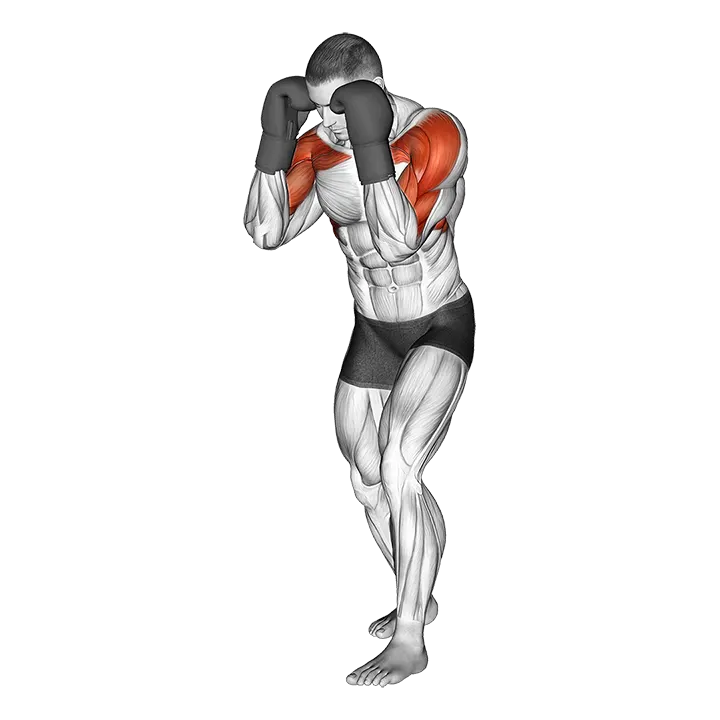
Boxing Block
- Target muscle
- —
- Equipment
- Body weight
- Body part
- Plyometrics
- Type
- Aerobic
The boxing block is a body-weight defensive drill where you hold a tight boxing guard and raise your gloves and forearms to shield your head from incoming punches. Worked in continuous rounds, it conditions the shoulders, arms, and core while reinforcing footwork and stance, making it a practical aerobic and plyometric workout for boxers and fitness training alike.
How to do the Boxing Block
- 1Stand in a boxing stance with your lead foot forward, feet about shoulder-width apart, knees softly bent, and weight balanced on the balls of your feet.
- 2Tuck your chin down toward your chest and bring both hands up so your gloves sit beside your cheekbones in a tight guard.
- 3Keep your elbows pulled in close to your ribs to protect your body and your forearms vertical to cover your head.
- 4As a punch comes in, raise your forearm and glove to meet it, absorbing the impact on your gloves or forearms rather than your head.
- 5Stay light on your feet, making small adjusting steps to keep your stance and balance as you block.
- 6Reset your hands straight back to the guard position immediately after each block, without dropping them.
- 7Continue blocking and shuffling for the full round, keeping your breathing steady and your core braced.
- 8At the end of the round, lower your hands, relax your shoulders, and recover before the next set.
Form tips
- Keep your hands high and your elbows tight so there are no gaps in your guard for a punch to slip through.
- Stay relaxed between blocks — tensing your whole body for the entire round wastes energy and slows your hands.
- Move your feet and torso rather than reaching with your arms, so you stay balanced and ready to counter.
- Exhale on each block and breathe rhythmically through the round to sustain the aerobic pace.
- Keep your chin tucked the entire time so your guard, not your jaw, takes any contact.
Common mistakes
- Dropping your hands as you tire, which exposes your head and defeats the purpose of the block.
- Letting your elbows flare out, leaving your ribs and the sides of your head unprotected.
- Lifting your chin or leaning your head back, which puts the jaw in line for a clean shot.
- Standing flat-footed and rigid, which kills your balance and your ability to reset and move.
- Holding your breath through the round, which spikes fatigue and ruins the conditioning benefit.
Frequently asked questions
What muscles does the boxing block work?
As a body-weight conditioning drill it mainly engages the shoulders and arms to hold and raise the guard, plus the core and legs that keep you braced and balanced in your stance. It is trained for cardiovascular conditioning rather than building any single muscle.
How should I position my hands and stance?
Stand in a staggered boxing stance with feet about shoulder-width apart and weight on the balls of your feet. Keep your gloves beside your cheekbones, elbows tucked to your ribs, and chin down so your guard covers your head.
Is the boxing block good for beginners?
Yes. It uses only your body weight and teaches a fundamental defensive position, so it suits beginners. Start with shorter rounds and focus on keeping your guard tight and your feet moving before extending the time.
How long should I hold the block during a conditioning round?
Work in timed rounds, such as two to three minutes with a short rest between, for three to five rounds. Keep your guard up and stay continuously moving to make it an effective aerobic workout.







