
Dynamic Back Stretch
- Target muscle
- Latissimus Dorsi, Teres Major
- Equipment
- Body weight
- Body part
- Back
- Type
- Stretching
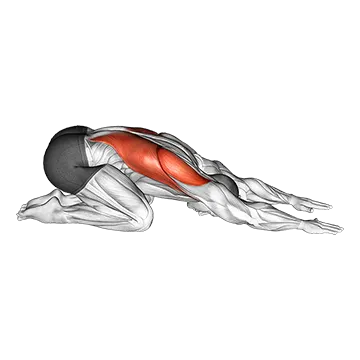

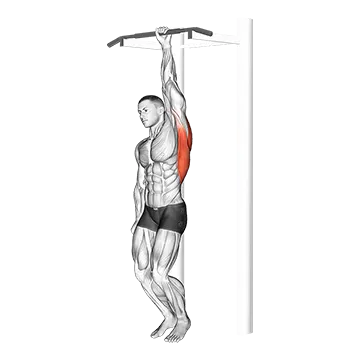

The dynamic back stretch is a bodyweight mobility movement that opens up the lats (latissimus dorsi) and the teres major along the side of the back. Instead of holding one position, you move smoothly in and out of the stretch to warm up the upper body and improve range of motion before back or pulling work.
How to do the Dynamic Back Stretch
- 1Stand tall with your feet shoulder-width apart, or kneel facing a sturdy surface such as a bench, rack, or doorframe to hold onto.
- 2Reach one or both arms overhead and take hold of the surface, keeping your grip relaxed and your arms roughly shoulder-width apart.
- 3Exhale as you sit your hips back and let your chest sink between your arms, feeling a gentle stretch spread down the side of your back and through the lats.
- 4Move only as far as feels like an easy, comfortable stretch, keeping your spine long rather than rounding your lower back.
- 5Inhale as you smoothly return to the upright start position, releasing the stretch without letting go of the surface.
- 6Repeat the movement in slow, controlled reps, gradually increasing your range as the muscles loosen.
- 7Switch sides if you are stretching one arm at a time, then finish standing tall and relaxed.
Form tips
- Move at a slow, deliberate tempo so each rep flows in and out of the stretch rather than snapping into the end range.
- Sync your breathing with the movement — exhale as you sink into the stretch, inhale as you return.
- Increase your range gradually across reps instead of forcing depth on the first repetition.
- Keep your shoulders pulling away from your ears and your core lightly braced to protect your lower back.
Common mistakes
- Bouncing or jerking into the end range, which can strain the muscle instead of warming it up.
- Pushing into a deep, painful stretch — overstretching irritates the tissue rather than mobilizing it.
- Rounding the lower back to reach further, which shifts tension away from the lats and onto the spine.
- Holding your breath, which tightens the upper body and limits how freely you can move.
Frequently asked questions
What muscles does the dynamic back stretch work?
It targets the latissimus dorsi (the broad muscles along the sides of your back) and the teres major just below the shoulder, helping them loosen and lengthen.
Is the dynamic back stretch good for beginners?
Yes. It uses only your bodyweight and a surface to hold, and you control the range, so beginners can start shallow and gradually move deeper as they warm up.
Should I do this before or after my workout?
Use it as part of a warm-up before back or pulling exercises. Dynamic stretches prepare the muscles for movement, whereas long static holds are better suited to after training.
How many reps of the dynamic back stretch should I do?
Aim for around 8–12 slow, controlled reps per side, gradually increasing your range. Stop short of any sharp or painful stretch.