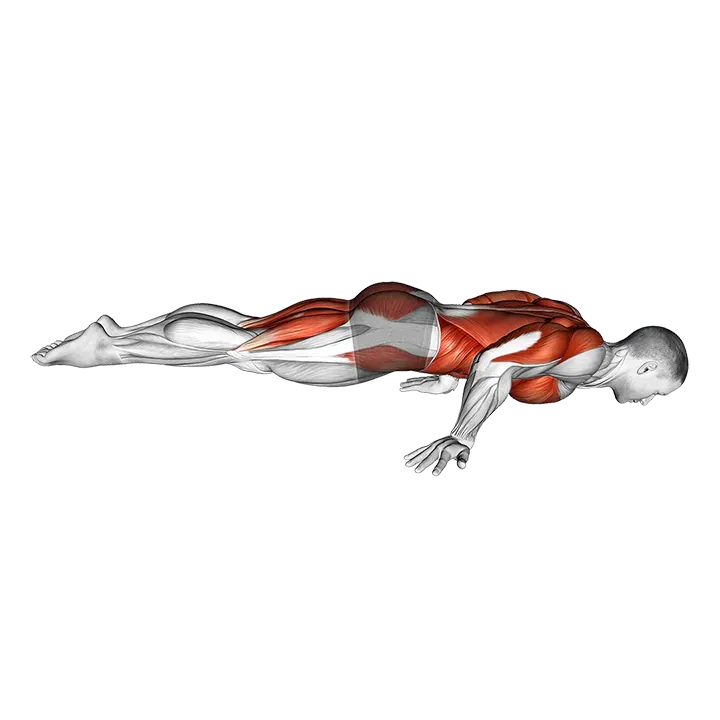
Elbow Planche
- Target muscle
- —
- Equipment
- Body weight
- Body part
- Stretching
- Type
- Stretching
The elbow planche is a bodyweight static hold in which you balance your whole body parallel to the floor, supported only on your forearms and elbows with your feet lifted off the ground. It demands and builds whole-body control, engaging the core, shoulders, and arms as you resist gravity, and serves as an accessible entry point toward the full straight-arm planche.
How to do the Elbow Planche
- 1Kneel on the floor and place your forearms down with your palms flat, positioning your elbows roughly under or slightly behind your hips.
- 2Lean your weight forward over your hands, letting your shoulders travel out past your elbows while keeping your forearms pressed into the floor.
- 3Brace your core and squeeze your glutes, then gradually shift more weight onto your forearms until your knees feel light.
- 4Extend one leg back at a time and lift your feet off the floor, straightening your body into a line from head to heels.
- 5Find your balance point by adjusting how far your shoulders lean forward, keeping your body parallel to the ground.
- 6Hold the position for time, breathing steadily and keeping your hips level with your shoulders.
- 7To finish, lower your knees back to the floor under control and bring your shoulders back over your elbows to release.
Form tips
- Lean your shoulders forward past your elbows — the further your weight shifts forward, the easier it is to balance your hips and legs off the floor.
- Keep your core braced and your glutes squeezed so your hips don't sag, which keeps the body in one rigid line.
- Press your forearms firmly into the floor throughout the hold to stay stable and protect your shoulders and wrists.
- Build up gradually with easier progressions such as a tucked or single-leg position before attempting the full straight-body hold.
- Warm up your shoulders and wrists first, and practice on a soft surface so a loss of balance is low-risk.
Common mistakes
- Letting the hips sag or pike upward, which breaks the parallel body line and shifts the hold away from a true planche.
- Not leaning the shoulders far enough forward, which leaves too much weight behind the elbows so the feet won't stay up.
- Holding your breath while gripping for balance, which raises tension and shortens how long you can hold the position.
- Forcing the full hold before you have the control for it, risking a sudden collapse onto your face or wrists.
Frequently asked questions
What muscles does the elbow planche work?
As a full-body static hold, it engages the core, shoulders, and arms to keep the body rigid and parallel to the floor. Treat it as a whole-body balance and tension exercise rather than an isolation movement.
Is the elbow planche good for beginners?
It is an advanced balance hold, but the elbow (forearm) support makes it more accessible than the full straight-arm planche. Beginners should start with easier progressions like a tucked or single-leg hold and build up gradually.
How long should I hold the elbow planche?
Aim for short holds of 5–15 seconds and repeat for a few sets, stopping before your form breaks. Quality of the hold matters more than chasing a longer time with sagging hips.
How do I keep my balance in the elbow planche?
Lean your shoulders forward past your elbows to counterbalance your legs, press your forearms into the floor, and keep your core and glutes tight. Small forward and back shifts of your shoulders fine-tune the balance point.







