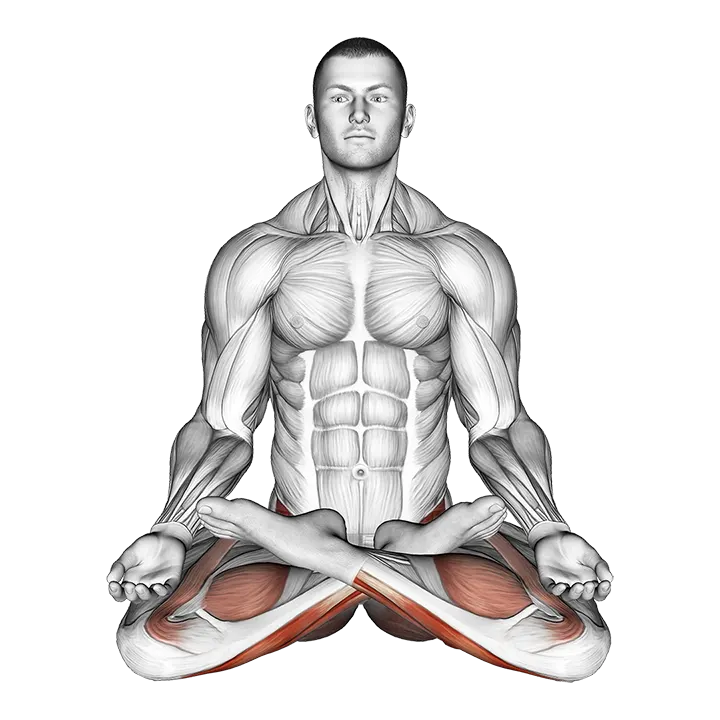
Full Lotus Yoga Pose
- Target muscle
- Gluteus Medius, Tibialis Anterior
- Synergist muscles
- Gastrocnemius, Sartorius, Tensor Fasciae Latae
- Equipment
- Body weight
- Body part
- Hips
- Type
- Stretching
The full lotus yoga pose (Padmasana) is an advanced seated mobility pose that deeply opens the hips while stretching the outer hip and glute (gluteus medius and tensor fasciae latae), the shin (tibialis anterior), and the calf (gastrocnemius). Each foot rests on the opposite thigh, making it a demanding stretch for the hips, knees, and ankles best used for hip mobility and seated meditation once you have the flexibility to enter it safely.
How to do the Full Lotus Yoga Pose
- 1Sit tall on the floor (or on a folded blanket to lift the hips) with your legs extended in front of you and your spine long.
- 2Bend your right knee and use your hands to bring the right foot toward you, then place the top of the right foot high onto the left thigh, near the hip crease, sole turned up.
- 3Bend your left knee and gently guide the left foot over the right shin, resting the top of the left foot high onto the right thigh so both feet are on opposite thighs.
- 4Let both knees settle toward the floor without forcing them; ease off immediately if you feel any pinch or pain in the knees.
- 5Lengthen your spine, stack your head over your hips, and draw your shoulders down and back so the chest stays open.
- 6Rest your hands on your knees or thighs and breathe slowly, holding the pose for 30 seconds to a few minutes as comfort allows.
- 7To exit, unstack the legs one at a time with your hands, extend both legs forward, and shake them out before switching the crossing on the next round.
Form tips
- Build up to full lotus over time through easier hip openers such as easy pose (Sukhasana) and half lotus before attempting both feet up.
- Sit on a folded blanket or cushion to tilt the pelvis forward, which lets the knees drop more naturally and protects the lower back.
- Alternate which foot crosses on top from session to session so both hips and ankles open evenly.
- Warm the hips, knees, and ankles first with gentle circles and stretches so the joints are prepared before you fold into the pose.
Common mistakes
- Forcing the knees down toward the floor, which strains the knee ligaments and can cause lasting joint injury — the opening must come from the hips, not the knees.
- Placing the feet low on the shins or knees instead of high on the opposite thighs, which loads the knee joint sideways instead of stretching the hips.
- Jumping straight into full lotus without the hip flexibility for it, skipping the half-lotus and easy-pose progressions that build the range safely.
- Rounding the lower back and slumping, which collapses the chest and shifts strain off the hips and onto the spine.
Frequently asked questions
What muscles does full lotus stretch?
It mainly stretches the outer hip and glute (gluteus medius) and the shin (tibialis anterior), with the calf (gastrocnemius), sartorius, and outer hip (tensor fasciae latae) also opening as the hips externally rotate.
Is full lotus bad for your knees?
It is only risky if you force it. The pose should open from the hips, not the knees — if your hips lack the external rotation, the strain transfers to the knee ligaments. Never push the knees down, and back off at any pinch or pain.
How do I work up to full lotus?
Start with easy pose (Sukhasana), then half lotus with one foot on the opposite thigh, and spend time on hip-opening stretches. Only progress to full lotus once both hips rotate openly and half lotus feels comfortable.
Is full lotus good for beginners?
No. Full lotus is an advanced pose that requires open hips, knees, and ankles. Beginners should build hip mobility with easy pose and half lotus first rather than attempting both feet on the thighs.
How long should I hold full lotus?
Hold for 30 seconds to a few minutes as comfort allows, breathing slowly. Exit if you feel knee pain or numbness, and alternate which leg crosses on top so both hips open evenly.







