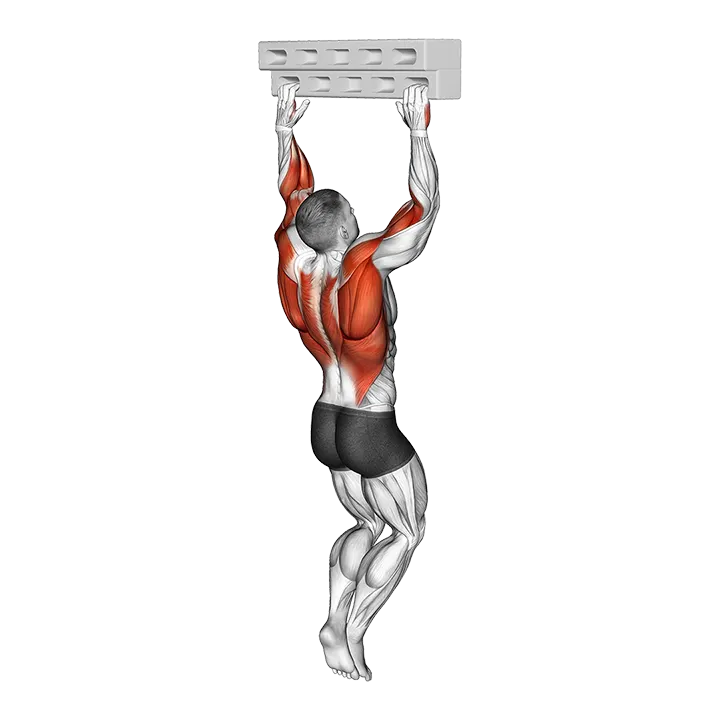
Handboard Hang with 135 Degree Elbow
- Target muscle
- —
- Equipment
- Body weight
- Body part
- Forearms
- Type
- Stretching
The handboard hang with 135 degree elbow is a body-weight isometric hold that builds grip and forearm strength by hanging from a hangboard with your elbows bent to roughly 135 degrees. Holding this partly flexed position keeps tension on the forearm muscles and finger flexors while training the climbing-style grip used to support your bodyweight.
How to do the Handboard Hang with 135 Degree Elbow
- 1Set the hangboard at a height where you can reach it with your arms nearly straight, then chalk your hands if you have it.
- 2Grip the edge or holds with all fingers, keeping your wrists firm and neutral rather than letting them collapse.
- 3Lift your feet so your body weight loads your hands, allowing your arms to take the hang.
- 4Pull yourself up partway until your elbows are bent to roughly 135 degrees, so your forearms are working under load rather than hanging fully passive.
- 5Set your shoulders down and slightly back to keep your shoulder blades engaged instead of letting your shoulders shrug up to your ears.
- 6Hold the position still, breathing steadily, and feel the effort in your forearms and grip.
- 7Hold for your target time, usually around 5 to 15 seconds, keeping the elbow angle and grip steady throughout.
- 8Lower your feet back to the floor under control to release the hang, then rest before the next hold.
Form tips
- Keep the elbow angle fixed at about 135 degrees for the whole hold — drifting straighter or curling up changes which part of the movement you train.
- Engage your shoulder blades and keep your shoulders down and slightly back so the hang stays active, not a dead, passive hang on the joints.
- Breathe steadily through the hold instead of holding your breath, which helps you keep tension and stay relaxed everywhere except your working forearms.
- Build up hold times and total volume gradually, since fingers and forearm tendons adapt more slowly than larger muscles.
Common mistakes
- Letting the shoulders shrug up to the ears and going fully passive, which loads the joints and connective tissue instead of building active grip strength.
- Letting the elbows straighten out of the 135 degree position during the hold, which drops the forearm tension the exercise is meant to keep.
- Holding your breath through the hang, which spikes tension everywhere and makes the hold harder to sustain.
- Pushing hold times or training too often too soon, which overloads the finger tendons and raises the risk of a grip or elbow injury.
Frequently asked questions
What muscles does the handboard hang with 135 degree elbow work?
It mainly works the forearms and grip — the finger flexors and forearm muscles that close your hand and support your body weight on the board. Keeping the elbows bent and shoulders engaged also calls on the surrounding arm and shoulder-girdle muscles to stabilize the hang.
How long should I hold each hang?
Aim for short, quality holds of roughly 5 to 15 seconds while you can keep the elbow angle and grip steady. Rest fully between hangs and stop the set once your grip starts to slip or your form breaks down.
Why bend the elbows to 135 degrees instead of hanging with straight arms?
Bending to about 135 degrees keeps the forearms and grip actively loaded rather than letting you hang passively on straight arms. It trains grip strength in a partly flexed position close to the angles used when pulling on holds.
Is the handboard hang with 135 degree elbow good for beginners?
It can be, as long as you start with short holds and add time slowly. Because it loads the finger tendons, beginners should keep the volume conservative and only progress once the grip feels strong and pain-free.
Where should I feel this exercise?
You should feel it mainly in your forearms and the muscles that grip the board, with a supporting effort across your shoulders. Sharp pain in the fingers, wrists, or elbows means you should stop and reduce the load or hold time.







