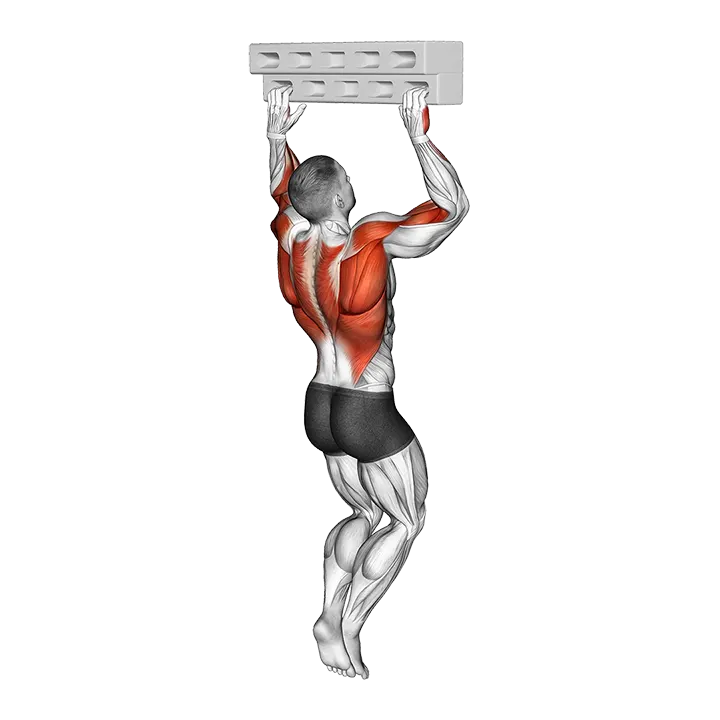
Handboard Hang with 90 Degree Elbow
- Target muscle
- —
- Equipment
- Body weight
- Body part
- Forearms
- Type
- Stretching
The handboard hang with a 90 degree elbow is a bodyweight isometric hold that targets the forearms and grip while loading the muscles around the elbow in a half-locked position. By hanging from a handboard with your elbows bent to roughly 90 degrees, you build static grip endurance and tendon resilience without any added weight. It's a useful conditioning drill for climbers and anyone wanting a stronger, more durable grip.
How to do the Handboard Hang with 90 Degree Elbow
- 1Set the handboard at a height that lets you reach up and grip it with your elbows already bent — high enough that your feet leave the floor when you hang.
- 2Take a secure, even grip on the board with both hands, thumbs wrapped or open depending on the hold you are training.
- 3Pull yourself up until your elbows form roughly a 90 degree angle and your forearms are loaded.
- 4Lift your feet off the floor so your full bodyweight hangs from the board, keeping your shoulders pulled down and back.
- 5Brace your core and hold the 90 degree elbow position still, avoiding any swinging or sagging.
- 6Keep breathing steadily and maintain the bent-elbow hold for your target time.
- 7Lower your feet to the floor under control before releasing your grip, then step down and rest.
Form tips
- Keep your shoulders actively pulled down away from your ears rather than letting them shrug up toward the board.
- Engage your core and glutes so your body stays still and the work stays in your grip and forearms.
- Start with short holds and build time gradually — grip and elbow tendons adapt more slowly than larger muscles.
- Warm up your wrists, forearms, and elbows first, since this static load can be demanding on the connective tissue.
Common mistakes
- Letting the elbows drift straight or fully bent instead of holding the 90 degree angle, which shifts the load away from the intended bent-arm position.
- Shrugging the shoulders up toward the ears, which strains the neck and reduces the stability of the hang.
- Swinging or kicking the legs to cheat the hold, which removes the steady tension that builds grip endurance.
- Holding too long, too soon and overloading the forearm and elbow tendons before they have adapted, risking strain.
- Holding your breath through the set, which spikes tension and shortens how long you can maintain the position.
Frequently asked questions
What muscles does the handboard hang with 90 degree elbow work?
It mainly trains the forearms and grip, which work isometrically to hold your bodyweight on the board, while the muscles around the bent elbow stay under static tension to maintain the 90 degree position.
Is the handboard hang with 90 degree elbow good for beginners?
Yes, as long as you keep the holds short and build up slowly. Beginners can start with a few seconds at a time and progress as their grip and elbow tendons adapt.
How long should I hold the position?
A common approach is several holds of around 5 to 15 seconds with full rest between them. Stop the set when your grip starts to slip rather than fighting to failure.
What's a good alternative to the handboard hang?
A standard bodyweight dead hang from a bar or hangboard is a close alternative that also builds grip and forearm endurance using only your bodyweight.
Why do I feel this mostly in my forearms?
That's expected — holding your bodyweight on the board demands constant grip, so the forearm muscles work hardest to keep your hands closed around the holds.







