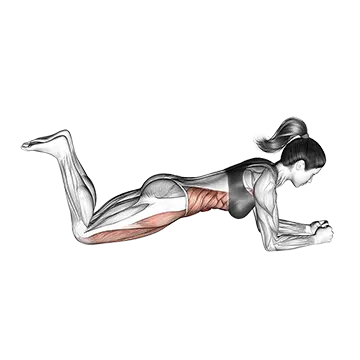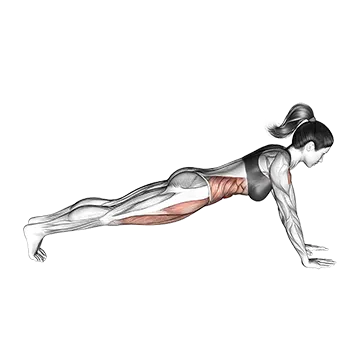
Hanging Pike
- Target muscle
- Rectus Abdominis
- Synergist muscles
- Adductor Brevis, Adductor Longus, Iliopsoas, Obliques, Quadriceps, Sartorius, Tensor Fasciae Latae
- Equipment
- Body weight
- Body part
- Waist
- Type
- Strength

The hanging pike is an advanced bodyweight core exercise that primarily targets the rectus abdominis, with strong assistance from the hip flexors (iliopsoas), obliques, and quadriceps. Hanging from a pull-up bar, you raise straight legs up toward the bar into a pike position, building serious abdominal strength, hip flexor control, and grip endurance.
How to do the Hanging Pike
- 1Hang from a pull-up bar with an overhand grip slightly wider than shoulder-width, arms fully extended.
- 2Set your shoulders by pulling them down and slightly back to engage your lats and stop your body from swinging.
- 3Brace your core and keep your legs straight with your toes pointed.
- 4Without bending your knees, raise both legs together in front of you, folding at the hips toward a pike position.
- 5Continue lifting until your legs reach roughly parallel to the floor or higher, ideally toward the bar.
- 6Pause briefly at the top while keeping your core fully contracted.
- 7Lower your legs under control back to the dead hang, resisting the urge to drop them.
- 8Complete your reps, then step down from the bar with control.
Form tips
- Lower your legs slowly to keep tension on the abs and prevent body swing between reps.
- Posteriorly tilt your pelvis at the top to drive the contraction through the rectus abdominis rather than only the hip flexors.
- Keep your shoulders depressed and your arms active throughout to maintain a stable hanging base.
- If grip fails before your abs do, use lifting straps so you can train the core to fatigue.
- Build up with bent-knee or L-sit variations first if you cannot keep your legs straight.
Common mistakes
- Using momentum and swinging the body to throw the legs up, which removes tension from the abs and turns it into a hip-flexor swing.
- Bending the knees on the way up, which shortens the lever and reduces the work on the rectus abdominis.
- Dropping the legs quickly on the way down, wasting the eccentric portion where much of the core strength is built.
- Failing to depress the shoulders, leaving you hanging passively and straining the shoulder joints.
Frequently asked questions
What muscles does the hanging pike work?
It primarily works the rectus abdominis, with the hip flexors (iliopsoas), obliques, quadriceps, and inner-thigh adductors assisting. Your forearms and grip work hard to keep you hanging.
Is the hanging pike good for beginners?
It is an advanced move. Beginners should start with hanging knee raises or lying leg raises to build core and grip strength, then progress to straight-leg hanging raises before attempting a full pike.
How is the hanging pike different from a hanging leg raise?
Both raise straight legs from a dead hang, but the pike emphasizes lifting the legs higher toward the bar and folding deeply at the hips, increasing the range of motion and the demand on the abs.
How many sets and reps should I do?
Aim for 3 to 4 sets of 6 to 12 controlled reps. Because grip and abs fatigue quickly, prioritize clean, swing-free reps over chasing a high count.
How do I stop my body from swinging?
Brace your core before each rep, keep your shoulders pulled down to engage your lats, and lower your legs slowly. Controlling the descent is the main key to eliminating swing.