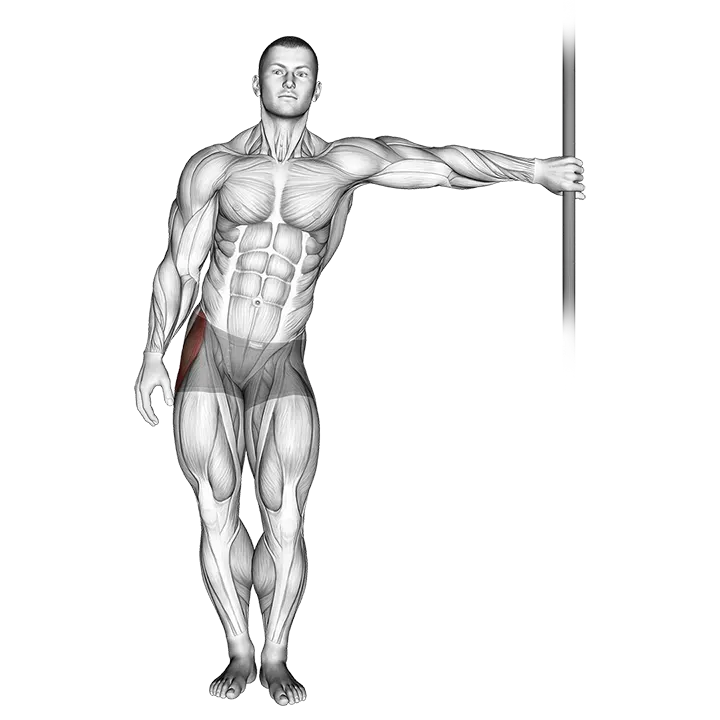
Leaning Abductor Stretch
- Target muscle
- —
- Equipment
- Body weight
- Body part
- Hips
- Type
- Stretching
The leaning abductor stretch is a standing bodyweight stretch that targets the hip abductors — primarily the gluteus medius and gluteus minimus — along the outer hip area. By crossing one leg behind the other and leaning away, you create a lateral lengthening through the glute complex that is otherwise difficult to isolate. It is ideal for relieving tightness in the hips, improving abductor flexibility, and supporting injury prevention in runners and lifters.
How to do the Leaning Abductor Stretch
- 1Stand upright next to a wall or sturdy surface, positioning it to your right side for initial support.
- 2Cross your left foot behind your right foot, placing it a comfortable distance to the right so both feet are flat on the floor.
- 3Extend your left arm overhead and place your right hand lightly on the wall or surface for balance.
- 4Shift your hips to the left by pushing them out laterally, creating a gentle arc through your torso.
- 5Lean your upper body to the right simultaneously, so the stretch runs along the entire left outer hip and glute.
- 6Hold the position for 20–30 seconds, breathing steadily and relaxing deeper into the stretch with each exhale.
- 7Return to the starting position slowly, then switch sides by crossing your right foot behind your left and repeating.
Form tips
- Keep both feet flat on the floor throughout — lifting a heel reduces the stretch on the hip abductors.
- The movement is a hip push, not a side bend; initiate by driving the hips laterally before allowing the torso to lean.
- Use the wall for balance only — avoid pressing into it heavily, as leaning on your arm shifts the stretch away from the hips.
- Breathe into the stretch: exhale slowly and let gravity deepen the position rather than forcing the lean.
- For a deeper stretch, cross the back foot slightly further across and increase the lateral hip push gradually over successive holds.
Common mistakes
- Bending the knee of the back leg: a bent knee releases tension in the outer hip, reducing the effectiveness of the abductor stretch.
- Twisting the torso forward or backward: rotation takes the stretch out of the lateral hip plane and can place uneven stress on the lower back.
- Rushing through the hold: the hip abductors are slow to release; holding for less than 20 seconds rarely produces meaningful flexibility gains.
- Over-gripping the support surface: leaning heavily on the wall lets you cheat the lateral lean, keeping the hips from pushing out far enough to stretch the abductors properly.
- Crossing the foot too close to the standing leg: insufficient crossover limits hip displacement and makes it difficult to feel the stretch in the outer hip at all.
Frequently asked questions
What muscles does the leaning abductor stretch target?
The stretch primarily targets the hip abductors — the gluteus medius and gluteus minimus — which run along the outer side of the hip and upper glute. These muscles are responsible for moving the leg away from the midline and stabilizing the pelvis during walking and running. The leaning position creates a lengthening force across these muscles that is hard to replicate with most other static stretches.
How often should I do the leaning abductor stretch?
For general hip mobility maintenance, performing the stretch once daily — especially after exercise — is effective. If you are addressing chronic tightness or recovering from hip-related discomfort, 2–3 sets per side, 2–3 times per day can accelerate progress. Because it uses only body weight and requires no equipment, it fits easily into warm-up and cool-down routines.
Is this stretch safe if I have hip or lower back pain?
For most people with mild hip tightness or general lower back tension, the leaning abductor stretch is gentle and low-risk. However, if you have a diagnosed hip condition (such as IT band syndrome, hip impingement, or bursitis) or acute lower back pain, consult a physiotherapist before adding this stretch. Stop immediately if you feel sharp or radiating pain rather than a dull muscular pull.
Can I do this stretch without a wall?
Yes. You can perform the leaning abductor stretch freestanding by crossing the feet and leaning with both arms raised overhead, which also adds a mild lateral trunk stretch. However, beginners and anyone with balance concerns should keep a wall or chair nearby, as the crossed-foot stance can feel unstable until the movement pattern becomes familiar.
Why do my hip abductors get so tight?
Hip abductor tightness is common in people who sit for long periods, as sustained hip flexion reduces blood flow and shortens the lateral hip muscles over time. It is also prevalent in runners, cyclists, and lateral-sport athletes whose training repeatedly loads the outer hip without equal recovery stretching. Regular stretching of the gluteus medius and minimus helps counteract this tightness and reduces the risk of compensatory knee and lower back issues.







