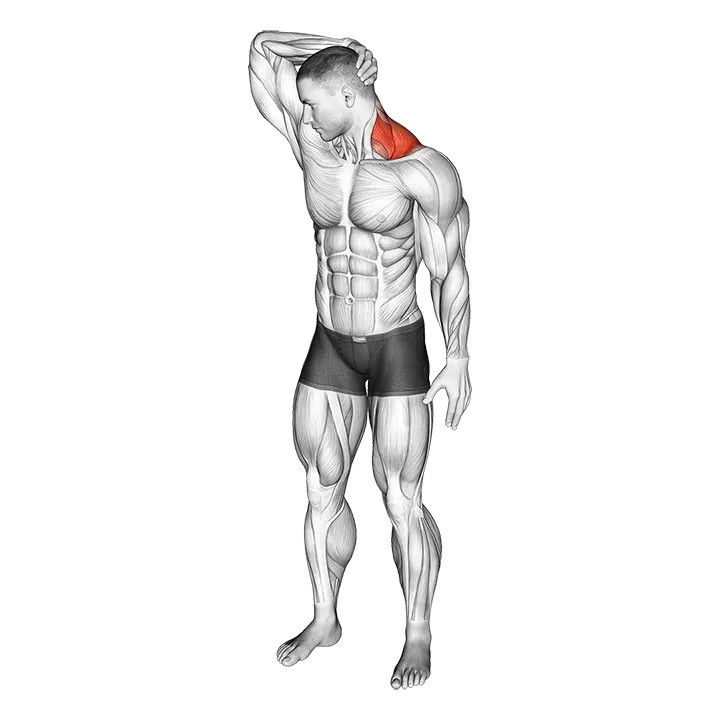
Neck Extensor And Rotational Stretch
- Target muscle
- —
- Equipment
- Body weight
- Body part
- Neck
- Type
- Stretching
The neck extensor and rotational stretch is a bodyweight mobility exercise that targets the muscles along the back and sides of the neck. By combining a forward flexion with a rotational component, it addresses tightness through a fuller range of the cervical spine than a single-plane stretch. It is well suited for relieving tension from prolonged sitting, poor posture, or a sedentary workday.
How to do the Neck Extensor And Rotational Stretch
- 1Sit or stand tall with your spine neutral, shoulders relaxed, and chin level with the floor.
- 2Slowly drop your chin toward your chest, letting the weight of your head gently stretch the back of your neck.
- 3From that flexed position, begin to rotate your head slowly to the right, bringing your chin toward your right collarbone.
- 4Pause for 2–3 seconds when you feel a comfortable stretch along the left side and back of your neck.
- 5Slowly rotate back through center — chin still lowered — and continue rotating to the left, bringing your chin toward your left collarbone.
- 6Pause again for 2–3 seconds to feel the stretch along the right side and back of your neck.
- 7Return to center and gently lift your head back to the neutral starting position.
- 8Repeat for the desired number of repetitions or hold each end position for a longer duration as needed.
Form tips
- Move slowly and smoothly throughout — jerky or fast rotations can strain the cervical joints and muscles.
- Let gravity do the work during the forward flexion; do not use your hands to pull your head down.
- Keep your shoulders down and back the entire time — shrugging your shoulders reduces the stretch in the neck.
- Breathe steadily and exhale as you rotate into the stretch to help the muscles relax.
Common mistakes
- Pulling the head down with the hands, which can compress the cervical spine and exceed a safe range of motion.
- Rushing through the rotation instead of moving slowly, which reduces the stretch stimulus and increases the risk of muscle strain.
- Allowing the shoulders to rise toward the ears, which shortens the muscles you are trying to lengthen.
- Extending (tilting the head back) during the rotation instead of keeping the chin dropped, which compresses the back of the neck rather than stretching it.
- Holding your breath, which keeps the neck muscles tense and limits the effectiveness of the stretch.
Frequently asked questions
What muscles does the neck extensor and rotational stretch target?
It primarily stretches the muscles along the back and sides of the neck, including the extensors and rotators of the cervical spine. Because no single target muscle is isolated, you will feel it across several overlapping neck muscle groups depending on the angle of rotation.
How long should I hold each position?
A hold of 20–30 seconds per side is effective for improving flexibility. For a quick relief break, 2–5 slow rotations through the full range is sufficient.
How often can I do this stretch?
You can perform it daily. It is safe to do multiple times throughout the day, especially if you spend long periods sitting at a desk.
Is this stretch safe if I have neck pain or a previous neck injury?
If you have a diagnosed cervical condition or acute neck pain, consult a physician or physiotherapist before attempting this stretch. Mild general tension is normal; sharp, radiating, or worsening pain is a signal to stop.
What is the difference between this stretch and a standard chin-to-chest stretch?
A chin-to-chest stretch only stretches the neck extensors in the sagittal plane. Adding the rotational component also targets the oblique and lateral neck muscles, giving a more complete release of the cervical region.







