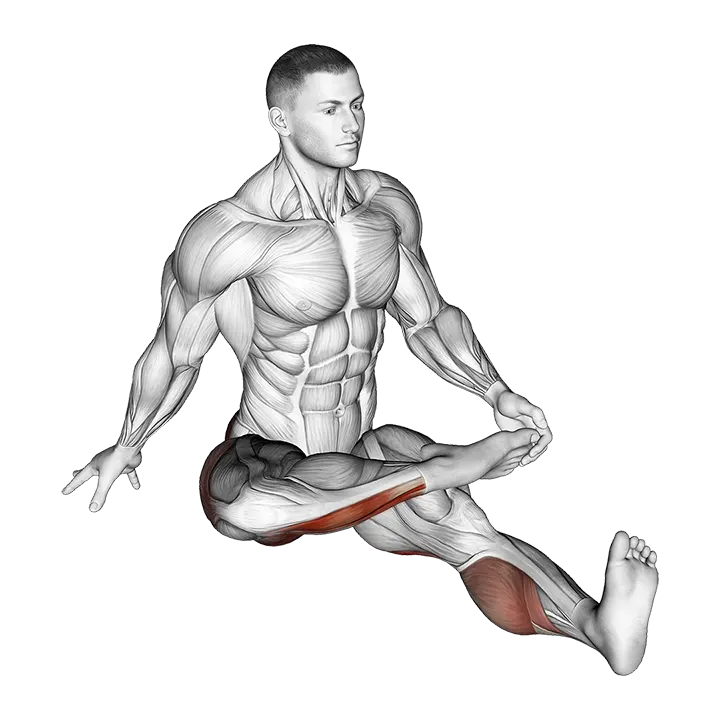
Plantar Flexion Stretch
- Target muscle
- —
- Equipment
- Body weight
- Body part
- Hips
- Type
- Stretching
The plantar flexion stretch is a body-weight mobility exercise that lengthens the tibialis anterior and the surrounding muscles along the front of the shin by holding the ankle in a pointed-toe position. It is commonly performed kneeling or seated and is used to improve ankle range of motion, reduce tightness in the lower leg, and prepare the feet and ankles for activity.
How to do the Plantar Flexion Stretch
- 1Kneel on a soft surface with your knees hip-width apart and the tops of your feet flat on the floor, toes pointing straight back.
- 2Sit your hips back toward your heels so your body weight gently presses the ankles and feet into plantar flexion.
- 3Place your hands on your thighs or the floor beside you for balance and to control how much pressure you apply.
- 4Keep your spine tall and your torso upright rather than hunching forward.
- 5Hold the stretched position for 20 to 30 seconds, breathing steadily and allowing the front of the shin and ankle to relax.
- 6To deepen the stretch slightly, shift a small amount of additional body weight toward your heels; back off immediately if you feel sharp discomfort in the knee or ankle.
- 7Release by lifting your hips and returning to an upright kneeling position before switching sides if working one leg at a time.
Form tips
- Start with minimal weight on your heels and increase gradually — the ankle joint has a limited range, and forcing it too quickly can cause discomfort.
- Keep your toes pointed straight back rather than angled outward; foot rotation changes the stress on the ankle and reduces the effectiveness of the stretch.
- Breathe out slowly as you settle into the position to help the muscles along the shin release tension.
- If the knees are uncomfortable on the floor, place a folded towel or mat under them to reduce pressure.
- Perform this stretch after activity when the tissue is warm, or after a brief warm-up if using it as a pre-workout mobility drill.
Common mistakes
- Dropping the hips too quickly: rushing into the full position before the ankle adapts can strain the joint capsule and surrounding ligaments — ease into depth over several breaths.
- Allowing the feet to splay outward: externally rotating the feet shifts load away from the tibialis anterior and reduces the intended stretch across the front of the ankle.
- Holding the breath: tension in the upper body prevents the lower leg muscles from fully relaxing, making the stretch less effective — breathe steadily throughout.
- Ignoring knee discomfort: if you feel pain in the knee rather than a mild stretch in the shin or ankle, reduce depth or place extra padding under the knee; continuing through knee pain risks irritating the patellar tendon or joint.
- Overstretching in one session: the ankle dorsiflexors respond better to consistent, moderate stretching over time than to aggressive single-session loading — stay within a comfortable range.
Frequently asked questions
What muscles does the plantar flexion stretch target?
The primary tissue under tension is the tibialis anterior, the muscle that runs along the front of the shin and controls the upward motion of the foot. The extensor digitorum longus and extensor hallucis longus, which run alongside it, are also lengthened when the foot is held in a pointed-toe position.
How long should I hold a plantar flexion stretch?
A hold of 20 to 30 seconds per side is a practical starting point for most people. Performing two to three sets after exercise, when tissues are warm, gives consistent mobility gains over time without overloading the joint.
Can this stretch help with shin splints?
Stretching the tibialis anterior can complement shin splint recovery by reducing muscular tension in the front of the lower leg, but it should be used alongside rest and gradual load management rather than as a standalone treatment. If shin pain is sharp or persistent, consult a healthcare professional before continuing training.
Is it normal to feel this stretch in the knee as well?
A mild sensation at the front of the knee can occur in the kneeling variation because the quadriceps are also slightly lengthened. However, sharp or concentrated knee pain is not normal and usually means the joint is under excessive compression — reduce depth or place additional padding under the knee.
How often should I do this stretch?
For general ankle mobility, two to three sessions per week is sufficient. If you are working to address persistent tightness, daily stretching after training is reasonable, provided the ankle and knee remain comfortable throughout.







