
Quadriceps stretch
- Target muscle
- Quadriceps
- Equipment
- Body weight
- Body part
- Thighs
- Type
- Stretching


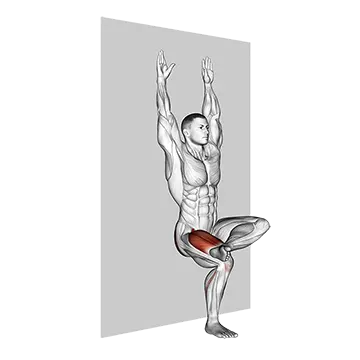

The quadriceps stretch is a standing bodyweight flexibility exercise that targets the quadriceps along the front of the thigh. By pulling one foot toward the glutes while balancing on the opposite leg, it lengthens all four quad muscles and is ideal for improving flexibility, reducing post-workout tightness, and supporting knee and hip health.
How to do the Quadriceps stretch
- 1Stand tall with your feet together and your gaze fixed on a point ahead of you to help maintain balance.
- 2Shift your weight onto your left foot and bend your right knee, bringing your right heel up toward your right glute.
- 3Reach back with your right hand and grasp the top of your right foot or ankle.
- 4Draw your right heel as close to your glute as comfortably possible while keeping your knees close together and your right knee pointing straight down.
- 5Squeeze your glutes and keep your hips level — avoid letting the right hip hike up or rotate outward.
- 6Stand tall through your spine; do not lean forward at the waist or arch your lower back excessively.
- 7Breathe slowly and deeply, allowing the quadriceps to relax further with each exhale. Hold the stretch for 20–30 seconds.
- 8Release your foot gently, return to the starting position, then repeat on the opposite side.
Form tips
- Keep both knees close together throughout the stretch — letting the bent knee drift out to the side reduces tension on the quadriceps.
- Brace your core and stand tall rather than leaning forward; a slight forward lean shortens the hip flexors and reduces the quad stretch.
- If balance is a challenge, lightly rest your free hand on a wall or stable surface without relying on it for support.
- Breathe slowly and let gravity do the work — avoid pulling your foot forcefully, as that can strain the knee joint.
- For a deeper stretch, gently push your hips forward while keeping your torso upright and your knees aligned.
Common mistakes
- Leaning forward at the torso, which reduces tension on the quadriceps and shifts stress to the lower back.
- Letting the bent knee flare outward instead of pointing straight down, which decreases the stretch on the quads and can stress the knee.
- Pulling the foot too forcefully toward the glute, which puts excessive pressure on the knee joint and risks injury.
- Allowing the hip to hike or rotate on the bent-leg side, which shortens the stretch and creates uneven tension.
- Holding the breath instead of breathing steadily, which increases muscle tension and prevents the quadriceps from fully relaxing into the stretch.
Frequently asked questions
How long should I hold a quadriceps stretch?
Hold each side for 20–30 seconds for a general flexibility benefit. If you are working on improving range of motion over time, extending the hold to 45–60 seconds and repeating 2–3 times per side can be more effective.
When is the best time to do the quadriceps stretch?
The quadriceps stretch is best performed after exercise when your muscles are warm, making the tissue more pliable and reducing the risk of strain. It can also be done as a standalone routine on rest days, but avoid aggressive stretching on cold, unprepared muscles.
What are the benefits of stretching the quadriceps regularly?
Regular quadriceps stretching improves flexibility along the front of the thigh, reduces post-exercise soreness, and helps maintain healthy knee and hip alignment. It can also alleviate tightness that contributes to anterior knee pain and lower back discomfort.
What can I do if I cannot reach my ankle while doing this stretch?
Loop a resistance band, towel, or strap around your ankle and hold the ends instead. This lets you get the same quad stretch without needing full shoulder or arm flexibility to reach your foot.
Can the quadriceps stretch help with knee pain?
Tight quadriceps are a common contributor to patellofemoral (kneecap) pain, and regular stretching can help reduce that tension. If you have an existing knee injury, stretch gently and consult a healthcare professional before increasing intensity.