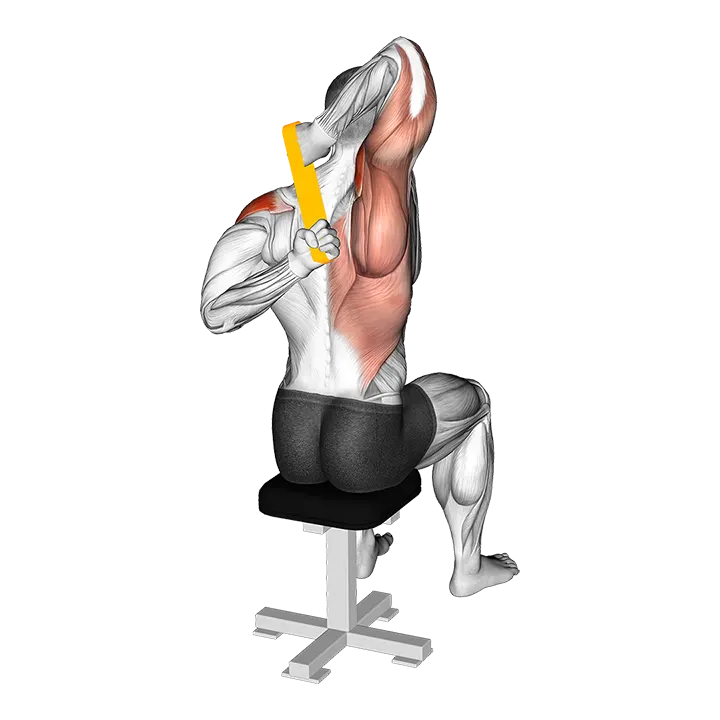

Resistance Band Shoulder Stretch Behind the Back
- Target muscle
- Deltoid Posterior
- Synergist muscles
- Infraspinatus, Latissimus Dorsi, Teres Major, Teres Minor, Trapezius Lower Fibers, Triceps Brachii
- Equipment
- Resistance Band
- Body part
- Shoulders
- Type
- Stretching
The Resistance Band Shoulder Stretch Behind the Back is a stretching exercise that targets the posterior deltoid and lengthens the surrounding shoulder musculature, including the infraspinatus, teres major, teres minor, latissimus dorsi, trapezius lower fibers, and triceps brachii. A resistance band held behind the back provides gentle assisted tension, making it easier to reach and hold a deeper stretch than most unassisted shoulder stretches allow. It is well suited for improving shoulder mobility, reducing stiffness after pressing or pulling work, and maintaining range of motion in the posterior shoulder.
How to do the Resistance Band Shoulder Stretch Behind the Back
- 1Stand tall with your feet about hip-width apart and hold a resistance band behind your back with both hands.
- 2Reach your top hand over the same-side shoulder and down your back to grip the band from above, keeping your elbow pointed toward the ceiling.
- 3Reach your bottom hand up your back from below to grip the band from beneath, palm facing away from your body.
- 4Gently pull downward with your bottom hand to increase tension in the band, which draws the top arm deeper into the stretch and lengthens the posterior shoulder and upper back on that side.
- 5Keep your chest lifted, your spine neutral, and your head in line with your torso — avoid letting your neck jut forward or your torso rotate.
- 6Hold the stretched position for 20 to 30 seconds, breathing steadily and releasing any tension in the shoulder with each exhale.
- 7Release the band slowly, switch which hand is on top, and repeat the stretch on the other side.
- 8Complete the desired number of holds on each side, typically two to three per session.
Form tips
- Use a band with light resistance — the goal is gentle assistance into a deeper range, not forceful pulling, so avoid bands that yank the arm beyond a comfortable end range.
- Keep both sides of your torso even and tall throughout the hold; leaning toward the stretched side reduces the tension on the posterior deltoid and shifts it to the trunk.
- Breathe slowly and deliberately during the hold — exhaling fully can help the shoulder release further into the stretch without forcing it.
- If your hands cannot reach each other to grip the band comfortably, use a longer section of band or hold each end with less overlap to reduce the pull and work within your current range.
Common mistakes
- Pulling too hard with the bottom hand, which can force the shoulder past its current range and strain the posterior capsule rather than stretch it gradually.
- Rotating the torso toward the stretched arm instead of keeping the chest square, which reduces the stretch on the posterior deltoid and loads the spine asymmetrically.
- Holding the breath during the stretch, which increases muscular tension and limits how far the shoulder can release into the end range.
- Rushing through the hold instead of staying for the full 20 to 30 seconds, which does not give the posterior deltoid and surrounding connective tissue enough time to respond to the sustained tension.
- Using the stretch on a cold shoulder without any prior movement, which can increase the risk of a strain — perform a brief warm-up or add this stretch after your main session when the shoulder is already warm.
Frequently asked questions
What muscles does the resistance band shoulder stretch behind the back target?
The primary muscle being stretched is the posterior deltoid. The infraspinatus, teres major, teres minor, latissimus dorsi, trapezius lower fibers, and triceps brachii are all lengthened as synergists during the stretch.
When should I do this stretch — before or after my workout?
This stretch is best performed after your workout when your shoulder is already warm and the tissues are more pliable. Performing a deep static stretch on a cold shoulder before training can temporarily reduce force output and increase strain risk.
How long should I hold the stretch?
Hold each side for 20 to 30 seconds per rep. For general mobility maintenance, two to three holds per side after training is sufficient. If you are working to improve a significant restriction, you can extend holds to 45 to 60 seconds.
Can I do this stretch without a resistance band?
Yes — you can perform a similar stretch by clasping your hands behind your back without a band, but the band makes it easier to modulate the depth of the stretch precisely by adjusting the pull with your bottom hand.
Will this stretch help with shoulder tightness from bench pressing or overhead work?
It can, because heavy pressing and overhead work often leave the posterior deltoid and external rotators in a shortened or fatigued state. Stretching the posterior shoulder regularly can help restore balance between the front and back of the joint and reduce accumulated stiffness.
Related exercises
 Resistance Band Half Kneeling Face PullShoulders
 Resistance Band Pull ApartShoulders
 Resistance Band Pull Apart (45 degrees)Shoulders
 Resistance Band Rear FlyShoulders
 Band Face PullShoulders
 Band horizontal Pallof Press with Resistance Band SquatHips, Thighs, Waist
 Band rear delt rowShoulders
 Band reverse flyShoulders