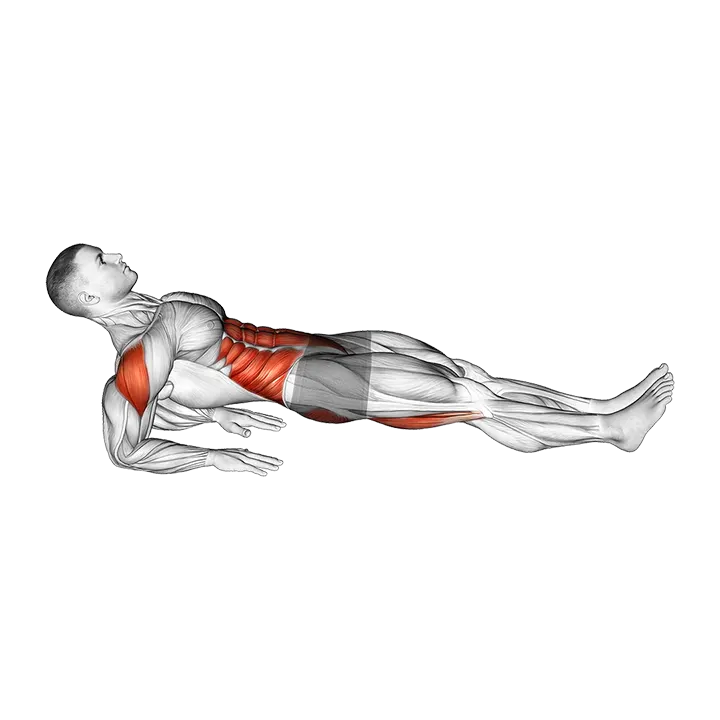
Reverse Plank (VERSION 2)
- Target muscle
- —
- Equipment
- Body weight
- Body part
- Waist
- Type
- Strength
The reverse plank is a bodyweight hold that challenges the entire posterior chain — glutes, hamstrings, and lower back — to keep your hips elevated in a straight line from heels to shoulders. Your core and waist muscles work isometrically to prevent sagging, making it an effective accessory for building posterior-chain endurance and shoulder stability.
How to do the Reverse Plank (VERSION 2)
- 1Sit on the floor with your legs extended in front of you and your heels pressed into the ground.
- 2Place your hands flat on the floor just behind your hips, fingers pointing forward or slightly outward.
- 3Press through your palms and heels to lift your hips off the floor, squeezing your glutes and driving your hips upward.
- 4Continue raising your hips until your body forms a straight line from heels to shoulders — avoid letting your hips pike up too high or sag toward the floor.
- 5Pull your shoulder blades together and down to keep your chest open and your shoulders stable.
- 6Hold your head in a neutral position — either looking straight up toward the ceiling or keeping your chin slightly tucked.
- 7Breathe steadily throughout the hold, keeping your glutes, hamstrings, and core actively engaged.
- 8To finish, lower your hips gently back to the floor in a controlled manner.
Form tips
- Squeeze your glutes hard at the top — this is the primary driver keeping your hips elevated and your body in a straight line.
- Keep your wrists stacked directly below your shoulders to reduce wrist strain and maintain a stable base.
- Press your heels firmly into the floor rather than letting your feet go limp; active heel drive engages the hamstrings more effectively.
- Avoid letting your chin jut forward or drop your head back excessively — a neutral neck reduces unnecessary tension on the cervical spine.
- If wrist discomfort is a problem, try making fists or using push-up handles to keep your wrists in a more neutral position.
Common mistakes
- Letting the hips sag toward the floor, which removes tension from the glutes and hamstrings and places strain on the lower back.
- Piking the hips too high so the body bends at the waist — the goal is a flat, straight line from heels to shoulders.
- Holding the breath throughout the hold, which spikes internal pressure and makes the position harder to sustain; breathe steadily.
- Placing the hands too far behind the body, which forces the shoulders into an overly extended position and reduces stability.
- Pointing the toes instead of keeping the feet flexed, which reduces hamstring engagement and makes it harder to maintain hip height.
Frequently asked questions
What muscles does the reverse plank work?
The reverse plank primarily challenges the posterior chain — glutes, hamstrings, and lower back erectors — which must fire continuously to hold the hips up. The core and waist muscles stabilize isometrically, and the shoulders and triceps support your body weight through the arms.
How long should I hold a reverse plank?
Beginners can start with 15–20 second holds and build toward 45–60 seconds as strength and endurance improve. Focus on maintaining perfect alignment rather than extending the duration beyond what your form allows.
What is the difference between a reverse plank and a table-top bridge?
The terms are often used interchangeably for this position. Both refer to hips lifted with legs extended and hands behind the hips. Some trainers use 'table-top' for a bent-knee version and 'reverse plank' for the straight-leg variation described here.
My wrists hurt during this exercise — what can I do?
Try rotating your hands outward so the fingers point to the sides rather than forward, which reduces wrist extension. You can also perform the hold on your fists or use push-up handles to keep the wrists neutral. Building general wrist mobility over time will also help.
Can the reverse plank help with lower back pain?
Strengthening the glutes and hamstrings through exercises like the reverse plank can take load off the lower back over time. However, if you experience pain during the hold — rather than general muscle fatigue — stop the exercise and consult a healthcare professional before continuing.







