
Roll Chest Lying on Floor
- Target muscle
- —
- Equipment
- Roll
- Body part
- Chest
- Type
- Stretching





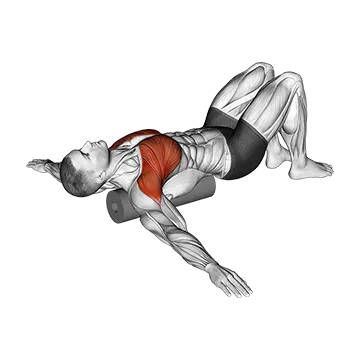
Roll Chest Lying on Floor is a foam roller stretching exercise for the chest. Lying face down with the roller placed across your pectoral area, you use controlled body weight to apply sustained pressure and release tension in tight chest tissue. It is well suited for improving chest mobility and reducing soreness after pressing exercises.
How to do the Roll Chest Lying on Floor
- 1Place a foam roller on the floor horizontally.
- 2Lie face down and position the roller under your chest, just below your collarbone, with your arms extended forward or out to the sides for support.
- 3Support most of your weight on your forearms or hands and lightly brace your core so your lower back does not sag.
- 4Slowly shift your body forward so the roller moves down toward the middle of your chest, then shift back to move it toward the upper chest.
- 5When you reach a tender spot, pause for 20–30 seconds and breathe deeply to let the tissue relax before continuing.
- 6Continue rolling at a slow, even pace across the full width of your chest, spending extra time on tight areas.
- 7To target one side more specifically, tilt your body slightly to that side and shift your weight onto the corresponding pectoral.
- 8After 30–60 seconds of rolling, or once the tissue feels less restricted, gently press up with your arms and lift yourself off the roller.
Form tips
- Breathe slowly and steadily throughout — holding your breath keeps the surrounding muscles tense and works against the release.
- Control how much body weight you direct into the roller; if the pressure feels excessive, shift more load onto your arms.
- Roll at a slow pace, roughly one body-width every two to three seconds, so the tissue has time to respond.
- Keep your head in a neutral position, in line with your spine, rather than craning your neck upward.
- Linger on tender spots rather than rolling quickly past them — sustained pressure is more effective than speed.
Common mistakes
- Rolling too fast, which does not give the chest tissue enough time to release and reduces the effectiveness of the session.
- Placing your full body weight directly on the roller, which can cause excessive discomfort and bruising rather than productive tissue release.
- Holding your breath, which keeps the chest and surrounding muscles contracted and prevents the relaxation the exercise is intended to produce.
- Allowing the lower back to sag toward the floor, which loads the lumbar spine unnecessarily and shifts the body out of proper alignment.
- Skipping both sides of the chest, which can leave one pectoral tighter than the other and reinforce muscular imbalances over time.
Frequently asked questions
What does Roll Chest Lying on Floor do?
It applies direct pressure to the chest muscles through a foam roller while you lie face down. The sustained compression helps release tightness and adhesions in the pectoral tissue, which can improve chest mobility and reduce post-exercise soreness.
How long should I foam roll my chest?
Aim for 30–60 seconds per side, or until the area feels noticeably less restricted. Pausing for 20–30 seconds on any particularly tender spot tends to be more effective than continuous rolling.
Is foam rolling the chest safe?
For most people, yes. Use your arms to control how much body weight presses into the roller and avoid rolling directly over bone. If you have a shoulder, rib, or chest injury, check with a healthcare provider before trying this exercise.
When is the best time to foam roll my chest?
You can use it as part of a warm-up to increase chest mobility before pressing exercises, or as part of a cool-down to reduce soreness after training. Either timing is effective; the key is consistency.
Why does foam rolling my chest feel painful?
Discomfort usually indicates tight or overworked chest tissue responding to pressure. A dull, achey sensation is normal and typically fades as the tissue releases. Sharp or stabbing pain is not normal and means you should stop and reduce pressure or see a professional.