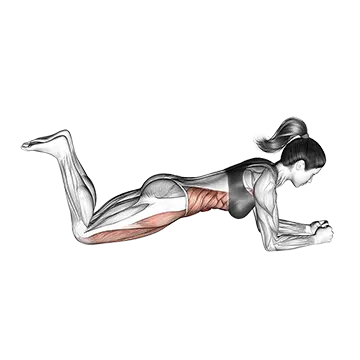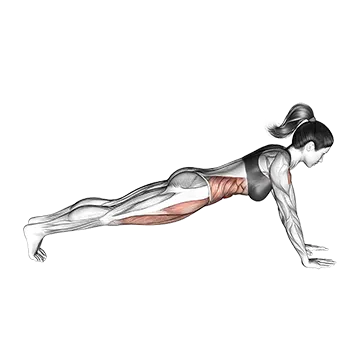
Seated Leg Raise
- Target muscle
- Rectus Abdominis
- Synergist muscles
- Iliopsoas, Obliques
- Equipment
- Body weight
- Body part
- Waist
- Type
- Strength





The Seated Leg Raise is a bodyweight waist exercise that primarily targets the rectus abdominis while recruiting the iliopsoas and obliques as synergists. Performed from a seated position, it builds core strength and hip flexor endurance with no equipment required, making it a practical choice for beginners and as an accessory movement in any strength or conditioning routine.
How to do the Seated Leg Raise
- 1Sit on a firm, flat surface such as a bench or the floor with your legs extended in front of you and your hands placed just behind your hips for support.
- 2Sit tall with your chest up, shoulders back, and spine in a neutral position.
- 3Brace your core by drawing your navel gently inward and tightening your abdominals.
- 4Keeping both legs straight or with a slight bend at the knees, slowly raise them together until they form roughly a 45-degree angle with the surface.
- 5Pause briefly at the top, maintaining the brace in your core and avoiding any arching in your lower back.
- 6Lower your legs in a controlled manner back toward the starting position, stopping just before they touch down to keep tension on the abdominals.
- 7Repeat for the desired number of repetitions, maintaining steady breathing throughout — exhale as you lift, inhale as you lower.
Form tips
- Press your palms into the surface behind you only for balance, not to push yourself upright — most of the stability work should come from your core.
- Exhale as you raise your legs to naturally engage the deep abdominal wall and protect the lower back under load.
- Keep the movement slow and controlled on both the lifting and lowering phases; momentum through the hips reduces core activation and increases injury risk.
- If you feel strain in your lower back, reduce the range of motion by not lowering your legs as far, or try bending your knees slightly to shorten the lever arm.
Common mistakes
- Letting the lower back arch excessively during the lift, which shifts stress from the rectus abdominis to the lumbar spine and can cause pain or injury over time.
- Using momentum to swing the legs upward instead of lifting with controlled muscular effort, which reduces time under tension and diminishes the training stimulus for the abdominals.
- Holding the breath throughout the set, which spikes blood pressure and makes it harder to draw the abdominal wall in as the legs rise — exhale on the way up and inhale on the way down.
- Placing the hands too far back and leaning the torso backward excessively, which unloads the core and turns the exercise into a passive hip-flexor hang rather than an abdominal strength drill.
- Dropping the legs too quickly on the descent, losing the eccentric contraction and reducing the total work done by the rectus abdominis and obliques.
Frequently asked questions
What muscles does the Seated Leg Raise work?
The Seated Leg Raise primarily targets the rectus abdominis — the muscle responsible for trunk flexion and the 'six-pack' appearance. The iliopsoas and obliques work as synergists, assisting with hip flexion and stabilizing the torso throughout the movement.
How is the Seated Leg Raise different from the lying leg raise?
In the lying version your back is fully supported by the floor, removing the need to stabilize your upper body. The seated version requires your core and supporting musculature to maintain an upright posture throughout, adding a stability demand that increases overall core involvement.
How many reps and sets should I do for the Seated Leg Raise?
For core strength and endurance, 3 sets of 12–20 controlled repetitions works well for most people. Beginners can start with 2 sets of 8–10 reps and progress over several weeks. Rest 30–60 seconds between sets to maintain quality of movement.
Why do I feel the Seated Leg Raise more in my hip flexors than my abs?
Hip flexors are the primary movers during leg raising, so they will always be involved. To shift more emphasis onto the rectus abdominis, brace your core firmly before each rep, exhale as you lift, and avoid letting your lower back arch. Keeping the movement slow also helps increase abdominal activation.
Is the Seated Leg Raise suitable for lower back pain?
It depends on the cause and severity of the pain. For many people, shortening the lever arm by bending the knees slightly makes the exercise more manageable. However, if you experience pain during the movement you should stop and consult a qualified healthcare professional before continuing.