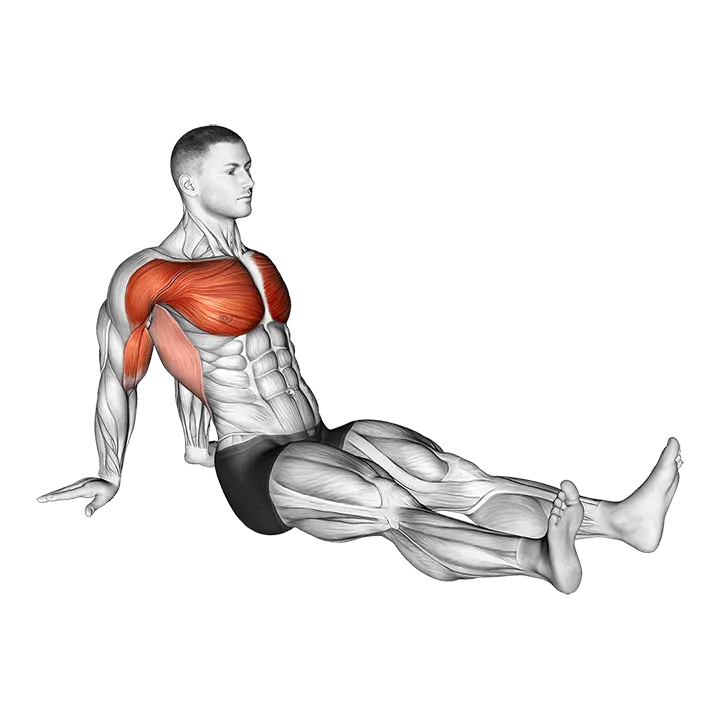
Seated Shoulder Flexor Depresor Retractor Stretch
- Target muscle
- —
- Equipment
- Body weight
- Body part
- Shoulders
- Type
- Stretching
The seated shoulder flexor depressor retractor stretch is a bodyweight mobility exercise that targets the anterior deltoid, pectoralis minor, and the muscles responsible for shoulder flexion, elevation, and protraction. Performed seated with hands clasped or gripping behind the back, it draws the shoulder blades down and together to open the front of the shoulder and chest. It is an ideal postural counter-stretch for anyone who sits for long periods with rounded or elevated shoulders.
How to do the Seated Shoulder Flexor Depresor Retractor Stretch
- 1Sit tall on a chair or bench with your feet flat on the floor, hips at roughly 90 degrees, and spine upright.
- 2Reach both arms behind your back and either interlace your fingers or grip the back edge of the chair seat.
- 3Straighten your elbows as much as your flexibility allows, keeping the grip firm.
- 4Inhale to prepare, then on the exhale draw your shoulder blades down away from your ears (depression) and squeeze them together toward your spine (retraction).
- 5Gently lift and extend your clasped hands a few centimetres away from your lower back, increasing the stretch across the front of the shoulders and chest.
- 6Keep your chin level — avoid jutting the head forward or tilting it back.
- 7Breathe slowly and hold the end position for 20–40 seconds, deepening the stretch slightly with each exhale.
- 8To release, soften the shoulder blades, lower your hands, and bring your arms back to your sides.
Form tips
- Anchor your sitting bones evenly on the seat so the stretch comes from the shoulders rather than from a twisted torso.
- Lead the movement with your shoulder blades first — depression and retraction before you lift the hands — to maximise the stretch on the anterior deltoid and pectoralis minor.
- Keep the chest lifted and the sternum tall throughout; collapsing the ribcage reduces the stretch across the front of the shoulder.
- If you cannot clasp your hands behind your back, grip a towel, resistance band, or the sides of the chair seat to create the same pulling tension.
- Progress the stretch gradually over multiple sessions — avoid jerking the arms upward, which can strain the shoulder capsule.
Common mistakes
- Shrugging the shoulders upward: elevating the shoulder girdle shortens the very muscles you are trying to lengthen; consciously press the shoulders down before and during the stretch.
- Rounding the upper back: slumping forward closes off the chest and reduces the stretch on the anterior deltoid — sit tall and lift the sternum throughout.
- Locking the breath: holding your breath increases tension and limits how deeply the muscles can release; breathe steadily and use each exhale to ease further into the position.
- Forcing the arms too high too soon: aggressively lifting clasped hands strains the shoulder capsule and bicep tendons — increase range gradually as flexibility improves.
- Tilting the head forward or down: poking the chin forward creates unnecessary tension in the cervical spine; keep the gaze level and the neck long.
Frequently asked questions
What muscles does the seated shoulder flexor depressor retractor stretch target?
The stretch primarily lengthens the anterior deltoid, pectoralis minor, and the short head of the biceps brachii — muscles involved in shoulder flexion, elevation, and protraction. Secondary tension is felt across the upper chest and the front of the shoulder capsule.
How long should I hold this stretch?
Hold the end position for 20–40 seconds per repetition and perform 2–3 repetitions per session. For tight shoulders from prolonged sitting, repeating the stretch 2–3 times throughout the day yields the best results.
Can this stretch help with rounded shoulders?
Yes — depression and retraction of the shoulder blades directly counters the protracted, elevated posture common in people who sit at desks. Consistent practice, combined with strengthening the mid and lower trapezius, helps restore a more neutral shoulder position.
I cannot clasp my hands behind my back — what should I do?
Grip a folded towel, a resistance band, or the back edge of the chair seat with both hands instead. This modification creates the same shoulder depression and retraction pattern while accommodating limited shoulder or wrist flexibility.
When is the best time to do this stretch?
It can be performed anytime — as part of a warm-up with lighter intensity, during a desk break to relieve postural tension, or in a cool-down after upper-body training. Avoid pushing aggressively into the stretch on a completely cold shoulder.







