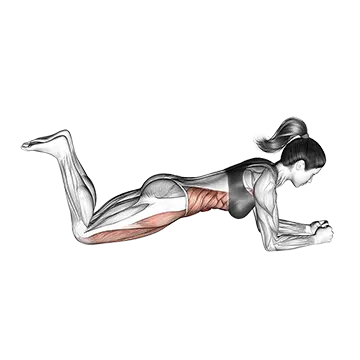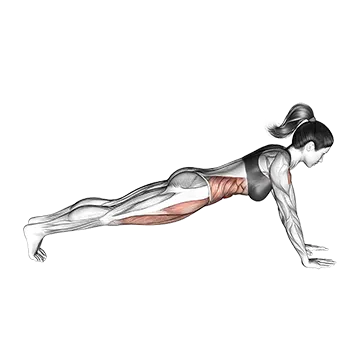
Sideways Lifts Vertical (straight legs)
- Target muscle
- Rectus Abdominis
- Synergist muscles
- Obliques
- Equipment
- Body weight
- Body part
- Waist
- Type
- Strength
Sideways lifts vertical with straight legs is a bodyweight core exercise performed lying on your side, lifting both legs simultaneously upward with the knees fully extended. The rectus abdominis stabilizes the spine isometrically while the obliques drive the lateral flexion needed to raise the legs. It is an effective bodyweight movement for building lateral core strength and hip control.
How to do the Sideways Lifts Vertical (straight legs)
- 1Lie on your side on a firm, flat surface with your body in a straight line from head to feet.
- 2Stack your hips and shoulders directly on top of each other so neither rolls forward nor backward.
- 3Extend both legs fully and press them together, pointing your toes away from you.
- 4Rest your bottom arm extended along the floor or bend it so your head rests on your hand for support.
- 5Brace your core firmly before the movement begins.
- 6On an exhale, raise both legs simultaneously off the floor, keeping the knees completely straight, until your top leg is approximately 30–45 degrees from the ground.
- 7Pause briefly at the top, maintaining tension through the obliques and rectus abdominis.
- 8Lower both legs with control back to the starting position without letting them drop to the floor passively.
- 9Complete all reps on one side, then switch sides and repeat.
Form tips
- Keep both knees fully locked throughout the movement — any bend shortens the lever arm and shifts load away from the target muscles.
- Press your bottom hip firmly into the floor rather than allowing it to lift; the pelvis should remain as stable as possible during each rep.
- Use a slow, deliberate tempo of about 2 seconds up and 2 seconds down to ensure the muscles do the work rather than momentum.
- Keep your top hip stacked directly over the bottom hip; rotating the pelvis forward turns the movement into a different exercise pattern.
- Exhale as you raise the legs and inhale as you lower them to maintain intra-abdominal pressure and protect the lower back.
Common mistakes
- Rolling the hips forward or backward before the lift begins, which changes the plane of movement and reduces oblique engagement.
- Bending the knees during the raise, which shortens the lever and makes the exercise easier than intended while reducing the core stimulus.
- Using a swinging or jerking motion to get the legs airborne, which transfers load to momentum rather than to the rectus abdominis and obliques.
- Allowing the lower back to arch excessively as the legs rise, which places compressive stress on the lumbar spine instead of loading the core.
- Lifting the legs too high by rotating the pelvis, which substitutes hip flexor activity for the lateral core work the exercise is designed to develop.
Frequently asked questions
What muscles do sideways lifts vertical with straight legs work?
The primary muscle is the rectus abdominis, which stabilizes the spine isometrically throughout the movement. The obliques act as synergists, providing the lateral flexion force that raises both legs.
How is this exercise different from a standard side-lying leg raise?
A standard side-lying leg raise lifts only the top leg independently. Sideways lifts vertical raises both legs together with straight knees, which increases the load on the lateral core and demands greater stability from the obliques and rectus abdominis.
How many reps and sets should I do?
A common starting point is 3 sets of 8–12 reps per side with a controlled tempo. As strength improves, increase reps or add a brief pause at the top of each lift rather than adding load, since this is a bodyweight movement.
Is this exercise suitable for beginners?
It can be challenging for beginners because it requires simultaneous core stability and straight-leg control. If the double-leg version is too difficult, start with a single top-leg raise and progress to lifting both legs once you can complete 10 clean reps per side.
Can I do this exercise if I have lower back pain?
Side-lying core exercises are generally considered lower back-friendly compared to flexion-based movements because the spine stays neutral. However, if you experience pain during the lift, stop and consult a healthcare professional before continuing.