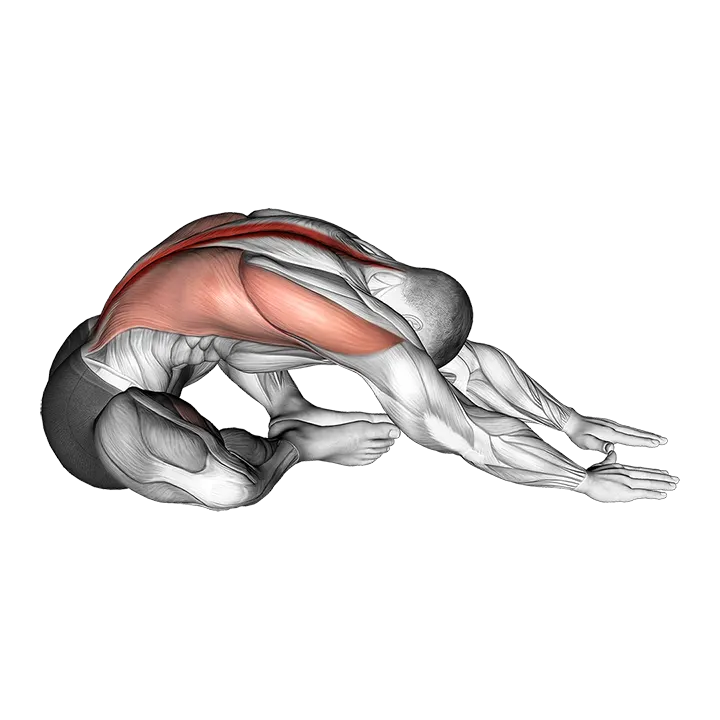
Sitting Feet Together Reach Forward Stretch
- Target muscle
- —
- Equipment
- Body weight
- Body part
- Back
- Type
- Stretching
The Sitting Feet Together Reach Forward Stretch is a bodyweight floor stretch that targets the back, particularly the lower back and posterior chain. By sitting with the soles of your feet together and reaching both hands as far forward as possible, it gently decompresses the spine and lengthens the lower-back muscles and inner thighs.
How to do the Sitting Feet Together Reach Forward Stretch
- 1Sit on the floor with your legs in front of you, then bring the soles of your feet together so your knees fall out to the sides in a butterfly position.
- 2Draw your feet in toward your hips as far as is comfortable, keeping the soles firmly pressed together.
- 3Sit tall, elongating your spine and lifting the crown of your head toward the ceiling.
- 4Inhale deeply to prepare, then exhale as you begin to hinge forward from your hips — not your waist — keeping your back as flat as possible.
- 5Reach both hands forward along the floor in front of you, extending as far as you can while maintaining a long spine.
- 6Hold the end position for 20–40 seconds, breathing slowly and deeply, allowing your lower back and posterior chain to relax further with each exhale.
- 7To release, walk your hands back toward your body, sit upright, and gently extend your legs out in front of you.
Form tips
- Breathe out as you reach forward and use each exhale to relax deeper into the stretch — never hold your breath.
- Initiate the forward movement from your hips, not your lower back; think of tilting your pelvis forward rather than rounding your spine.
- To deepen the stretch, pull your feet slightly closer to your body and focus on lengthening your torso before reaching further forward.
- Keep your shoulders relaxed and away from your ears throughout the hold to avoid tension in the neck and upper back.
- Progress gradually — stretch to the point of mild tension, never sharp pain. Each session the range of motion will naturally improve.
Common mistakes
- Rounding the lower back immediately instead of hinging from the hips, which shifts the stretch away from the target muscles and can strain the lumbar spine.
- Forcing the stretch by yanking the torso forward with momentum, which risks overstretching the connective tissue and reducing the effectiveness of the hold.
- Holding your breath, which increases tension throughout the body and prevents the muscles from releasing into the stretch.
- Letting the knees creep upward off the floor, which reduces the hip-opening component and limits how far the torso can reach forward.
- Collapsing the chest and curling the shoulders inward, which compresses the front of the spine rather than elongating the back.
Frequently asked questions
What muscles does this stretch target?
It primarily stretches the lower back and the posterior chain as a whole, including the erector spinae and the muscles running along the spine. The hamstrings and inner thighs also receive a secondary stretch from the butterfly leg position.
How long should I hold the stretch?
Aim for 20–40 seconds per hold. For mobility work, two to three holds with a brief rest between them is effective. Avoid holding longer than 60 seconds without releasing to restore blood flow.
Why is the feet-together position used instead of legs straight?
Bringing the soles together opens the hips and removes much of the hamstring tension that limits a straight-leg forward fold, allowing you to focus more directly on lengthening the lower back and posterior chain rather than fighting tight hamstrings.
Can I do this stretch if I have lower back pain?
Many people with mild lower back tightness find gentle forward stretches helpful, but you should hinge from the hips and keep the back as flat as possible. Avoid the stretch if it causes sharp, radiating, or worsening pain, and consult a healthcare professional if in doubt.
When is the best time to do this stretch?
It works well as part of a cool-down after a workout when the muscles are warm, or as a stand-alone mobility drill in the morning. Avoid performing deep static stretches on completely cold muscles — a brief warm-up walk or light movement beforehand is ideal.







