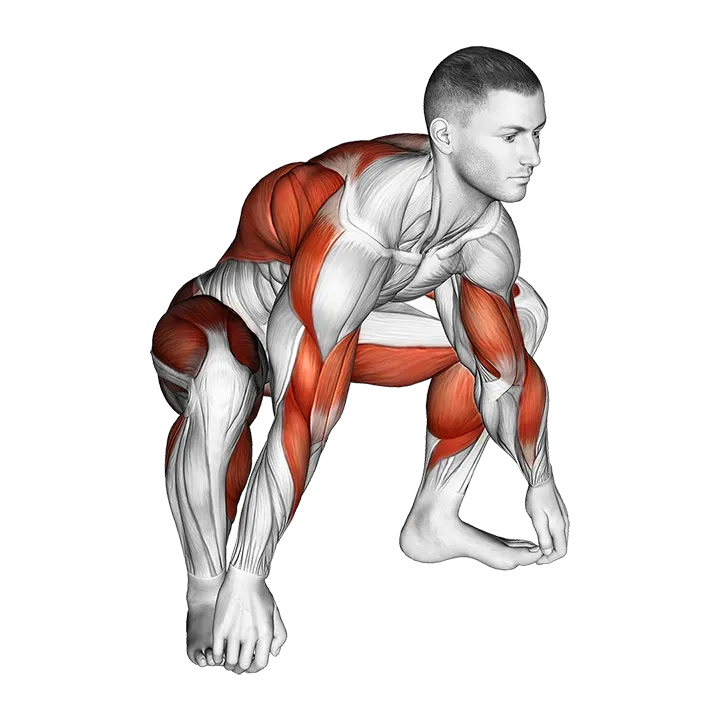
Sitting Sumo Mobility Stretch
- Target muscle
- —
- Equipment
- Body weight
- Body part
- Back, Thighs
- Type
- Stretching
The sitting sumo mobility stretch is a floor-based flexibility exercise that opens the inner thighs and groin while relieving tension along the lower back. Performed with legs spread wide in a sumo stance and torso leaning forward, it is effective for improving hip mobility and reducing tightness in the back and thighs accumulated from sitting or heavy lower-body training.
How to do the Sitting Sumo Mobility Stretch
- 1Sit on the floor with your legs spread as wide as is comfortable, forming a wide V shape. Flex your feet so your toes point toward the ceiling.
- 2Sit up tall, lengthening your spine and drawing your shoulders back and down away from your ears.
- 3Place your hands on the floor between your legs, fingertips pointing forward.
- 4On an exhale, hinge forward from your hips — not your waist — and begin walking your hands out along the floor in front of you.
- 5Lower your torso toward the floor as far as your flexibility allows, keeping your spine long rather than rounding aggressively through your mid-back.
- 6Hold the end position for 20–40 seconds, breathing steadily and allowing your inner thighs and lower back to relax with each exhale.
- 7To release, walk your hands back in and sit upright slowly before bringing your legs together.
Form tips
- Initiate the forward lean from your hip joint, not by rounding your lower back — this keeps the stretch in the inner thighs and back rather than straining the lumbar spine.
- Keep your feet flexed throughout to engage the leg muscles gently and protect the knee joints.
- Use each exhale as a cue to sink slightly deeper; avoid forcing the stretch by pressing on your thighs or pushing your torso down.
- If your lower back rounds severely before you reach a stretch, sit on a folded blanket or yoga block to tilt your pelvis forward and restore a neutral spine.
Common mistakes
- Rounding the lower back heavily to reach the floor, which shifts the stretch away from the inner thighs and places compressive load on the lumbar discs.
- Letting the knees roll inward or the legs drift closer together, which reduces the stretch on the inner thighs and groin.
- Holding the breath, which increases tension throughout the body and prevents the muscles from releasing into the stretch.
- Pointing the toes instead of flexing the feet, which can place unwanted stress on the knee ligaments at the wide-leg position.
- Forcing range of motion by pushing or bouncing, which triggers a protective stretch reflex and increases injury risk.
Frequently asked questions
What does the sitting sumo mobility stretch target?
It primarily targets the inner thighs and groin (adductors), while also releasing tension in the lower back and hip flexors. The wide-leg seated position places a sustained stretch on all of these areas simultaneously.
How long should I hold the sitting sumo stretch?
Hold for 20–40 seconds per repetition and perform 2–3 rounds. For flexibility gains over time, gradually work toward holding 60 seconds as your range of motion improves.
Can I do this stretch if my back rounds a lot when I sit on the floor?
Yes — sit on a folded blanket, yoga block, or firm cushion to elevate your hips above your thighs. This tilts your pelvis forward and makes it easier to hinge from the hips without rounding the lumbar spine.
Is the sitting sumo mobility stretch good for lower back pain?
It can help relieve tightness in the lower back that stems from hip and adductor restriction, but it should be approached carefully if you have an active lumbar injury. Avoid excessive rounding and stop if the stretch produces pain rather than tension.
When is the best time to do this stretch?
It is most effective as part of a post-workout cooldown or a dedicated mobility session when the muscles are already warm. Performing it on cold muscles can make it harder to relax into the position and may increase discomfort.







