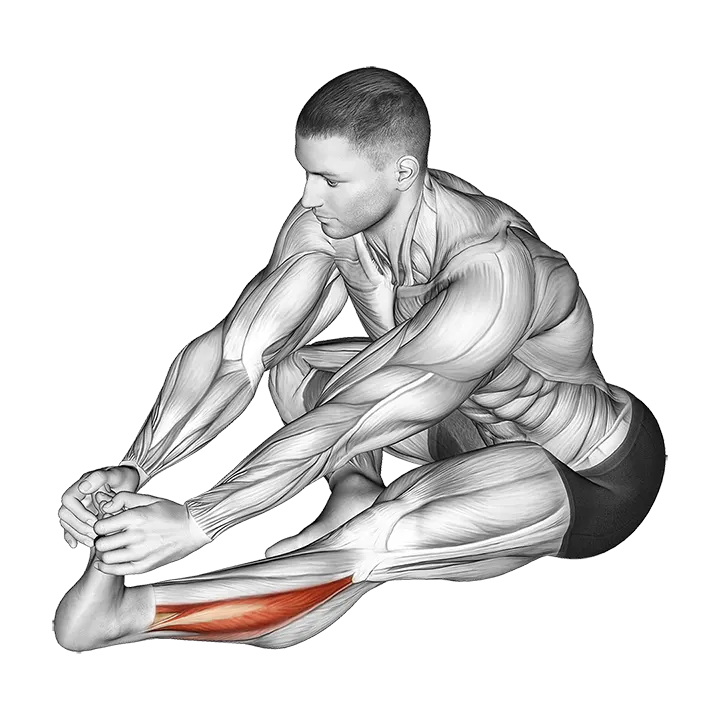
Sitting Toe Pull Calf Stretch
- Target muscle
- —
- Equipment
- Body weight
- Body part
- Calves
- Type
- Stretching
The Sitting Toe Pull Calf Stretch is a bodyweight flexibility exercise that targets the calves — primarily the gastrocnemius and soleus — by sitting with legs extended and pulling the toes toward you to create dorsiflexion. It is an effective cooldown or mobility drill for runners, cyclists, and anyone looking to reduce calf tightness and improve ankle range of motion.
How to do the Sitting Toe Pull Calf Stretch
- 1Sit on the floor with your legs extended straight in front of you and your back tall.
- 2Flex your ankles so your toes point directly toward the ceiling.
- 3Reach forward and loop a towel, resistance band, or your hands around the balls of your feet.
- 4Gently pull the tops of your feet toward your shins, deepening the dorsiflexion as far as your flexibility allows.
- 5Hold the end-range position for 20–30 seconds, breathing steadily and relaxing into the stretch.
- 6Release the tension slowly, then repeat for the desired number of sets on both legs.
Form tips
- Keep your knees fully extended throughout the stretch — a bent knee reduces tension on the gastrocnemius and shifts most of the load onto the soleus alone.
- Breathe slowly and let each exhale encourage a slightly deeper stretch; never force the position with a hard yank.
- Sit on a folded mat or blanket if your hamstrings are tight and prevent you from keeping your back upright — a neutral spine ensures the calf receives the full stretch.
- Pull evenly through the entire foot rather than just the toes to avoid cramping the foot muscles.
Common mistakes
- Rounding the lower back heavily, which shifts tension away from the calves and places strain on the lumbar spine.
- Bending the knees during the stretch, which slackens the gastrocnemius and makes the stretch far less effective.
- Jerking or bouncing the foot toward the shin, which triggers the stretch reflex and can cause a calf cramp or minor muscle strain.
- Holding the breath, which increases muscular tension and prevents the calf from releasing fully into the stretch.
- Pulling only the big toe rather than the whole forefoot, which creates uneven force across the ankle and may strain the plantar fascia.
Frequently asked questions
What muscles does the Sitting Toe Pull Calf Stretch work?
It primarily stretches the gastrocnemius and soleus — the two main muscles of the calf. With the knee straight, the gastrocnemius (which crosses the knee) is elongated most; bending the knee slightly would shift emphasis to the deeper soleus.
How long should I hold the Sitting Toe Pull Calf Stretch?
Aim for 20–30 seconds per hold and repeat 2–3 times per leg. Research on static stretching supports holds in this range for improving flexibility without reducing subsequent muscle performance excessively.
Is this stretch good for runners?
Yes. Tight calves are one of the most common contributors to Achilles tendon issues, plantar fasciitis, and shin splints in runners. Performing this stretch after a run — when the muscles are warm — can help maintain ankle mobility and reduce injury risk.
What can I use if I cannot reach my feet?
Loop a resistance band, yoga strap, or even a folded towel around the balls of your feet and hold both ends. This lets you apply controlled dorsiflexion without needing full hamstring flexibility.
Can I do this stretch if I have tight hamstrings?
Yes — sit on a folded blanket or wedge to tilt your pelvis slightly forward and reduce hamstring pull. This allows you to keep your back upright and your knees straight so the calf receives the full benefit of the stretch.







