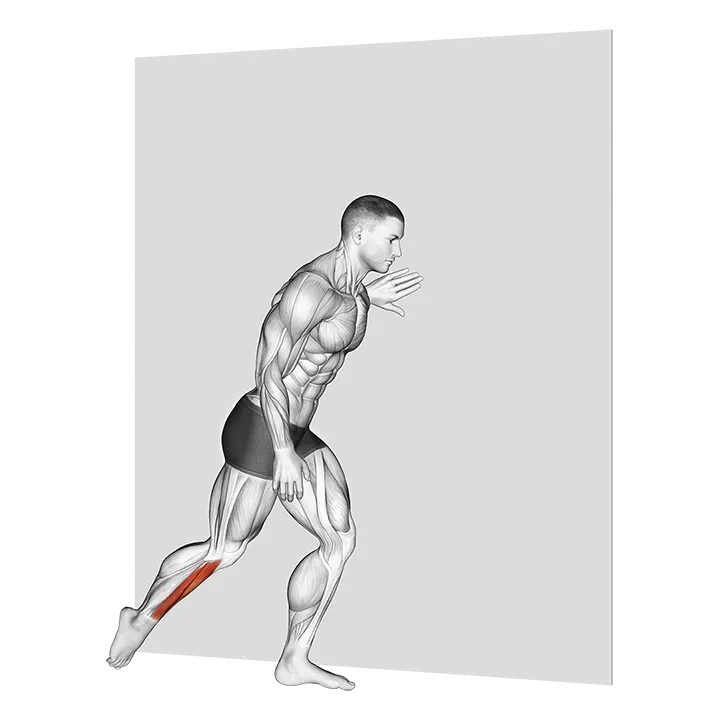
Standing Shin Stretch
- Target muscle
- —
- Equipment
- Body weight
- Body part
- Calves
- Type
- Stretching
The Standing Shin Stretch targets the tibialis anterior — the muscle that runs along the front of your shin — along with the surrounding dorsiflexor muscles of the lower leg. Performed using only body weight, it relieves tightness in the shin that builds up from running, walking uphill, or prolonged time on your feet. Regular stretching of this area supports ankle mobility and can help reduce the risk of shin splints.
How to do the Standing Shin Stretch
- 1Stand tall near a wall or sturdy surface for balance, feet hip-width apart and your core lightly engaged.
- 2Shift your weight onto your left foot, keeping a slight bend in the standing knee for stability.
- 3Extend your right leg slightly behind you and point your toes downward toward the floor.
- 4Curl your toes gently under so the top of your foot faces the floor, then press the top of your foot lightly against the ground.
- 5Slowly bend the standing knee a little more or shift your hips slightly forward until you feel a clear stretch along the front of your shin.
- 6Hold the position for 20–30 seconds, breathing steadily and letting the tibialis anterior relax into the stretch.
- 7Ease out of the position slowly, return to standing, and repeat on the opposite side.
Form tips
- Keep the stretch gentle — aim for mild, comfortable tension along the shin. If you feel sharp or shooting pain, reduce the foot pressure immediately.
- Use a wall or chair back for balance so you can fully relax into the stretch rather than fighting to stay upright.
- To deepen the stretch, press the top of your foot a little more firmly into the floor or increase the bend in your standing knee slightly.
- Perform this stretch after activity, when the lower leg is warm, for the best results — cold muscles stretch less efficiently and are more prone to strain.
- Breathe slowly and steadily throughout the hold — relaxed breathing helps the tibialis anterior release more effectively.
Common mistakes
- Pointing the foot out to the side rather than straight back, which shifts tension away from the tibialis anterior and makes the stretch much less effective.
- Locking the standing knee, which reduces stability and makes it harder to control the depth of the stretch safely.
- Pressing the top of the foot too hard into the ground on the first attempt — ease in gradually to avoid overstretching the top of the foot or the ankle joint.
- Holding for fewer than 20 seconds, which does not give the muscle enough time to lengthen and release tension.
Frequently asked questions
What muscles does the Standing Shin Stretch target?
It primarily stretches the tibialis anterior, the main muscle running along the front of the shin that is responsible for pulling the foot upward (dorsiflexion). The surrounding dorsiflexor muscles of the lower leg also benefit.
How long should I hold the Standing Shin Stretch?
Hold each side for 20–30 seconds. Repeat 2–3 times per side to allow the tibialis anterior enough time to release and lengthen.
When is the best time to do shin stretches?
After activity is ideal, when the lower leg muscles are warm. Stretching a cold muscle is less effective and slightly riskier — if you stretch before exercise, keep the hold brief and gentle.
Can the Standing Shin Stretch help with shin splints?
It can help relieve associated tightness in the shin muscles, which is a contributing factor in shin splints. However, shin splints are an overuse injury — stretching alone will not cure them. Reduce training load and consult a healthcare provider if the pain persists.
What is a good alternative to the Standing Shin Stretch?
The seated shin stretch — sitting on your heels with the tops of both feet flat on the floor — stretches the same muscles with more bilateral contact and less balance demand, making it a useful option when standing balance is a challenge.







