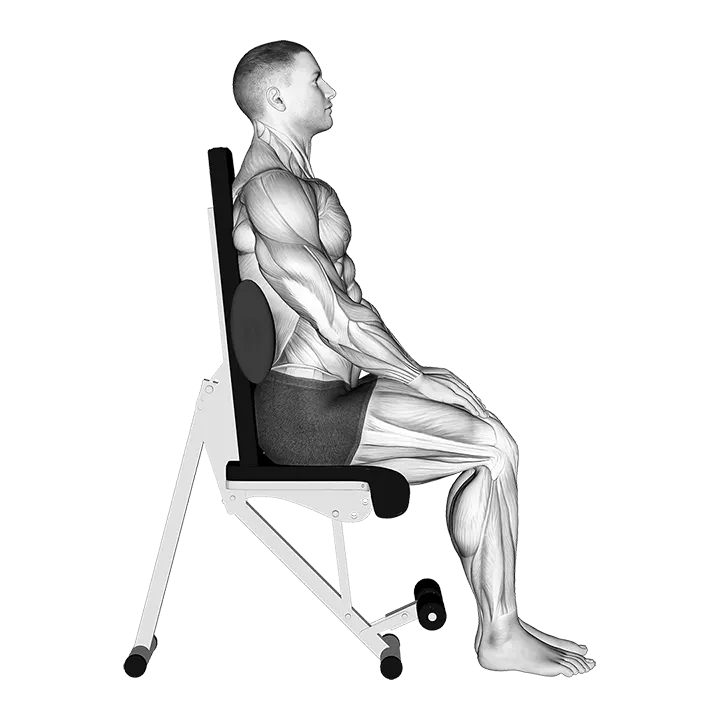
Static Position Seated Back with Pad
- Target muscle
- —
- Equipment
- Body weight
- Type
- Stretching
The Static Position Seated Back with Pad is a gentle body-weight stretching exercise designed to decompress the spine and relieve tension throughout the back while seated. A pad placed behind the back provides a supportive point of contact that encourages a natural thoracic opening and improved posture. It is well suited for recovery sessions, desk-break mobility work, or as a warm-up to prepare the spine for more demanding movement.
How to do the Static Position Seated Back with Pad
- 1Place a firm pad vertically against the back of a sturdy chair or bench so it will sit between your shoulder blades and your lower back when you sit down.
- 2Sit upright on the chair with your feet flat on the floor, hip-width apart, and lean gently back until the pad makes full contact with your mid-to-lower back.
- 3Allow your pelvis to settle in a neutral position — neither tucked nor excessively arched — so your natural spinal curves are supported.
- 4Rest your hands loosely on your thighs or fold them in your lap to keep the upper body relaxed.
- 5Take a slow, deep breath in through your nose, letting your ribcage expand against the pad.
- 6Exhale fully through your mouth, allowing your torso to soften and gently sink further into the pad with each breath.
- 7Hold the position for 20–60 seconds, breathing steadily and releasing any residual tension with each exhale.
- 8To finish, engage your core lightly and sit forward away from the pad before standing.
Form tips
- Keep your chin slightly tucked throughout — avoid letting your head jut forward, which can create neck tension instead of relieving it.
- Use each exhale as an opportunity to relax deeper into the pad rather than forcing the stretch actively.
- Position the pad so its top edge sits just below your shoulder blades for a thoracic focus, or lower toward your lumbar spine to target the lower back.
- Keep your feet fully grounded; pressing them gently into the floor helps stabilise the pelvis and prevent slouching.
- Breathe diaphragmatically — let your belly rise first on the inhale — to maximise spinal decompression benefit.
Common mistakes
- Placing the pad too high so it contacts the neck area, which can cause discomfort and defeats the back-decompression purpose.
- Holding the breath instead of breathing deeply, which keeps the surrounding muscles tense and prevents the stretch from taking effect.
- Slumping the shoulders forward during the hold, which rounds the upper back and counteracts the opening the pad is meant to create.
- Sitting too far from the pad so contact is lost mid-hold, reducing the supportive feedback and postural benefit.
- Forcing the spine into the pad aggressively rather than letting gravity and breath create a gradual, comfortable release.
Frequently asked questions
What does the Static Position Seated Back with Pad stretch?
The exercise primarily decompresses the thoracic and lumbar spine and releases tension in the paraspinal muscles that run along either side of the spine. Depending on pad placement, it can also gently open the chest and stretch the muscles between the shoulder blades.
What type of pad should I use?
A rolled-up yoga mat, a foam roller placed horizontally, a lumbar support cushion, or a purpose-made back pad all work well. The pad should be firm enough to provide a consistent point of contact but not so hard that it causes discomfort against the vertebrae.
How long should I hold the static position?
Most people benefit from holds of 20–60 seconds. You can repeat the hold 2–3 times, repositioning the pad slightly between sets to address different spinal segments.
Can I do this exercise if I have lower back pain?
Mild back tension often responds well to gentle supported seated stretches, but if you have a diagnosed spinal condition, disc injury, or acute pain, consult a healthcare professional before attempting this exercise. Stop immediately if you feel sharp or radiating pain.
When is the best time to do this exercise?
It works well as a midday desk break to counteract prolonged sitting, at the start of a session to mobilise the spine before loading it, or at the end of a workout as part of a cool-down routine. Because it uses only body weight and requires no warm-up, it can be performed almost any time.







