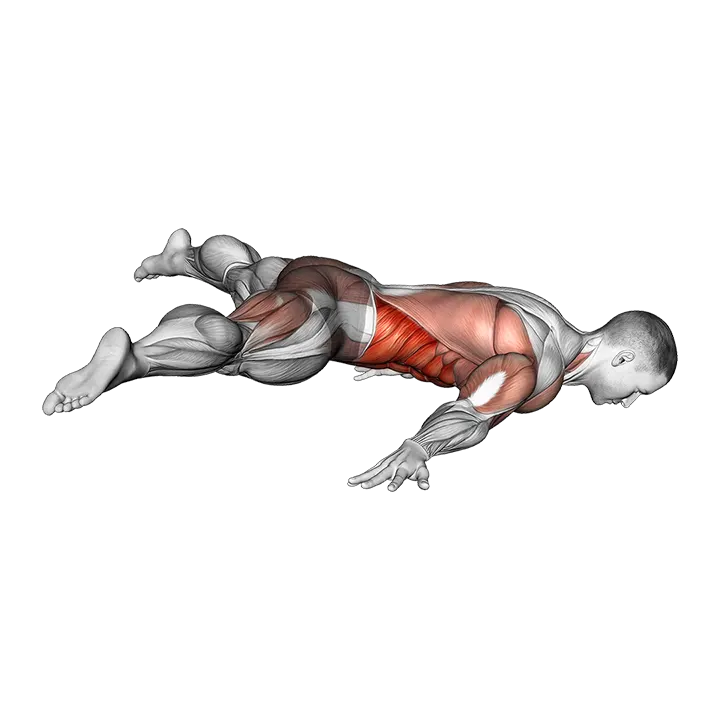
Straddle Maltese
- Target muscle
- —
- Equipment
- Body weight
- Body part
- Waist
- Type
- Stretching
The Straddle Maltese is an advanced gymnastic static hold performed with the legs spread wide and the body held parallel to the ground, demanding exceptional core and shoulder-girdle strength. It targets the waist region through extreme lateral and rotational stability requirements. The position is typically trained on rings or floor and requires a long-term progression build.
How to do the Straddle Maltese
- 1Begin in a support position on parallel bars or rings with your arms straight and your body upright, feet together.
- 2Spread your legs out to a straddle position, roughly 90–120 degrees apart, keeping both legs fully extended and feet pointed.
- 3Lean your torso forward gradually while pressing down through your arms, shifting your center of mass toward horizontal.
- 4Continue lowering until your body is parallel to the ground, arms extended to the sides and slightly behind your hips.
- 5Keep your hips level and your lower back engaged to prevent sagging at the waist.
- 6Hold your gaze slightly forward and down to keep a neutral neck position throughout the hold.
- 7Brace your entire midsection firmly — think of compressing the waist from all directions simultaneously.
- 8Hold the position for the target duration (begin with 1–3 seconds and build progressively), breathing shallowly but continuously.
- 9To exit, pike your hips up or press back to the support position under control rather than dropping out of the hold.
Form tips
- Protract your shoulder blades and push through your palms actively — passive hanging collapses the position immediately.
- A wider straddle lowers your center of mass slightly, making the hold more accessible than a closed-leg Maltese; use the straddle width to your advantage while building strength.
- Keep your legs and feet actively squeezed and pointed throughout — a relaxed lower body shifts unwanted load onto the waist.
- Train the hold in negatives (lowering slowly from support to horizontal over 3–5 seconds) before attempting static holds.
- Exhale partially before the hold and then breathe in controlled sips; a full deep breath disrupts core tension.
Common mistakes
- Allowing the hips to sag below shoulder height, which dumps the load into passive structures and removes the training stimulus from the waist.
- Bending the elbows during the hold, which reduces the lever demand significantly and means you are not truly in the Maltese position.
- Letting the legs drop rather than maintaining an active straddle, which shifts the center of mass and destabilizes the hold.
- Attempting the full hold before building sufficient foundation through progressions such as the tuck or straddle planche, risking shoulder and wrist strain.
- Holding the breath completely, which spikes intra-abdominal pressure beyond what is useful and can cause dizziness or premature failure.
Frequently asked questions
What is the difference between the Straddle Maltese and the regular Maltese?
The regular Maltese is performed with legs together, creating a longer, heavier lever. The Straddle Maltese spreads the legs wide to shorten the effective lever arm and shift the center of mass, making it a more accessible progression while still demanding extreme core and shoulder-girdle strength.
What progressions lead to the Straddle Maltese?
A structured path typically runs from the tuck planche through the advanced tuck planche, straddle planche, and then into Maltese-specific work on rings or floor. Maltese leans and negative holds at the target body angle are the most direct preparatory drills.
How long should I hold the Straddle Maltese?
Beginners working toward the hold aim for 1–3 second negatives or partial holds. A 3-second static hold is a meaningful benchmark for intermediate practitioners, while advanced gymnasts may hold 5–10 seconds with good form.
Can the Straddle Maltese be trained on the floor instead of rings?
Yes. The floor version requires pushing through the palms with arms behind the hips rather than out to the sides, which changes the wrist and shoulder angle. Rings allow a more natural arm path and are generally considered the standard training surface.
How often should I train the Straddle Maltese?
Because of the extreme static demand on the waist and shoulder girdle, most practitioners train Maltese-family work two to three times per week with at least one full rest day between sessions to allow connective tissue recovery.







