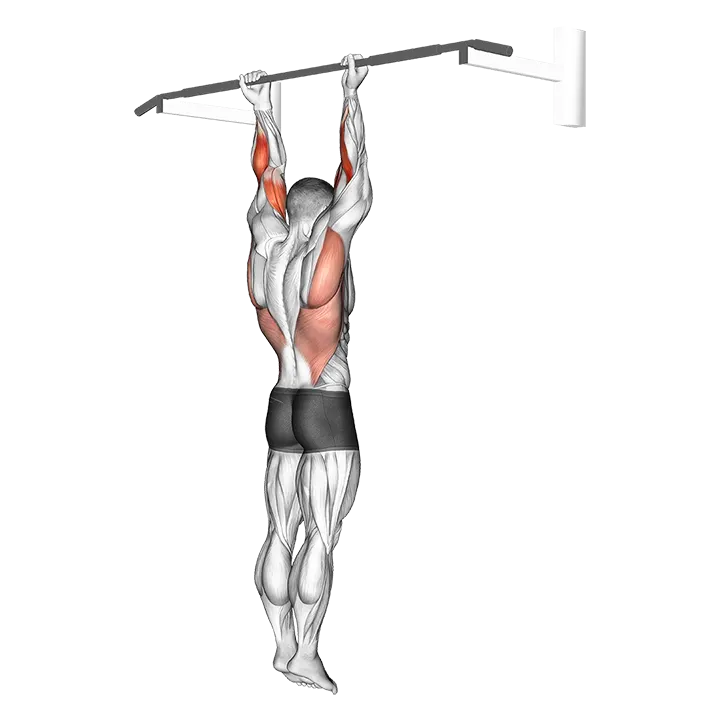
Supination Bar Suspension Stretch
- Target muscle
- —
- Equipment
- Body weight
- Body part
- Upper Arms
- Type
- Stretching
The Supination Bar Suspension Stretch is a bodyweight mobility exercise that targets the upper arms by hanging from an overhead bar with an underhand, supinated grip (palms facing toward you). Hanging in supination lets your bodyweight place a deep stretch on the biceps and forearm, making it an effective addition to upper-arm mobility and recovery work.
How to do the Supination Bar Suspension Stretch
- 1Stand beneath a pull-up bar or similar overhead bar so it is within easy reach overhead.
- 2Reach up and grip the bar with both hands using an underhand (supinated) grip — palms facing toward you, hands roughly shoulder-width apart.
- 3Bend your knees or lift your feet so your bodyweight hangs from the bar with your arms fully extended.
- 4Let your bodyweight settle while keeping your shoulders packed down away from your ears and your elbows straight.
- 5Relax into the hang and allow gravity to deepen the stretch through your biceps and forearms — keep the elbows extended and do not force the position.
- 6Breathe slowly and steadily, easing a little deeper into the stretch with each exhale.
- 7Hold the stretched position for 20–40 seconds, or as long as you can maintain a controlled, relaxed hang.
- 8To finish, place your feet back on the floor to unload your arms before releasing the bar.
Form tips
- Keep your shoulders depressed (pulled down) throughout the hang to avoid unnecessary stress on the shoulder joint.
- Keep your elbows fully extended — a straight arm is what places the stretch on the biceps, so let them lengthen rather than bending them.
- Breathe out and relax as you settle into the hang to help your muscles accept the stretch.
- Maintain a slight engagement in your core to keep your body from swinging and destabilising the stretch.
- Use a bar at a height that lets you hang with fully extended arms and feet clear of the floor for a controlled stretch.
Common mistakes
- Shrugging the shoulders up toward the ears, which loads the neck and traps and reduces the effectiveness of the upper-arm stretch.
- Bending the elbows during the hang, which slackens the biceps and limits the stretch.
- Dropping into the hang abruptly instead of easing in, which yanks on the shoulder and elbow rather than letting the stretch develop gradually.
- Holding the breath, which increases muscular tension and prevents the muscles from relaxing into the stretch.
- Using momentum to swing the body, which shortens the time under stretch and places uncontrolled stress on the shoulder and elbow.
Frequently asked questions
What muscles does the Supination Bar Suspension Stretch target?
It primarily stretches the biceps brachii and the forearm, both of which are loaded when you hang from a supinated grip. The stretch is felt most in the upper arms and forearms.
How long should I hold the Supination Bar Suspension Stretch?
Aim to hold each rep for 20–40 seconds. Perform 2–3 repetitions per session. As your grip endurance and flexibility improve you can gradually work toward longer holds.
When is the best time to do this stretch?
It works well as part of a post-workout cool-down or active recovery day when your muscles are warm. Avoid performing a deep stretch on completely cold, unwarmed tissue.
Can this stretch help with elbow or forearm tightness?
Yes. Because the biceps crosses the elbow, stretching it in a suspended position can relieve tightness around the elbow and help maintain forearm and elbow range of motion over time.
Do I need any equipment for this exercise?
No additional equipment is needed beyond a stable overhead bar — a pull-up bar, gymnastics bar, or any fixed bar you can hang from safely will work.







