Suspended Abdominal Fallout
- Target muscle
- Rectus Abdominis
- Synergist muscles
- Deltoid Anterior, Latissimus Dorsi, Obliques, Pectoralis Major Clavicular Head, Serratus Anterior
- Equipment
- Body weight
- Body part
- Waist
- Type
- Strength


The Suspended Abdominal Fallout is an advanced anti-extension core exercise that primarily targets the rectus abdominis, with meaningful synergistic work from the obliques, anterior deltoids, serratus anterior, latissimus dorsi, and clavicular head of the pectoralis major. Performed with suspension straps, it trains core stability through a long lever arm — making it one of the most demanding bodyweight ab movements available.
How to do the Suspended Abdominal Fallout
- 1Set the suspension straps so the handles hang at approximately hip height when you are standing upright in front of the anchor.
- 2Face away from the anchor, grasp one handle in each hand with a neutral grip, and walk forward until the straps are taut and your body angles slightly forward.
- 3Brace your core firmly, squeeze your glutes, and create a rigid line from your head to your heels — this is your starting position.
- 4With arms extended at roughly shoulder height and elbows nearly locked, let your hands travel forward and overhead in a smooth arc, allowing your body to fall toward the floor.
- 5Keep your hips fully extended and your lower back neutral throughout the descent — do not let your hips sag toward the floor or pike toward the ceiling.
- 6Continue the fall until your arms are fully extended overhead and your torso is near parallel to the floor, going only as far as you can control with a rigid core.
- 7Drive your hands back down and toward your hips in a reverse arc, pulling through your lats and obliques to return to the upright starting position.
- 8Reset your brace fully before beginning the next rep.
Form tips
- Keep your ribcage down and your lower back neutral throughout the full range — the moment your ribs flare upward, your core has lost the anti-extension position.
- Think of slightly pulling the handles apart as you fall forward; this activates the serratus anterior and keeps the shoulder girdle stable under load.
- Control the difficulty by foot position: stepping closer to the anchor reduces the load, while stepping farther away increases it significantly.
- Exhale forcefully as you pull back to the start and inhale during the fallout; coordinating breathing with the movement helps maintain intra-abdominal pressure.
- If you feel compression in your lower back at any point, shorten the range of motion — stop the fallout higher — and rebuild strength before extending further.
Common mistakes
- Letting the hips sag during the fallout, which shifts the load from the rectus abdominis to the lumbar spine and increases lower back injury risk.
- Bending the elbows to complete the rep, which shortens the lever arm dramatically and removes most of the challenge from the abs.
- Piking the hips upward on the way back in, which folds the body at the hips so the hip flexors shorten the lever instead of the abs holding the line, cutting the working range short.
- Rushing the eccentric (falling) phase, which sacrifices time under tension on the rectus abdominis and reduces the training stimulus.
- Starting with the foot position too far from the anchor before building adequate strength, making it impossible to control the end range and forcing compensations throughout.
Frequently asked questions
What muscles does the Suspended Abdominal Fallout work?
The primary muscle is the rectus abdominis, which resists extension of the spine throughout the movement. The obliques, anterior deltoids, serratus anterior, latissimus dorsi, and clavicular head of the pectoralis major all contribute as synergists to stabilize the shoulder girdle and assist the return phase.
Is the Suspended Abdominal Fallout good for beginners?

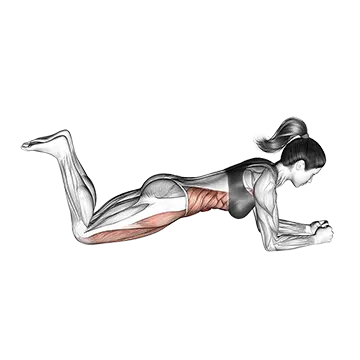
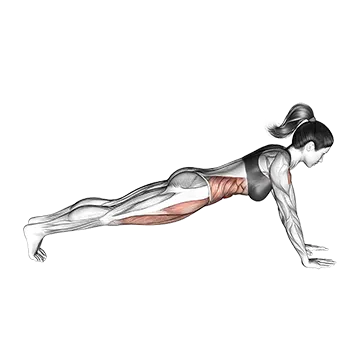
It is not recommended for beginners. The long lever arm places a high demand on core stability and shoulder strength that beginners typically have not yet built. Develop a strong plank hold, dead bug, and hollow-body position before attempting suspension fallouts.
How do I make the Suspended Abdominal Fallout easier or harder?
Walk your feet closer to the anchor point to reduce the effective load (easier), or step farther away to increase it (harder). You can also limit how far you fall as an intermediate step — stopping at a 45° angle before progressing to near-parallel.
How many sets and reps should I do for the Suspended Abdominal Fallout?
Two to four sets of 6–12 controlled reps is a practical working range. Because the exercise demands strict technique, prioritize a slow eccentric and full range of motion over accumulating high rep counts with compromised form.
Where should I feel the Suspended Abdominal Fallout?
You should feel primary tension in the front wall of your core — the rectus abdominis — fighting to prevent your lower back from extending. Secondary work will be noticeable in the shoulders and lats, especially on the return. Any sharp pain in the lower back indicates your hips are sagging and you should reduce the range of motion immediately.