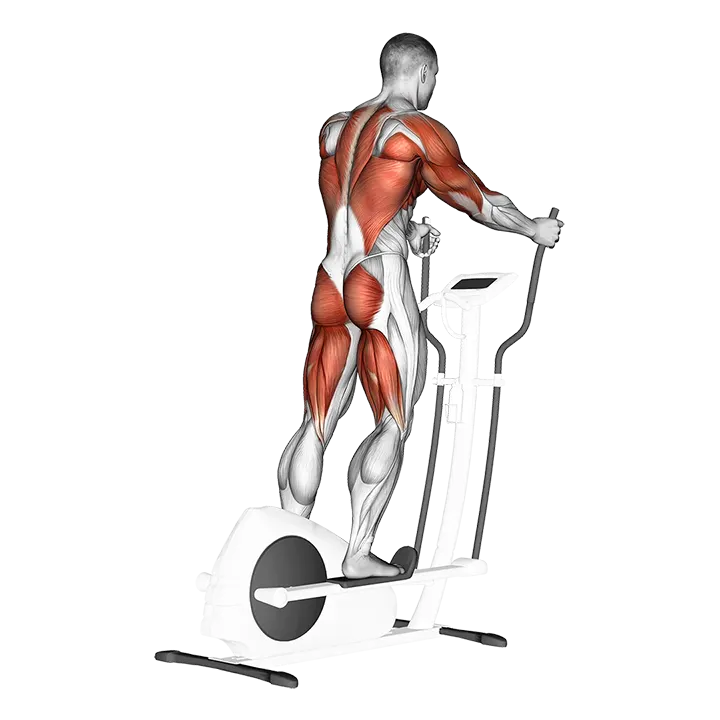
Walk (equipment)
- Target muscle
- —
- Equipment
- Body weight
- Body part
- Cardio
- Type
- Aerobic
Walk (equipment) is a low-impact aerobic exercise performed on a treadmill or similar cardio machine, using your own bodyweight as the load. It elevates heart rate, improves cardiovascular endurance, and engages the lower body — making it an accessible and effective option for warm-ups, active recovery, fat-burning sessions, and general daily movement goals.
How to do the Walk (equipment)
- 1Step onto the treadmill and stand with feet on the side rails before starting the belt.
- 2Set the speed to a comfortable walking pace — typically 2.5–4.0 mph — and step onto the moving belt.
- 3Stand tall with your head up, eyes forward, and shoulders relaxed and slightly back.
- 4Swing your arms naturally at your sides, bending them at roughly 90 degrees and alternating in sync with your opposite leg.
- 5Strike the ground with your heel first, rolling through the midfoot and pushing off with your toes on each step.
- 6Keep your core gently braced and your hips level throughout the stride — avoid excessive side-to-side swaying.
- 7Breathe steadily and rhythmically; you should be able to hold a conversation without gasping.
- 8If using an incline, increase the grade gradually (1–3%) to simulate outdoor terrain and increase intensity without raising speed.
- 9When your session is complete, reduce the speed gradually, step to the side rails, and let the belt stop before stepping off.
Form tips
- Clip the treadmill's safety key to your waistband so the belt cuts out immediately if you lose your footing.
- Let your arms swing freely and naturally; exaggerated arm movement can help increase heart rate and walking efficiency.
- Walk in the middle third of the belt — drifting toward the rear leaves no room to recover if you stumble, and drifting forward crowds the console.
- Judge intensity by your breathing or a heart rate monitor rather than the console's calorie readout, which is only an estimate.
- Start at a slower pace for the first 2–3 minutes as a warm-up, then gradually increase to your target walking speed.
Common mistakes
- Holding or leaning on the handrails — this unloads your legs and core, reducing calorie expenditure and promoting poor posture that can lead to neck and back strain.
- Walking with too long a stride — overstriding causes heel-slamming and places excess stress on the knees and hips; a shorter, more natural stride is safer and more efficient.
- Looking down at your feet or the console — this rounds the upper back and strains the neck; keep your head neutral and gaze forward.
- Skipping the gradual speed adjustment — jumping on or off a moving belt without stepping to the side rails first is a common cause of treadmill falls.
- Keeping the incline at zero the entire session — a flat treadmill is slightly easier than walking outdoors; a 1–2% incline more accurately replicates real-world conditions and increases caloric burn.
Frequently asked questions
What are the benefits of walking on a treadmill?
Treadmill walking improves cardiovascular health, supports weight management, boosts mood through endorphin release, and is gentle on the joints compared to running. The controlled environment lets you adjust speed and incline precisely, making it easy to track progress and tailor intensity to your fitness level.
How long should I walk on a treadmill for a good workout?
General health guidelines recommend at least 150 minutes of moderate-intensity aerobic activity per week, which works out to roughly 30 minutes most days. Beginners can start with 10–15 minute sessions and build up over time. Longer walks of 45–60 minutes are effective for fat burning and endurance building.
What pace should I walk on a treadmill?
A moderate walking pace of 2.5–4.0 mph is typical for most adults. A good benchmark is the 'talk test' — you should be able to speak in short sentences but still feel like you're working. Increasing the incline to 2–5% is an effective way to raise intensity without increasing speed.
Is walking on a treadmill as good as running?
Walking burns fewer calories per minute than running, but it is far lower impact, making it sustainable for much longer durations and safer for people with joint concerns. Brisk treadmill walking, especially with incline, can deliver meaningful cardiovascular benefits comparable to light jogging for many individuals.
Is treadmill walking good for beginners?
Yes — treadmill walking is one of the most beginner-friendly forms of cardio. The cushioned belt reduces joint impact, and the adjustable speed makes it easy to start at a comfortable pace and progress gradually. It requires no special skill and can be performed at any fitness level.







