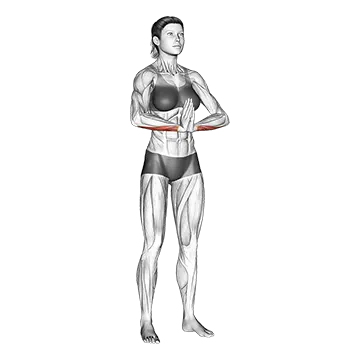
Wrist - Adduction - Articulations
- Target muscle
- Wrist Flexors
- Equipment
- Body weight
- Body part
- Forearms
- Type
- Stretching

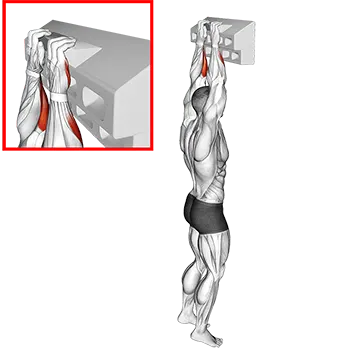
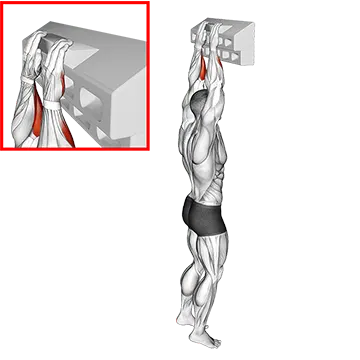

Wrist Adduction Articulations is a bodyweight mobility drill that moves the hand into ulnar deviation — tilting it toward the little-finger side — to stretch and mobilise the wrist flexors along the forearm. It is a low-load, high-control movement used in warm-ups, rehab protocols, and recovery sessions to reduce wrist stiffness and build usable range of motion.
How to do the Wrist - Adduction - Articulations
- 1Sit or stand with your working arm extended in front of you at roughly chest height, elbow straight and palm facing down.
- 2Relax your fingers and let your hand rest in a neutral, flat position aligned with your forearm.
- 3Keeping your forearm completely still, slowly tilt your hand toward the little-finger (ulnar) side as far as you can go without pain.
- 4Pause for one to two seconds at the end of your comfortable range, feeling a mild stretch along the thumb-side of the wrist and the forearm flexors.
- 5Return your hand under control to the neutral starting position — do not let it snap back.
- 6Repeat for the desired number of repetitions, moving at a slow, deliberate pace throughout.
- 7When the set is complete, lower your arm and shake it out gently before switching sides.
Form tips
- Keep the movement isolated to the wrist joint — brace your forearm against your thigh or a table edge if you find the whole arm shifting during the drill.
- Move within a pain-free range only; a mild pulling sensation along the forearm is normal, but sharp or pinching joint pain is a signal to stop.
- Slow the tempo on the return phase — resisting gravity on the way back builds more wrist stability than simply letting the hand drop.
- Perform 2–3 sets of 10–15 reps per side as part of a warm-up or cool-down; short, frequent sessions are more effective than occasional long ones for improving mobility.
Common mistakes
- Rotating the forearm instead of adducting at the wrist, which changes the joint being mobilised and reduces the stretch on the wrist flexors.
- Forcing the end range with a jerk or an assist from the other hand, which risks spraining the ulnar collateral ligament rather than gently lengthening the soft tissue.
- Holding the breath through the drill, which increases muscular tension and limits how far the joint can open up — exhale steadily as you move into the end range.
- Rushing through reps, which turns a controlled mobility drill into a ballistic swing and loses the neuromuscular benefit of exploring the range slowly.
- Skipping the return phase by letting the hand fall back to neutral, which misses the eccentric control component that builds joint stability over time.
Frequently asked questions
What muscles does the Wrist Adduction Articulations drill work?
The primary target is the wrist flexors — the muscles running along the palm-side of the forearm that control wrist movement. Ulnar deviation also places a mild stretch on the radial-side structures and the intrinsic hand muscles, but the forearm flexors are the main tissue being mobilised.
What is the difference between wrist adduction and wrist abduction?
Wrist adduction (ulnar deviation) tilts the hand toward the little-finger side; wrist abduction (radial deviation) tilts it toward the thumb side. Both directions are worth training for balanced wrist mobility, but adduction typically has a smaller natural range.
Is this drill suitable for beginners or people with wrist pain?
Yes — because it uses only bodyweight and can be scaled to any range of motion, it is one of the most beginner-friendly wrist exercises available. If you have an existing wrist injury, confirm with a physiotherapist before starting, and work only within a completely pain-free range.
How many sets and reps should I do?
A common starting point is 2–3 sets of 10–15 slow, controlled reps per side, performed as part of a warm-up or cool-down. As your range of motion improves you can add a 2–3 second pause at end range to deepen the stretch.
What exercises pair well with Wrist Adduction Articulations?
Pairing it with wrist abduction (radial deviation) articulations and wrist flexion/extension circles gives a complete wrist mobility warm-up. It works especially well before activities that load the wrist heavily, such as push-ups, overhead pressing, or gymnastics movements.