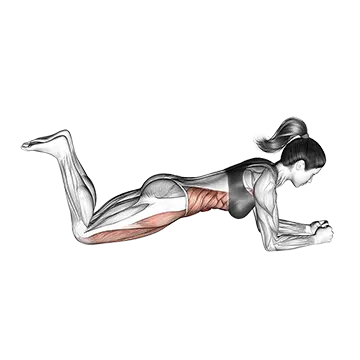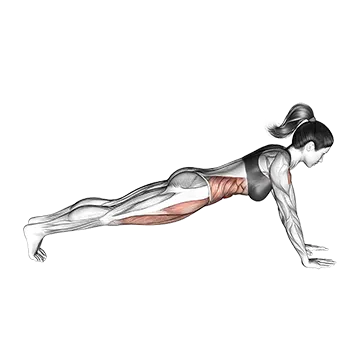
Reverse Crunch
- Zielmuskel
- Rectus Abdominis
- Synergistenmuskeln
- Obliques
- Equipment
- Body weight
- Körperregion
- Waist
- Typ
- Strength


Der Reverse Crunch ist eine Eigengewichtsübung für den Rumpf, die primär den geraden Bauchmuskel (rectus abdominis) trainiert, während die schrägen Bauchmuskeln zur Stabilisierung beitragen. Da du die Hüfte und Knie zum Brustkorb ziehst, statt den Oberkörper zu den Knien, liegt der Fokus direkt auf dem unteren Teil der Bauchmuskulatur – eine effektive Ergänzung für jedes Core-Training.
Reverse Crunch: So führst du sie aus
- 1Lege dich flach auf den Rücken, die Arme liegen neben deinem Körper, wobei die Handflächen zur Stabilisierung leicht in den Boden drücken.
- 2Hebe deine Beine an, sodass Hüfte und Knie einen 90°-Winkel bilden, die Schienbeine parallel zum Boden und die Füße zusammenliegen.
- 3Spanne deine Körpermitte an und drücke den unteren Rücken in den Boden, bevor du mit jeder Wiederholung beginnst.
- 4Atme aus und ziehe deine Hüfte durch Kontraktion der Bauchmuskeln vom Boden ab, indem du deine Knie zum Brustkorb führst.
- 5Führe die Bewegung fort, bis dein Steißbein angehoben ist und deine Knie so nah wie möglich an deiner Brust sind (je nach Bewegungsradius).
- 6Halte die oberste Position kurz inne und spanne deine Bauchmuskeln fest an.
- 7Atme ein und senke deine Hüfte unter Kontrolle langsam wieder in die Ausgangspaktition ab; stoppe, bevor der Kontakt des unteren Rückens zum Boden verloren geht.
- 8Wiederhole dies für die gewünschte Anzahl an Wiederholungen und halte die Spannung in deiner Körpermitte durchgehend aufrecht.
Technik-Tipps
- Drücke deine Handflächen in den Boden, um deinen Oberkörper zu verankern, aber vermeide Schwung aus den Armen, um die Hüfte hochzuschwingen.
- Bewege dich beim Ablassen langsam – die exzentrische Phase ist für den Aufbau der Bauchmuskelkraft genauso wichtig wie die konzentrische Phase.
- Halte die Bewegung in deinen Bauchmuskeln, nicht in deinen Hüftbeugern; denke eher an ein Rollen des Beckens als an ein bloßes Heranziehen der Knie.
- Atme aus, wenn du deine Hüfte hochziehst, und atme ein, wenn du sie senkst – halte niemals die Luft unter Belastung an.
- Falls du merkst, dass sich dein Nacken verspannt, entspanne ihn vollständig; die gesamte Kraft sollte aus deiner Körpermitte kommen.
Häufige Fehler
- Nutzung von Schwung, um die Beine zu bewegen, statt die Bauchmuskeln anzuspannen, was die Belastung vom geraden Bauchmuskel (rectus abdominis) wegverlagert und den Trainingsreiz reduziert.
- Das Hohlkreuz am tiefsten Punkt jeder Wiederholung zulassen, was die Spannung von den Bauchmuskeln nimmt und die Lendenwirbelsäule belasten kann.
- Die Beine beim Ablassen zu schnell absinken lassen, wodurch die exzentrische Phase zu einem freien Fall wird und die Zeit unter Spannung verloren geht.
- Das Heranziehen der Knie primär mit den Hüftbeugern statt durch das Rollen des Beckens, was die Vorderseite der Hüfte überlagert, anstatt die gewünschten Bauchmuskeln zu trainieren.
- Das Anspannen des Nackens oder das Drücken des Kopfes in den Boden, was unnötige Verspannungen im Halsbereich erzeugt und die Konzentration auf den Core stört.
Häufig gestellte Fragen
Welche Muskeln werden beim Reverse Crunch trainiert?
Der Reverse Crunch zielt primär auf den geraden Bauchmuskel (rectus abdominis) ab. Die schrägen Bauchmuskeln wirken als Synergisten und helfen, deinen Rumpf während der Bewegung zu stabilisieren.
Was ist der Unterschied zwischen einem Reverse Crunch und einem normalen Crunch?
Bei einem normalen Crunch hebst du deine Schultern in Richtung eines fixierten Beckens; beim Reverse Crunch hebst du dein Becken in Richtung eines fixierten Oberkörpers. Beide trainieren den geraden Bauchmuskel (rectus abdominis), aber der Reverse Crunch legt einen größeren Fokus auf den unteren Teil des Muskels.
Wie viele Wiederholungen sollte ich machen?
Für Kraft und muskuläre Ausdauer sind 3–4 Sätze mit 12–20 kontrollierten Wiederholungen ideal. Priorisiere die Form vor dem Volumen – weniger qualitativ hochwertige Wiederholungen sind effektiver als viele unsaubere.
Können Anfänger den Reverse Crunch machen?
Ja. Der Reverse Crunch ist eine einsteigerfreundliche Eigengewichtsübung. Beginne mit einem kleineren Bewegungsumfang und konzentriere dich darauf, den unteren Rücken in den Boden zu pressen, bevor du die Hüfte anhebst.
Warum spüre ich eher meine Hüftbeuger als meine Bauchmuskeln?
Das bedeutet meist, dass du die Knie einfach nur gerade heranziehst, statt das Becken nach oben zu rollen. Konzentriere dich darauf, dein Steißbein zum Brustkorb zu neigen und die Bewegung durch eine bewusste Kontraktion der Bauchmuskeln einzuleiten.