
Box Jump Down with One Leg Stabilization
- Músculo objetivo
- Gastrocnemius
- Músculos sinergistas
- Soleus
- Equipamiento
- Body weight
- Parte del cuerpo
- Calves
- Tipo
- Aerobic



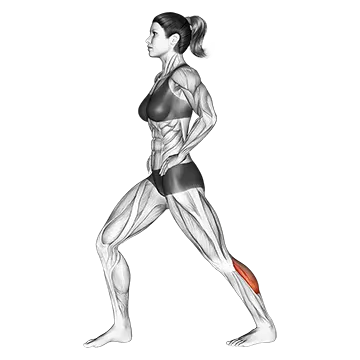

The box jump down with one leg stabilization is a body-weight plyometric drill that trains the calves, primarily the gastrocnemius, with the soleus assisting. Starting on top of a box, you drop down and land on a single leg, absorbing the impact through the ankle and calf. It builds landing control, single-leg balance, and reactive lower-leg strength.
Cómo hacer el Box Jump Down with One Leg Stabilization
- 1Stand tall on top of a low, stable box with your feet hip-width apart and your arms ready at your sides.
- 2Brace your core and pick the leg you will land on, keeping a soft bend in that knee.
- 3Step or hop off the front edge of the box rather than jumping out far, so you drop down close to the box.
- 4Land on the chosen single leg with the ball of your foot touching first, then let your heel settle.
- 5Absorb the landing by bending your ankle, knee, and hip together, sinking into a controlled quarter-squat.
- 6Stabilize on that one leg, holding the balanced position for a beat with your knee tracking over your toes.
- 7Stand back up under control, step onto the box, and reset before the next rep, alternating legs as programmed.
Consejos de técnica
- Land quietly — a soft, near-silent landing means your calves and ankle are absorbing force well instead of slamming through the joints.
- Start with a low box and master the landing before progressing to a taller one.
- Keep your eyes forward and fix your gaze on a point ahead to help you balance on the single leg.
- Let your arms swing forward and out as you land to act as a counterbalance and steady the stabilization.
- Make sure the box is sturdy and the floor is non-slip before each set to protect your ankle and knee.
Errores comunes
- Landing with a stiff, locked knee, which sends impact straight into the joint instead of letting the calf and ankle absorb it.
- Letting the landing knee cave inward, which strains the knee and signals poor single-leg control.
- Jumping far out from the box instead of dropping down, which increases impact force and makes a clean one-leg landing harder.
- Landing flat-footed or on the heel first, which removes the calf's shock-absorbing role and jars the lower leg.
- Rushing the next rep before you have fully balanced, which trains sloppy stabilization and risks a turned ankle.
Preguntas frecuentes
What muscles does the box jump down with one leg stabilization work?
It primarily works the calves, especially the gastrocnemius, with the soleus assisting as you absorb and control the single-leg landing. The drill also challenges ankle and knee stability and single-leg balance.
How high should the box be?
Start low — a knee-height or lower box is plenty while you learn the single-leg landing. Only raise the box once you can land softly and balance on one leg every rep, since higher boxes sharply increase impact.
Is this exercise good for beginners?
It can be, but build up to it. Beginners should master a two-foot box step-down and basic single-leg balance first, then start with a very low box to learn how to absorb the landing through the ankle and calf.
Where should I feel this exercise?
You should feel your calves and the muscles around your ankle working to cushion the landing, plus your hip and core stabilizing your balance. Sharp knee or ankle pain means the box is too high or the landing too stiff — lower the box and soften the catch.