
Calf Raise from Deficit with Chair Supported
- Músculo objetivo
- Gastrocnemius
- Músculos sinergistas
- Soleus
- Equipamiento
- Body weight
- Parte del cuerpo
- Calves
- Tipo
- Strength



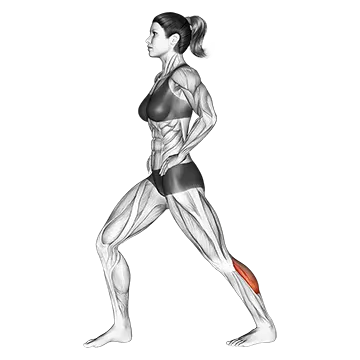
The calf raise from deficit with chair supported is a bodyweight calf-building exercise that primarily targets the gastrocnemius, with the soleus assisting through the deeper range. Standing on a raised edge so your heels can drop below your toes, you train the calves through a full stretch-to-contraction range while holding a chair for balance. It's a simple, joint-friendly way to add calf size and ankle strength at home.
Cómo hacer el Calf Raise from Deficit with Chair Supported
- 1Find a sturdy raised surface — a step, low platform, or weight plate — and place a stable chair within easy reach for support.
- 2Stand on the edge with the balls of your feet on the surface and your heels hanging off the back, feet about hip-width apart.
- 3Rest one or both hands lightly on the chair back for balance, keeping your weight through your forefeet rather than the chair.
- 4Lower your heels under control until they drop below the level of your toes and you feel a deep stretch in your calves.
- 5Pause briefly in the bottom stretch, keeping your knees straight but not locked.
- 6Press through the balls of your feet and rise as high as possible onto your toes, squeezing your calves at the top.
- 7Hold the top contraction for a moment, then lower slowly back into the deficit stretch.
- 8Repeat for your target reps, then step off the edge with control.
Consejos de técnica
- Use the chair only for balance, not to pull yourself up — keep the work in the calves by driving through the balls of your feet.
- Move slowly through both directions, with a controlled lower into the stretch and a full rise onto the toes for maximum range.
- Keep your knees straight throughout to bias the gastrocnemius; bending the knees shifts emphasis toward the soleus.
- Pause at both the bottom stretch and the top contraction to remove momentum and build calf strength through the full range.
- Keep your torso upright and core lightly braced so you stay balanced over the edge.
Errores comunes
- Cutting the range short at the bottom, which skips the deficit stretch that makes this version effective.
- Not rising fully onto the toes at the top, leaving the calves out of their strongest contracted position and reducing results.
- Leaning on the chair and offloading bodyweight, which takes tension off the calves and turns it into an arm exercise.
- Bouncing out of the bottom stretch, which uses momentum instead of the muscle and strains the Achilles tendon.
- Letting the heels collapse inward or outward, which stresses the ankles and reduces even loading across the calf.
Preguntas frecuentes
What muscles does the calf raise from deficit work?
It primarily works the gastrocnemius, the larger upper calf muscle, with the soleus assisting — especially through the deeper part of the range below toe level.
Why do it from a deficit instead of flat ground?
Standing on a raised edge lets your heels drop below your toes, stretching the calves further at the bottom. That extra range loads the muscle more fully than a flat-footed raise.
How many sets and reps should I do?
Because calves respond well to volume, aim for 3–4 sets of 12–20 slow reps. Hold the top contraction and the bottom stretch on each rep rather than rushing.
Is this exercise good for beginners?
Yes. It uses only bodyweight, and the chair gives balance support, so beginners can learn the full range safely. Start with a smaller deficit and increase the drop as your ankles get comfortable.
Where should I feel this exercise?
You should feel a deep stretch through the calves at the bottom and a strong squeeze in the gastrocnemius at the top. Pain in the Achilles tendon means you are bouncing or dropping too fast.