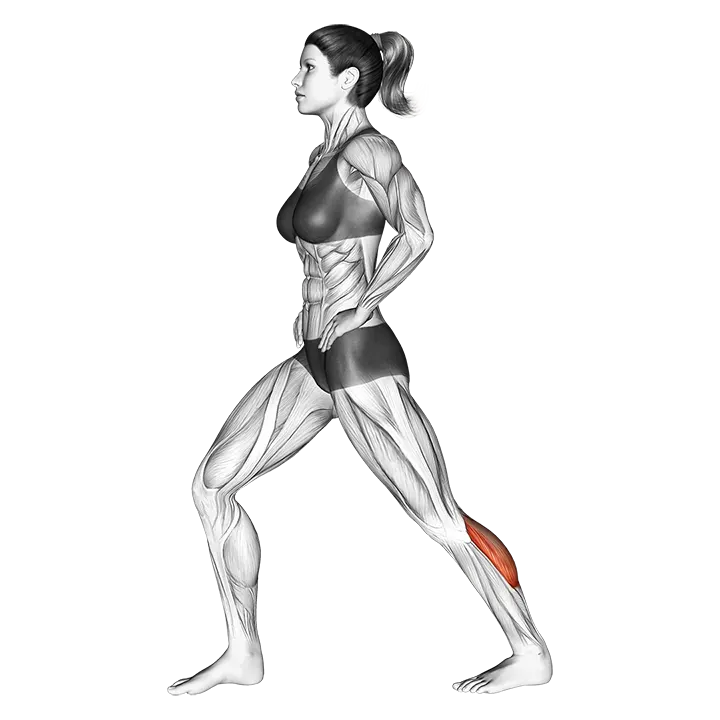
Lunging Straight Leg Calf Stretch
- Músculo objetivo
- Gastrocnemius
- Equipamiento
- Body weight
- Parte del cuerpo
- Calves
- Tipo
- Stretching
The Lunging Straight Leg Calf Stretch is a standing bodyweight movement that targets the gastrocnemius, the large upper calf muscle, by holding a lunge position with the back leg fully extended and the heel pressed firmly into the floor. It is an effective stretch for improving ankle flexibility, reducing calf tightness, and aiding recovery after running or lower-body training.
Cómo hacer el Lunging Straight Leg Calf Stretch
- 1Stand upright with your feet together near a wall or with your hands on your hips for balance.
- 2Step one foot forward into a lunge stance, placing the front foot flat on the floor with the knee bent.
- 3Extend the back leg straight behind you, keeping the knee locked out and the toes pointing forward.
- 4Press the heel of the back foot firmly into the floor so the entire sole makes contact with the ground.
- 5Shift your bodyweight slightly forward over the front foot while keeping the back leg straight.
- 6Hold the stretch for 20–30 seconds, breathing steadily and allowing the gastrocnemius to release.
- 7Return to the starting position by bringing the back foot forward, then repeat on the opposite side.
Consejos de técnica
- Keep the back foot's toes pointing directly forward, not turned out, to ensure the stretch targets the gastrocnemius rather than the peroneals.
- Maintain a tall, upright torso throughout the stretch rather than leaning forward from the waist.
- Press the full heel into the ground — lifting even slightly reduces tension on the gastrocnemius significantly.
- Perform the stretch on a flat, non-slip surface to prevent the back heel from sliding out during the hold.
- Breathe deeply and avoid bouncing; a steady hold allows the muscle to relax and lengthen more effectively.
Errores comunes
- Letting the back heel rise off the floor: this removes tension from the gastrocnemius entirely, so you feel little to no stretch in the calf.
- Bending the back knee: flexing the knee shifts the stretch from the gastrocnemius to the soleus and reduces the effectiveness for the intended target muscle.
- Turning the back foot outward: an externally rotated foot changes the line of pull and reduces isolated tension on the gastrocnemius.
- Leaning forward aggressively from the waist: collapsing the torso places excessive stress on the lower back and reduces the calf stretch.
- Holding for too short a time: releasing the stretch before 20 seconds does not allow the gastrocnemius enough time to lengthen, limiting flexibility gains.
Preguntas frecuentes
What is the difference between the lunging straight leg calf stretch and the bent knee calf stretch?
The straight leg version targets the gastrocnemius, the larger, two-joint calf muscle that crosses the knee. Bending the back knee in the bent-knee variation shifts emphasis to the soleus, which lies beneath the gastrocnemius. For complete calf flexibility, performing both versions is recommended.
How long should I hold the lunging straight leg calf stretch?
Hold each side for 20–30 seconds per repetition. Perform 2–3 repetitions per leg. For chronic tightness or post-run recovery, extending each hold to 45–60 seconds can produce greater flexibility improvements over time.
Can I do this stretch before running?
Static stretches like this one are best performed after a workout or as a standalone flexibility session when the muscles are warm. Before running, opt for dynamic calf movements such as ankle circles or leg swings to prepare the tissue without reducing power output.
Why does my back heel keep lifting during the stretch?
Heel lift is usually a sign that the gastrocnemius is very tight or that your lunge stance is too long. Try shortening your step slightly so you can keep the heel flat while still feeling an adequate stretch, then gradually increase the stride length as flexibility improves.
Is the lunging straight leg calf stretch safe for people with Achilles tendon issues?
This stretch can be beneficial for mild Achilles tightness, but it should be performed gently and without forcing the range of motion. If you have a diagnosed Achilles tendinopathy or recent injury, consult a physiotherapist before adding this stretch to your routine, as excessive tension may aggravate the tendon.