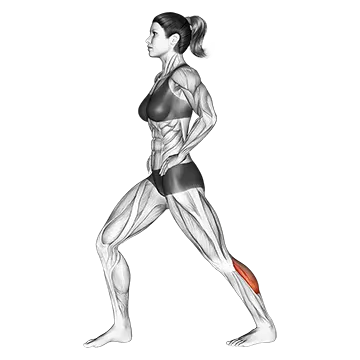
Seated Calf Stretch (Version 2)
- Target muscle
- Gastrocnemius
- Synergist muscles
- Soleus
- Equipment
- Body weight
- Body part
- Calves
- Type
- Stretching
The Seated Calf Stretch (Version 2) is a floor-based flexibility exercise that targets the gastrocnemius as the primary muscle, with the soleus working as a synergist. Performed with one or both legs extended, this version uses a towel, resistance band, or strap looped around the ball of the foot to actively pull the foot into dorsiflexion, allowing a deeper and more controlled stretch than relying on hands alone. The strap-assisted approach makes it accessible regardless of hamstring tightness or shoulder flexibility.
How to do the Seated Calf Stretch (Version 2)
- 1Sit on the floor with your legs extended straight out in front of you and your spine tall.
- 2Loop a towel, resistance band, or stretching strap around the ball of one foot, holding one end in each hand.
- 3Keep the target leg straight and the knee pressed gently toward the floor to ensure the gastrocnemius is fully engaged in the stretch.
- 4Gently pull both ends of the strap toward you, drawing the foot into dorsiflexion — toes pointing back toward your shin — until you feel a firm stretch through the calf.
- 5Hold the stretched position for 20–30 seconds, breathing steadily and avoiding any bouncing or jerking.
- 6Slowly release tension on the strap and allow the foot to return to a neutral position.
- 7Repeat on the opposite leg, performing 2–3 holds per side.
Form tips
- Use a folded towel or long resistance band if you do not have a dedicated stretching strap — any loop that reaches the foot comfortably will work.
- Focus on pulling through the strap evenly with both hands to keep the foot straight rather than rolling inward or outward.
- Sit on a folded blanket or yoga block if tight hamstrings make it difficult to keep the lower back from rounding.
- Breathe out as you deepen the pull on the strap; exhaling helps the nervous system release tension and allows a greater range of motion.
- Progress the stretch by dorsiflexing the foot slightly further on each exhale rather than forcing the range all at once.
Common mistakes
- Bending the knee during the stretch — a bent knee shifts the load away from the gastrocnemius and reduces the effectiveness of the stretch, since the gastrocnemius crosses the knee joint and only stretches fully when the leg is straight.
- Bouncing or pulsing the strap — ballistic pulls activate the muscle's stretch reflex, causing it to contract rather than lengthen, which limits flexibility gains and can strain the Achilles tendon.
- Letting the foot roll inward (pronation) while pulling — this places uneven stress on the ankle and misaligns the stretch, reducing tension on the target muscle fibers and increasing injury risk.
- Rounding the lower back excessively — slouching shortens the posterior chain and reduces the stretch stimulus on the calf, while also placing strain on the lumbar spine.
- Holding the breath — breath-holding increases muscle tension throughout the body, working against the relaxation needed to deepen a static stretch.
Frequently asked questions
What is the difference between Seated Calf Stretch Version 1 and Version 2?
Version 1 typically involves reaching forward with the hands to grasp the foot or using the hands against the shin to pull the toes back. Version 2 uses a towel, strap, or resistance band looped around the ball of the foot, giving you more leverage and control over the dorsiflexion angle without requiring significant shoulder or hamstring flexibility.
How long should I hold the Seated Calf Stretch (Version 2)?
Hold each stretch for 20–30 seconds and perform 2–3 repetitions per side. Research on static stretching suggests this duration is sufficient to promote increases in muscle length and flexibility when practiced consistently.
Can I do this stretch if I have a tight Achilles tendon?
Yes, but start with a gentle pull and a shorter hold (15–20 seconds) to avoid overstressing the tendon. If you feel sharp pain rather than a firm stretching sensation, ease off immediately and consult a healthcare professional before continuing.
When is the best time to perform the Seated Calf Stretch (Version 2)?
This stretch is most effective after a workout or physical activity when the muscles are warm, but it can also be performed as part of a morning mobility routine. Avoid aggressive stretching on completely cold muscles — a brief walk or light movement beforehand helps prepare the tissue.
Will this stretch help with plantar fasciitis or calf tightness from running?
Regular gastrocnemius stretching is commonly recommended as part of recovery and prevention protocols for plantar fasciitis and calf tightness associated with running. The strap-assisted version is particularly useful because it allows precise control of foot position, making it easier to stretch without aggravating the plantar fascia.