Wrist Ulnar Deviator And Flexor Stretch
- Target muscle
- Wrist Extensors, Wrist Flexors
- Equipment
- Body weight
- Body part
- Forearms
- Type
- Stretching



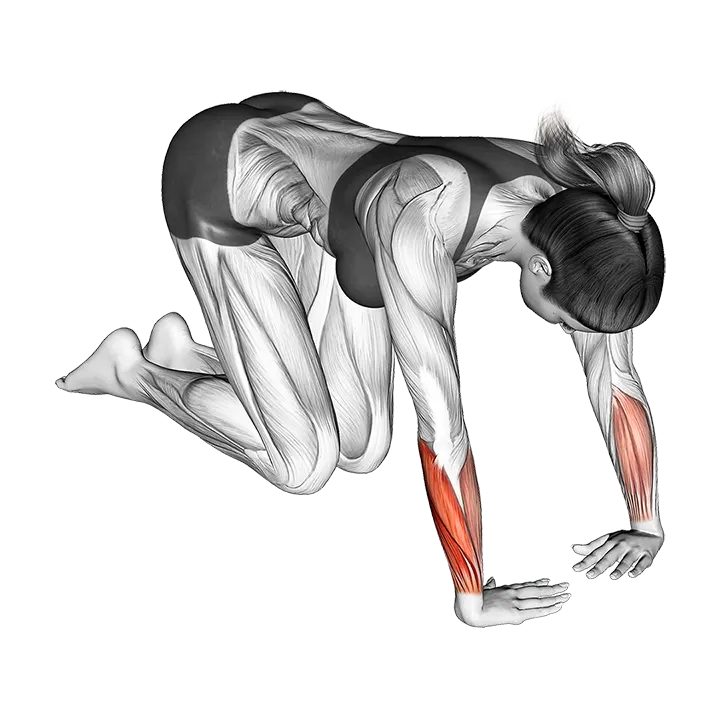
The wrist ulnar deviator and flexor stretch is a bodyweight mobility exercise that targets the wrist extensors and wrist flexors by moving the wrist through flexion, extension, and radial deviation under gentle manual pressure. It improves forearm flexibility, reduces tension from repetitive gripping or typing, and supports long-term wrist health.
How to do the Wrist Ulnar Deviator And Flexor Stretch
- 1Stand or sit upright and extend one arm straight in front of you at roughly shoulder height, elbow fully extended.
- 2For the extensor stretch: rotate your palm to face down and use your opposite hand to press the back of your fingers gently toward the floor, flexing your wrist until you feel a stretch across the top of your forearm.
- 3While holding that flexed position, draw your hand slightly toward your thumb side (radial deviation) to increase the stretch along the ulnar side of your forearm where the ulnar deviator muscles run.
- 4Hold for 20–30 seconds, breathing steadily, then release the pressure and return your wrist to neutral.
- 5For the flexor stretch: rotate your palm to face up and use your opposite hand to press your fingers gently back toward your body, extending your wrist until you feel a stretch along the underside of your forearm.
- 6Hold for 20–30 seconds, then release and return your wrist to neutral.
- 7Lower your arm, shake it out gently, and repeat the full sequence on the opposite arm.
- 8Complete 2–3 rounds per arm, working within a comfortable range of motion throughout.
Form tips
- Keep your elbow fully extended during both stretch components — bending the elbow reduces the tension on the forearm muscles and makes the stretch less effective.
- Apply pressure with your opposite hand gradually and with control; you should feel a moderate pulling sensation, never sharp pain.
- Hold each position for at least 20–30 seconds — shorter holds do not allow the muscle tissue enough time to relax and lengthen.
- Breathe normally throughout; holding your breath increases muscle tension and works against the stretch.
- If you cannot reach a comfortable stretch without rotating your shoulder, lower your arm slightly below shoulder height before applying pressure.
Common mistakes
- Bending the elbow during the stretch, which slackens the wrist flexors and extensors and significantly reduces the stretch stimulus along the forearm.
- Pulling too aggressively with the assisting hand — forcing the wrist beyond its comfortable range can strain the joint capsule and surrounding tendons rather than lengthening the muscles.
- Holding the stretch for fewer than 15 seconds, which does not give the wrist extensors or flexors enough time to release and limits flexibility gains.
- Skipping the radial deviation component, which means the ulnar side of the forearm gets little to no stretch even though that is a key part of this exercise.
- Allowing the shoulder to hike or rotate during the stretch, which changes the line of pull and shifts stress away from the forearm muscles to the shoulder and upper arm.
Frequently asked questions
What muscles does the wrist ulnar deviator and flexor stretch work?
This stretch primarily targets the wrist extensors, which run along the back of the forearm, and the wrist flexors, which run along the palm side. The ulnar deviation component adds a stretch to the muscles on the pinky side of the forearm that are responsible for moving the wrist toward the ulnar side.
How long should I hold the wrist ulnar deviator and flexor stretch?
Hold each position for 20–30 seconds. This duration allows the target muscles to relax past their initial stretch reflex and begin to lengthen. Aim for 2–3 rounds per arm for a meaningful effect on flexibility.
When should I do this stretch?
This stretch is best done after a workout or physical activity when your muscles are warm, or during a dedicated mobility session. Avoid applying heavy stretching pressure to a completely cold wrist; if you plan to stretch first thing in the morning, warm your forearms with 2–3 minutes of light wrist circles.
Is this stretch good for desk workers and people who type a lot?
Yes. Prolonged typing and mouse use create sustained low-level tension in the wrist flexors and the muscles along the ulnar side of the forearm. Performing this stretch two to three times during the workday can reduce that accumulated tightness and help prevent overuse discomfort.
Can I do this stretch if I have wrist pain?
If you have existing wrist pain, consult a physiotherapist before adding stretches, as the correct approach depends on the underlying cause. For mild general tightness without injury, work within a pain-free range and reduce the pressure applied by the assisting hand until you are comfortable.