
Seated Straight Leg Calf Stretch
- Músculo objetivo
- Gastrocnemius
- Músculos sinergistas
- Hamstrings, Soleus
- Equipamiento
- Body weight
- Parte del cuerpo
- Calves
- Tipo
- Stretching




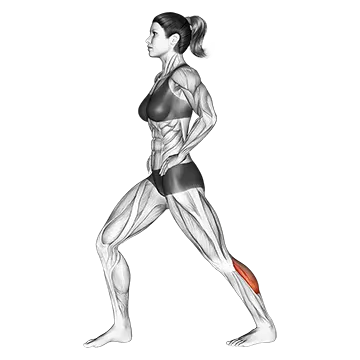



The seated straight leg calf stretch targets the gastrocnemius by pulling the foot toward the shin while keeping the knee fully extended. The hamstrings and soleus act as synergists throughout the hold. It is a practical, body-weight stretch for improving ankle mobility, reducing post-exercise tightness, and relieving tension after prolonged sitting or walking.
Cómo hacer el Seated Straight Leg Calf Stretch
- 1Sit on the floor with your legs extended straight in front of you and your back tall. You can sit against a wall for support if needed.
- 2Keep both knees fully locked out and your toes pointing toward the ceiling in a neutral position.
- 3Reach forward and hook your hands around the ball of one foot (or both feet if stretching both at once); if you cannot reach without rounding your back, loop a towel or belt around the foot instead.
- 4Gently pull the top of the foot back toward your shin, flexing at the ankle until you feel a clear stretch through the back of your lower leg.
- 5Hold your spine upright — avoid rounding your lower back to reach further, as this reduces tension on the calf and loads the hamstrings unnecessarily.
- 6Hold the stretched position for 20–45 seconds, breathing steadily and allowing the muscle to relax into the stretch.
- 7Release slowly and repeat on the other side, or repeat the same side for the prescribed number of sets.
Consejos de técnica
- Stretch one leg at a time, with the other knee bent and that foot flat on the floor, if reaching for both feet at once forces your back to round.
- Stretch after training or once the calves are warm — a cold gastrocnemius resists lengthening, so the same effort buys less range.
- Breathe out as you ease into the stretch; the exhale helps the muscle relax and allows you to move deeper without forcing it.
- Sit on a folded mat or blanket if your hamstrings are tight and prevent you from sitting upright — raising your hips slightly lets you maintain a neutral spine.
Errores comunes
- Bending the knee during the stretch, which unloads the gastrocnemius and reduces the effectiveness of the movement.
- Rounding the lower back to pull the foot closer, which shifts tension from the calf to the lumbar spine and can cause discomfort.
- Pulling through the toes instead of the ball of the foot, which can cramp the foot and misaligns the ankle.
- Bouncing or pulsing through the stretch instead of holding a steady position, which triggers a protective reflex and prevents the muscle from lengthening.
- Holding for too short a time — less than 20 seconds is generally not enough for the gastrocnemius to release meaningfully.
Preguntas frecuentes
What muscles does the seated straight leg calf stretch work?
The primary target is the gastrocnemius, the large two-headed muscle that forms the bulk of the calf. The hamstrings and soleus act as synergists, receiving some stretch as well, particularly when the knee is kept fully extended.
Why does keeping the leg straight matter so much?
The gastrocnemius crosses both the knee and ankle joints, so it only reaches full length when both the knee is straight and the ankle is dorsiflexed (foot pulled toward the shin). Bending the knee slackens the gastrocnemius and the stretch shifts primarily to the soleus instead.
Is the seated straight leg calf stretch suitable for beginners?
Yes. It needs no equipment — your hands around the ball of the foot are enough — it involves no balance challenge, and the intensity stays entirely under your control. Beginners can start with a lighter pull, holding 20 seconds, and build depth over time.
How long and how often should I hold this stretch?
Hold each rep for 20–45 seconds. Two to four sets per side, two to three times per week, is a practical starting point. For acute tightness after training, a single extended hold of 30–60 seconds can also be effective.
Can I do this stretch if I have tight hamstrings?
Yes, but tight hamstrings may make it hard to sit upright with straight legs. Sit on a folded mat or a low block to tilt the pelvis forward, which lets you maintain a neutral spine without fighting hamstring tension. This also ensures the stretch stays focused on the calf rather than the back.