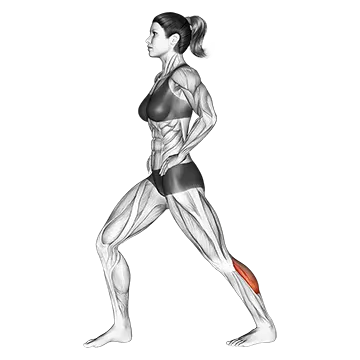
Squat Hold Calf Raise
- Músculo objetivo
- Gastrocnemius
- Músculos sinergistas
- Gluteus Maximus, Quadriceps, Soleus
- Equipamiento
- Body weight
- Parte del cuerpo
- Calves
- Tipo
- Strength
The Squat Hold Calf Raise combines an isometric squat position with a calf raise, simultaneously loading the gastrocnemius while engaging the gluteus maximus, quadriceps, and soleus as synergists. This bodyweight exercise builds lower-leg strength and ankle stability under functional load, making it an excellent choice for athletes and anyone looking to strengthen the calves without additional equipment.
Cómo hacer el Squat Hold Calf Raise
- 1Stand with your feet shoulder-width apart and toes pointing slightly outward.
- 2Lower into a squat until your thighs are parallel to the floor, keeping your chest up and back straight.
- 3Hold the squat position throughout the entire set — do not rise out of it.
- 4Distribute your weight evenly across both feet, then press through the balls of your feet to raise your heels as high as possible.
- 5Pause briefly at the top of the movement, squeezing your calves.
- 6Slowly lower your heels back to the floor under control.
- 7Repeat for the desired number of repetitions while maintaining the squat hold.
- 8To finish, press through your heels to stand up from the squat position.
Consejos de técnica
- Keep your knees tracking over your toes throughout the squat hold to avoid inward collapse during the calf raise.
- Drive the balls of your feet into the floor and think about lifting your heels as high as possible — a full range of motion maximizes gastrocnemius activation.
- Brace your core tightly to prevent your torso from rocking forward as you raise and lower your heels.
- Use a slow, controlled lowering phase (2–3 seconds) to build greater calf strength and muscle endurance.
- If balance is a challenge, lightly touch a wall or sturdy surface with one hand without leaning into it.
Errores comunes
- Rising out of the squat during the calf raise — this removes the synergistic load on the glutes and quads and turns the movement into a standard calf raise, defeating the purpose of the exercise.
- Letting the knees cave inward — valgus collapse under load stresses the knee joints and reduces force production through the lower body.
- Using a shallow squat depth — staying above parallel significantly reduces quad and glute engagement, limiting the full training stimulus of the movement.
- Bouncing at the bottom of the calf raise — dropping the heels quickly and rebounding removes tension from the calves and reduces muscle-building stimulus.
- Leaning the torso forward excessively — shifting weight forward unloads the heels prematurely and compromises both squat and calf raise mechanics.
Preguntas frecuentes
What muscles does the Squat Hold Calf Raise work?
The primary muscle targeted is the gastrocnemius (the large calf muscle). The gluteus maximus, quadriceps, and soleus act as synergists, keeping you stable in the squat position while your calves perform the raise.
Is the Squat Hold Calf Raise good for beginners?
It can be suitable for beginners who are comfortable holding a bodyweight squat, but it requires both lower-body stability and decent ankle mobility. Beginners may want to master regular calf raises and bodyweight squats separately before combining them.
How many reps and sets should I do?
For strength and muscle development, aim for 3–4 sets of 12–20 reps. The sustained squat hold increases muscular demand, so start conservatively, especially if your quads fatigue before your calves do.
How does the Squat Hold Calf Raise differ from a regular calf raise?
A regular calf raise is performed standing upright, isolating the calves. The Squat Hold Calf Raise adds an isometric lower-body load — the bent-knee position slightly alters gastrocnemius tension and recruits the glutes and quads, making it a more demanding, compound-style movement.
Can I add weight to make the Squat Hold Calf Raise harder?
The exercise is classified as a bodyweight movement. To progress, increase the number of reps, slow the tempo, add a longer pause at the top, or hold a deeper squat position. Adding external load like a dumbbell is possible but changes the equipment category.