

Assisted Inverse Leg Curl
- Target muscle
- Hamstrings
- Synergist muscles
- Gastrocnemius
- Equipment
- Assisted
- Body part
- Thighs
- Type
- Strength
The assisted inverse leg curl is a bodyweight, Nordic-style hamstring exercise that primarily targets the hamstrings, with the gastrocnemius (calves) helping to stabilize the knee. Kneeling with your ankles anchored, you lower your torso toward the floor under control and use a partner's help to manage the descent and drive back up, making this powerful eccentric movement accessible before you can do it unassisted.
How to do the Assisted Inverse Leg Curl
- 1Kneel on a pad with your torso upright and hips, knees, and shoulders stacked in a straight line.
- 2Have a partner anchor your ankles firmly, or hook your heels under a secure pad so your lower legs stay pinned to the floor.
- 3Brace your core and squeeze your glutes so your body forms a rigid line from knees to head.
- 4Lower your torso slowly toward the floor, resisting the descent with your hamstrings for as long as possible.
- 5As you near the floor, have your partner assist or use your hands to catch yourself, keeping the hips extended.
- 6Pull yourself back up by contracting your hamstrings, with your partner helping just enough to keep the motion smooth.
- 7Push off lightly with your hands only if needed, then return to the upright kneeling start.
- 8Complete your reps, keeping each descent controlled and the hips locked out throughout.
Form tips
- Keep your hips fully extended the whole rep so the work stays in the hamstrings instead of folding at the waist.
- Lower as slowly as you can — the eccentric (lowering) phase is where this exercise builds the most hamstring strength.
- Have your partner or your hands assist only as much as needed, gradually reducing help as you get stronger.
- Make sure your ankles are anchored securely before each set so your lower legs can't lift off the floor.
Common mistakes
- Bending at the hips to shorten the range, which shifts effort off the hamstrings and removes the tension that drives results.
- Dropping quickly instead of resisting the descent, which wastes the eccentric phase and can strain the hamstrings on the catch.
- Relying too heavily on the hand push or partner assist, which limits how much your hamstrings actually do.
- Letting the ankles lift because they aren't anchored, which collapses the position and risks losing control.
Frequently asked questions
What muscles does the assisted inverse leg curl work?
It primarily works the hamstrings, with the gastrocnemius (calves) assisting to stabilize the knee. The glutes and core also work to keep your hips extended and your body rigid throughout the rep.
Is the assisted inverse leg curl good for beginners?
Yes. The assistance — from a partner or your own hands — lets you control the lowering and drive back up before you have the strength for an unassisted Nordic curl, making it a good entry point for building hamstring strength.
How many sets and reps should I do?
Because the focus is the demanding eccentric phase, start with 3 sets of 5–8 controlled reps. Use as much assistance as you need at first, then reduce it as your hamstrings get stronger.
Why do I need assistance for this exercise?
The unassisted version is extremely demanding on the hamstrings, especially while lowering. A partner or your hands take just enough load so you can control the descent and return to the start with good form.
Related exercises
 Assisted Prone HamstringThighs
 Assisted Chin TuckNeck
 Assisted Hanging Knee RaiseWaist
 Assisted Hanging Knee Raise With Throw DownWaist
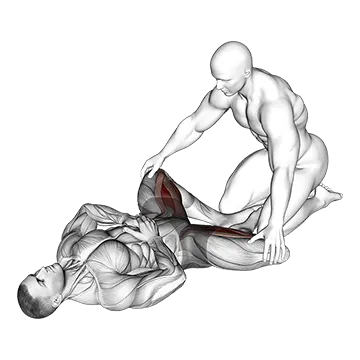 Assisted Lying Adductors StretchHips
 Assisted Lying Gastrocnemius StretchCalves
 Assisted Lying Gluteus And Piriformis StretchHips
 Assisted Lying Gluteus Maximus StretchHips