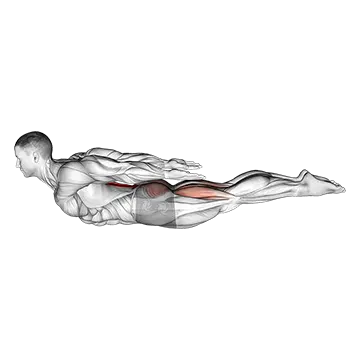
Cat Stretch
- Target muscle
- Erector Spinae
- Equipment
- Body weight
- Body part
- Waist
- Type
- Stretching
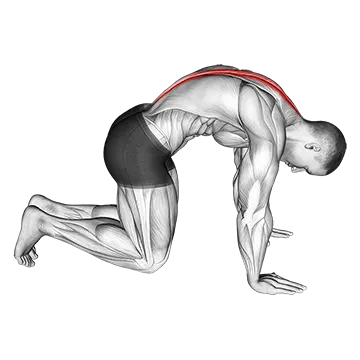
The cat stretch is a body-weight mobility movement that gently flexes and articulates the spine, targeting the erector spinae that run the length of your back. Performed on all fours, it relieves stiffness in the waist and lower back and is a low-impact way to warm up or wind down a training session.
How to do the Cat Stretch
- 1Start on all fours in a tabletop position, with your wrists stacked under your shoulders and your knees under your hips.
- 2Set a neutral spine to begin: keep your back flat, your head in line with your torso, and your gaze toward the floor.
- 3Inhale to prepare, keeping your core lightly engaged and your weight evenly distributed across your hands and knees.
- 4As you exhale, slowly round your spine toward the ceiling, drawing your belly button up and tucking your chin toward your chest.
- 5Continue arching one vertebra at a time until you feel a comfortable stretch across your upper, mid, and lower back.
- 6Hold the rounded position for a breath or two, feeling the stretch spread through the erector spinae along your waist.
- 7Inhale as you slowly release back to the flat, neutral tabletop position with control.
- 8Repeat for 5 to 10 slow, breath-paced reps, never forcing the range of motion.
Form tips
- Sync the movement to your breath: exhale as you round up, inhale as you return, so the stretch stays smooth and controlled.
- Articulate the spine segment by segment rather than moving as one stiff block, so each part of the back gets mobilized.
- Keep your hands and knees planted and your shoulders away from your ears so the movement comes from the spine, not the arms.
- Move only as far as feels comfortable; this is a mobility stretch, so range should build gradually, never to the point of pain.
Common mistakes
- Rushing through the reps, which turns a controlled spinal stretch into a bounce and limits how much the back actually mobilizes.
- Holding your breath instead of exhaling into the round, which keeps the back tense and reduces the release through the erector spinae.
- Letting the shoulders shrug up toward the ears, which shifts effort into the neck and traps rather than the spine.
- Forcing an extreme round to chase a deeper stretch, which can strain the lower back instead of gently loosening it.
Frequently asked questions
What muscles does the cat stretch work?
It targets the erector spinae, the muscles that run along your spine through the waist. Rounding the back lengthens and mobilizes them, easing stiffness rather than building strength.
Is the cat stretch good for beginners?
Yes. It uses only your body weight, is low-impact, and lets you control the range of motion, making it a safe spinal mobility drill for any level.
When should I do the cat stretch?
It works well as a gentle warm-up to loosen the spine before training, or as a cool-down to relieve back and waist stiffness afterward.
How many reps of the cat stretch should I do?
Aim for 5 to 10 slow, breath-paced reps. Move with your breathing and stop short of any pain, gradually increasing range as your spine loosens.