Lying Double Leg Kick
- Target muscle
- Erector Spinae, Gluteus Maximus, Hamstrings
- Synergist muscles
- Deltoid Posterior, Gastrocnemius, Latissimus Dorsi, Obliques, Rectus Abdominis, Soleus, Teres Major, Triceps Brachii
- Equipment
- Body weight
- Body part
- Hips, Thighs
- Type
- Stretching
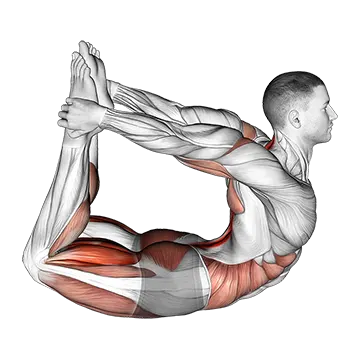
The lying double leg kick is a bodyweight stretching exercise that targets the erector spinae, gluteus maximus, and hamstrings while engaging the core and posterior shoulder muscles. Performed prone on the floor, it combines a hamstring curl with a back extension to simultaneously open the hip flexors and strengthen the posterior chain.
How to do the Lying Double Leg Kick


- 1Lie face down on the floor with your legs together and your hands clasped behind your lower back, palms facing upward.
- 2Turn your head to one side and rest your cheek on the floor.
- 3Bend both knees and pulse them toward your glutes two to three times in a controlled, rhythmic motion.

- 4On the final pulse, straighten both legs and simultaneously lift them off the floor while extending your spine and raising your chest.
- 5At the same time, draw your clasped hands toward your feet, opening your chest and squeezing your shoulder blades together.
- 6Hold the extended position for one to two seconds, feeling the contraction through your glutes, hamstrings, and erector spinae.
- 7Lower your chest and legs back to the floor in a controlled manner and turn your head to the opposite side.
- 8Repeat the pulse-and-extend sequence on each side for the desired number of repetitions.
Form tips
- Keep your core lightly braced throughout so your lower back is supported during the spinal extension.
- Focus on squeezing the glutes and hamstrings actively during the lift rather than relying on momentum to raise the legs.
- Draw your shoulder blades down and together as you extend to avoid shrugging and to fully engage the posterior deltoids and latissimus dorsi.
- Breathe out as you lift into the extension and breathe in as you return to the floor to maintain a steady rhythm.
- Keep your feet together and toes pointed to maintain tension through the soleus and gastrocnemius throughout the movement.
Common mistakes
- Jerking the legs upward instead of pulsing smoothly — this shifts the load away from the target muscles and can strain the lower back.
- Allowing the knees to drift apart during the curl — this reduces tension on the hamstrings and glutes and places uneven stress on the hips.
- Shrugging the shoulders when lifting the chest — this recruits the upper trapezius instead of the intended posterior deltoids and teres major.
- Hyperextending the neck by looking forward during the lift — the head should remain in line with the spine to avoid cervical strain.
- Rushing through the repetitions without pausing at the top — skipping the hold eliminates the isometric contraction that builds posterior chain strength and body awareness.
Frequently asked questions
What muscles does the lying double leg kick work?
The primary muscles are the erector spinae, gluteus maximus, and hamstrings. Supporting muscles include the posterior deltoid, latissimus dorsi, teres major, triceps brachii, gastrocnemius, soleus, obliques, and rectus abdominis, which stabilize the spine and limbs throughout the movement.
Is the lying double leg kick suitable for beginners?
Yes. No equipment is required and the range of motion can be scaled by how high you lift the legs and chest. Beginners can focus on the pulse phase without elevating the legs very high, then gradually increase the range as the posterior chain becomes stronger and more flexible.
How many sets and reps should I do?
For mobility and stretching purposes, two to three sets of eight to twelve repetitions per side is a common starting point. If using the exercise as a strength-endurance drill for the posterior chain, three to four sets with a one-to-two-second hold at the top is effective.
What is the difference between the lying double leg kick and the single leg kick?
The single leg kick is performed with alternating legs and places more emphasis on hip flexor stretching. The double leg kick lifts both legs simultaneously, which increases the demand on the erector spinae, glutes, and hamstrings and also incorporates a more pronounced upper-back and shoulder extension.
Can the lying double leg kick help with lower back pain?
Strengthening the erector spinae and glutes through controlled extension exercises can support spinal stability, which may reduce discomfort from weak posterior chain muscles. However, anyone with an existing lower back condition should consult a healthcare professional before adding spinal extension movements to their routine.