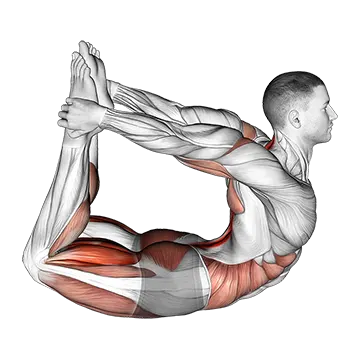
Swimmer Kicks (VERSION 2)
- Target muscle
- Erector Spinae, Gluteus Maximus, Hamstrings
- Equipment
- Body weight
- Body part
- Hips
- Type
- Strength
Swimmer kicks (version 2) is a bodyweight prone exercise that alternately raises each leg in a flutter-kick pattern to target the erector spinae, gluteus maximus, and hamstrings simultaneously. Performed lying face down with no equipment, it builds posterior-chain endurance and lower-back stability while developing hip extension strength. It is an effective finisher for back and glute sessions or a standalone movement for strengthening the entire rear of the body.
How to do the Swimmer Kicks (VERSION 2)
- 1Lie face down on the floor with your legs fully extended, toes pointing back, and your arms resting alongside your body or extended straight overhead.
- 2Press your hips lightly into the floor, brace your core, and squeeze your glutes to create a stable base before the movement begins.
- 3Lift both legs just off the floor by engaging your gluteus maximus and hamstrings — your thighs should clear the ground while your hips remain in contact with it.
- 4Raise your right leg higher by driving through the glute and hamstring, keeping the leg as straight as possible, while simultaneously lowering your left leg toward the floor.
- 5Reverse the motion in a controlled, alternating flutter-kick rhythm — left leg rises as the right leg descends — without letting either leg touch the floor between reps.
- 6Keep your head in a neutral position and your gaze directed straight down or slightly forward; avoid craning the neck upward.
- 7Continue alternating legs for the target number of reps or time, then lower both legs to the floor under control to finish the set.
Form tips
- Squeeze the glute of the rising leg actively at the top of each kick rather than relying on momentum to lift it.
- Keep your core braced throughout to prevent your lower back from hyperextending as the legs lift.
- Point your toes and maintain full knee extension to maximize hamstring engagement on every repetition.
- Breathe steadily — exhale as you drive one leg up, inhale as it descends — to avoid building unnecessary spinal pressure.
Common mistakes
- Bending the knees excessively during the kick, which shifts the work away from the hamstrings and erector spinae and reduces the effectiveness of each rep.
- Allowing the hips to rock from side to side with each kick — this bleeds tension from the target muscles and places unwanted rotational stress on the lumbar spine.
- Craning the neck upward to look forward, which compresses the cervical spine; keep the head neutral and gaze directed at the floor.
- Using rapid, uncontrolled momentum rather than deliberate muscle contraction, which diminishes posterior-chain activation and makes the movement less productive.
- Letting the legs drop all the way to the floor between reps, which removes continuous tension from the glutes, hamstrings, and erector spinae.
Frequently asked questions
What muscles does swimmer kicks version 2 work?
The exercise targets three primary muscles: the erector spinae, which stabilizes and extends the spine; the gluteus maximus, which drives hip extension on each kick; and the hamstrings, which assist with leg elevation and maintain leg straightness throughout the movement.
How is swimmer kicks version 2 different from regular swimmer kicks?
Both variations are prone flutter-kick exercises that target the erector spinae, gluteus maximus, and hamstrings. Version 2 may differ in arm position, range of motion, or tempo — check the exercise video for the specific setup cue that distinguishes it, then apply the same muscle-activation principles.
Is swimmer kicks version 2 safe for people with lower back issues?
The movement can be appropriate for building lower-back endurance, but it requires careful bracing and controlled range of motion. Anyone with existing lumbar conditions should consult a qualified professional before performing prone back-extension exercises, and should stop immediately if pain is felt.
How many reps or how long should I do swimmer kicks version 2?
For endurance and posterior-chain activation, time-based sets of 20–45 seconds work well. For a more strength-focused approach, 3–4 sets of 10–15 alternating reps per side with a deliberate tempo is a solid starting point.
Do I need any equipment for swimmer kicks version 2?
No equipment is required — the exercise is performed using body weight alone on any flat surface. A yoga mat or exercise mat can add comfort for the hip bones and chest during the prone position.