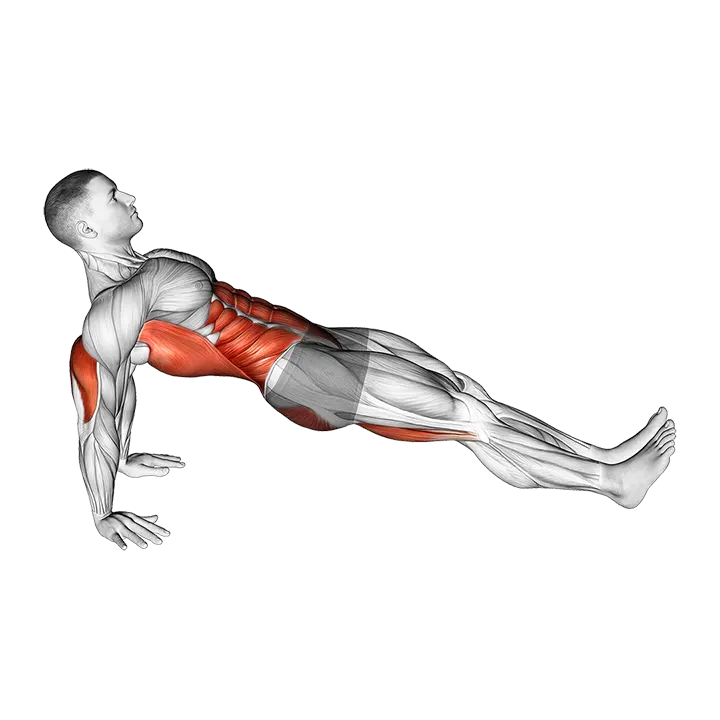
Reverse Plank
- Target muscle
- Gluteus Maximus, Rectus Abdominis
- Synergist muscles
- Deltoid Posterior, Hamstrings, Latissimus Dorsi, Obliques, Teres Major, Triceps Brachii
- Equipment
- Body weight
- Body part
- Back
- Type
- Strength

The reverse plank is a bodyweight strength and stability exercise that primarily targets the gluteus maximus and rectus abdominis, with assistance from the hamstrings, triceps brachii, latissimus dorsi, posterior deltoid, teres major, and obliques. You sit on the floor with legs extended, place your hands behind your hips, and press through your palms and heels to lift your body into a straight line. It is an effective way to build posterior chain strength and core stability without any equipment.
How to do the Reverse Plank
- 1Sit on the floor with your legs extended straight in front of you and your feet together.
- 2Place your hands on the floor behind your hips, roughly shoulder-width apart, with fingers pointing toward your feet or angled slightly outward.
- 3Press through your palms and engage your core, then drive your heels into the floor to lift your hips up off the ground.
- 4Continue pressing until your body forms a straight line from your heels to your shoulders — squeeze your glutes to hold the position.
- 5Keep your head in a neutral position, looking slightly upward, without letting it drop back excessively.
- 6Hold the position for the desired duration while breathing steadily, maintaining a flat body line throughout.
- 7To finish, lower your hips back to the floor with control.
Form tips
- Actively squeeze your glutes and brace your core throughout the hold to prevent your hips from sagging toward the floor.
- Keep your elbows soft rather than hyperextended — a slight bend protects the elbow joint and engages the triceps more effectively.
- To protect your wrists, distribute weight evenly across your entire palm and all fingers rather than letting it pool at the heel of the hand; if wrist discomfort persists, try angling your fingers outward.
- Point your toes and press your heels firmly into the floor to engage the hamstrings and help maintain a level body line.
- Start with short holds of 10–15 seconds and build duration gradually as your posterior chain and core strength improve.
Common mistakes
- Letting the hips sag toward the floor, which removes the load from the gluteus maximus and rectus abdominis and places compressive stress on the lumbar spine.
- Dropping the head too far back, which can strain the cervical spine and makes it harder to maintain a neutral body line.
- Hyperextending the elbows to lock them out, which shifts stress onto the elbow joint instead of allowing the triceps brachii to actively stabilize the position.
- Placing hands too far behind the hips, which reduces the mechanical advantage of the shoulder girdle and forces the posterior deltoid and teres major into a compromised angle.
- Holding the breath during the hold, which spikes blood pressure and forces you to cut the set short as oxygen debt builds — breathe steadily throughout.
Frequently asked questions
What muscles does the reverse plank work?
The reverse plank primarily targets the gluteus maximus and rectus abdominis. The hamstrings, triceps brachii, latissimus dorsi, posterior deltoid, teres major, and obliques act as synergists to support and stabilize the position.
How long should I hold a reverse plank?
Beginners should aim for holds of 10–20 seconds and rest between sets. As your gluteus maximus, hamstrings, and core strength improve, work toward holds of 30–60 seconds. Quality of form matters more than duration — stop the hold the moment your hips begin to sag.
What is the difference between a plank and a reverse plank?

A standard plank has you face-down, supported on your forearms or hands, emphasizing the anterior core. The reverse plank has you face-up, supported on your hands and heels, shifting primary load to the gluteus maximus and rectus abdominis while also challenging the posterior deltoid, triceps brachii, and hamstrings.
Can I do the reverse plank if I have wrist pain?
Wrist discomfort is common in the reverse plank because the wrists are loaded in extension. Rotating your fingers outward can reduce this angle. If pain persists, avoid the exercise and address wrist mobility or strength with a qualified professional before attempting it again.
How can I make the reverse plank harder?
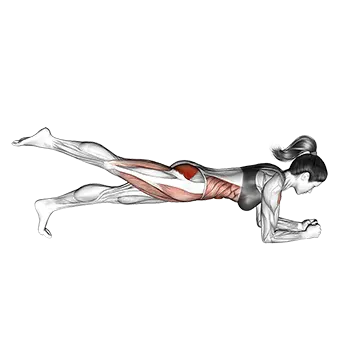
You can increase difficulty by extending the hold duration, adding a single-leg variation (lift one heel off the floor to increase demand on the gluteus maximus and obliques on the working side), or performing slow hip dips — lowering toward the floor and pressing back up — to add a dynamic component for the triceps brachii and hamstrings.