
Suspension Upper Back Stretch
- Target muscle
- Erector Spinae
- Equipment
- Suspension
- Body part
- Back
- Type
- Stretching

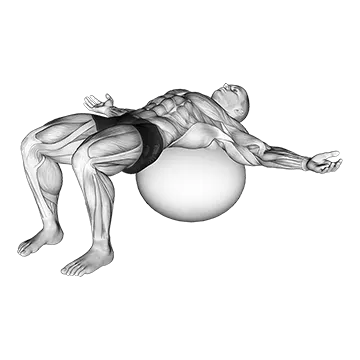


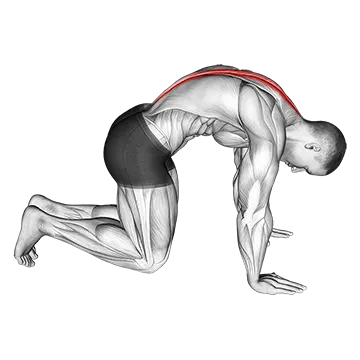
The suspension upper back stretch uses suspension straps to unload and elongate the erector spinae by letting your bodyweight create traction along the spine. Holding the handles while leaning back allows gravity to gently decompress the upper back, making it an effective cool-down or mobility drill after heavy pulling or rowing work.
How to do the Suspension Upper Back Stretch
- 1Stand facing the suspension anchor point and grip both handles with an overhand grip at about chest height.
- 2Step your feet in toward the anchor until the straps are taut and your arms are fully extended in front of you.
- 3Shift your weight back so that the straps support your full bodyweight and your hips are behind your heels.
- 4Allow your head to drop between your arms and round your upper back deliberately, letting the straps pull your arms forward.
- 5Tuck your chin to your chest and press your shoulder blades apart to deepen the stretch through the upper back.
- 6Breathe slowly and hold the stretched position for the prescribed time, relaxing further into the stretch with each exhale.
- 7To exit, keep your grip and walk your feet back away from the anchor until you are standing upright again.
Form tips
- Use the straps as a counterbalance, not a pull — let gravity do the work rather than actively pulling your arms forward.
- Actively spread your shoulder blades apart at the peak of the stretch to maximize the lengthening of the erector spinae.
- Control your breathing: inhale to prepare, then exhale and relax deeper into the stretch with each breath cycle.
- Adjust the angle by stepping your feet closer to the anchor for a more intense stretch or farther away to reduce the load.
Common mistakes
- Holding tension in the shoulders and neck instead of letting go, which prevents the upper back from fully releasing.
- Bending the arms at the elbows, which shortens the effective lever and reduces the stretch on the erector spinae.
- Rushing through the hold without breathing, which keeps the back muscles contracted and limits the benefit of the stretch.
- Standing too upright so the straps are not fully supporting bodyweight, reducing the decompression effect on the spine.
Frequently asked questions
What muscles does the suspension upper back stretch target?
It primarily targets the erector spinae, the group of muscles running along either side of the spine that are commonly tight after heavy lifting or prolonged sitting.
How long should I hold the suspension upper back stretch?
Aim for 20–40 seconds per hold to allow the erector spinae enough time to relax and lengthen. Two to three holds is sufficient for a cool-down.
When is the best time to do this stretch?
It works best as part of a cool-down after back training or rowing movements, when the muscles are warm and more receptive to lengthening. Avoid performing it as a primary warm-up before heavy lifting.
How do I make the stretch easier or harder?
Walk your feet away from the anchor to reduce the angle and lower the intensity, or step closer to it to increase your lean and deepen the stretch on the upper back.