
Suspension Pendulum
- Target muscle
- Obliques
- Synergist muscles
- Gluteus Medius, Iliopsoas, Quadriceps, Rectus Abdominis, Tensor Fasciae Latae
- Equipment
- Suspension
- Body part
- Waist
- Type
- Strength



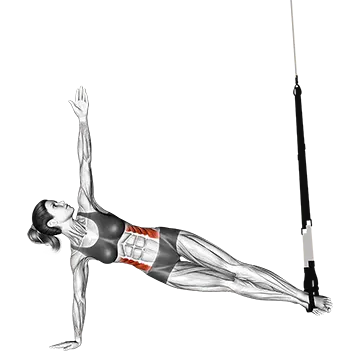
The suspension pendulum is a core stability exercise performed in a plank position with your feet in the suspension handles, primarily targeting the obliques. Swinging both legs side to side in a controlled arc calls on the gluteus medius and tensor fasciae latae to move the hips, while the iliopsoas, quadriceps, and rectus abdominis hold the body in line. It builds anti-rotation strength and hip control under full-body tension.
How to do the Suspension Pendulum
- 1Set the suspension trainer handles low to the ground, roughly 6–12 inches above the floor.
- 2Sit facing away from the anchor point and place both feet through the handles so the tops of your feet rest inside the loops.
- 3Walk your hands out to a push-up position, arms fully extended with shoulders stacked over your wrists and your body in a straight line from head to heels.
- 4Brace your abs and squeeze your glutes so your hips stay level and your spine stays neutral.
- 5Keeping your legs together and knees straight, swing both feet slowly out to one side, letting the hips travel only as far as you can control without your shoulders turning.
- 6Pause briefly at the end of the arc, then swing your legs back through center and out to the opposite side in one smooth motion to complete a rep.
- 7Keep your hands planted and your torso still throughout — the arc comes from the hips and waist, not from the arms.
- 8Finish the set by bringing your legs back to center, lowering your knees to the floor, and sliding your feet out of the handles.
Form tips
- Think of your torso as a fixed column — the swing should come from your hips and waist, not from your shoulders shifting or your arms pulling.
- Control the deceleration at the end of each arc; the obliques and gluteus medius work hardest resisting the swing, so don't let momentum throw the legs.
- Start with a narrow arc and widen it only once your hips stay level and your lower back stays neutral through the full range.
- Press the floor away and keep your shoulder blades spread to keep the shoulders stable while the legs move.
- Exhale as your legs pass through center and keep your ribs pulled down so the lower back doesn't extend.
Common mistakes
- Letting the hips pike up or sag as the legs swing — both break the plank line and shift load off the obliques onto the shoulders or lower back.
- Swinging the legs with momentum instead of muscular control, which cuts time under tension and can jerk the lumbar spine at the end of the arc.
- Rotating the shoulders to follow the legs, which lets the whole torso turn and removes the anti-rotation demand that makes the exercise work.
- Bending the knees to shorten the legs, which reduces the lever arm and makes the swing far easier than intended.
- Allowing the lower back to arch as the legs travel wide, which compresses the lumbar spine — keep the pelvis level and the core braced throughout.
Frequently asked questions
What muscles does the suspension pendulum work?
The obliques are the primary target. The gluteus medius and tensor fasciae latae drive and control the lateral hip swing, while the iliopsoas, quadriceps, and rectus abdominis work to hold the plank position.
How is the suspension pendulum different from a regular plank?
A plank is a static anti-extension hold. The pendulum adds a moving load: your legs swing sideways, so the core has to resist rotation and lateral flexion while the hip abductors control the arc.
How do I make the suspension pendulum harder or easier?
To make it easier, shorten the arc and keep a slight knee bend, or drop to a forearm plank position on the floor first. To make it harder, straighten the legs fully, widen the arc, slow the tempo, or raise the handles so your feet sit higher than your shoulders.
Can beginners do the suspension pendulum?
It requires solid baseline core and shoulder stability. Beginners should hold a suspension plank for 30 seconds with level hips before adding the swing, and start with a very short arc.
How many reps and sets should I do?
For core strength and stability, 3–4 sets of 8–12 controlled swings per side is a good starting point. Quality matters more than volume here — stop the set as soon as the hips start to sag or rotate.